
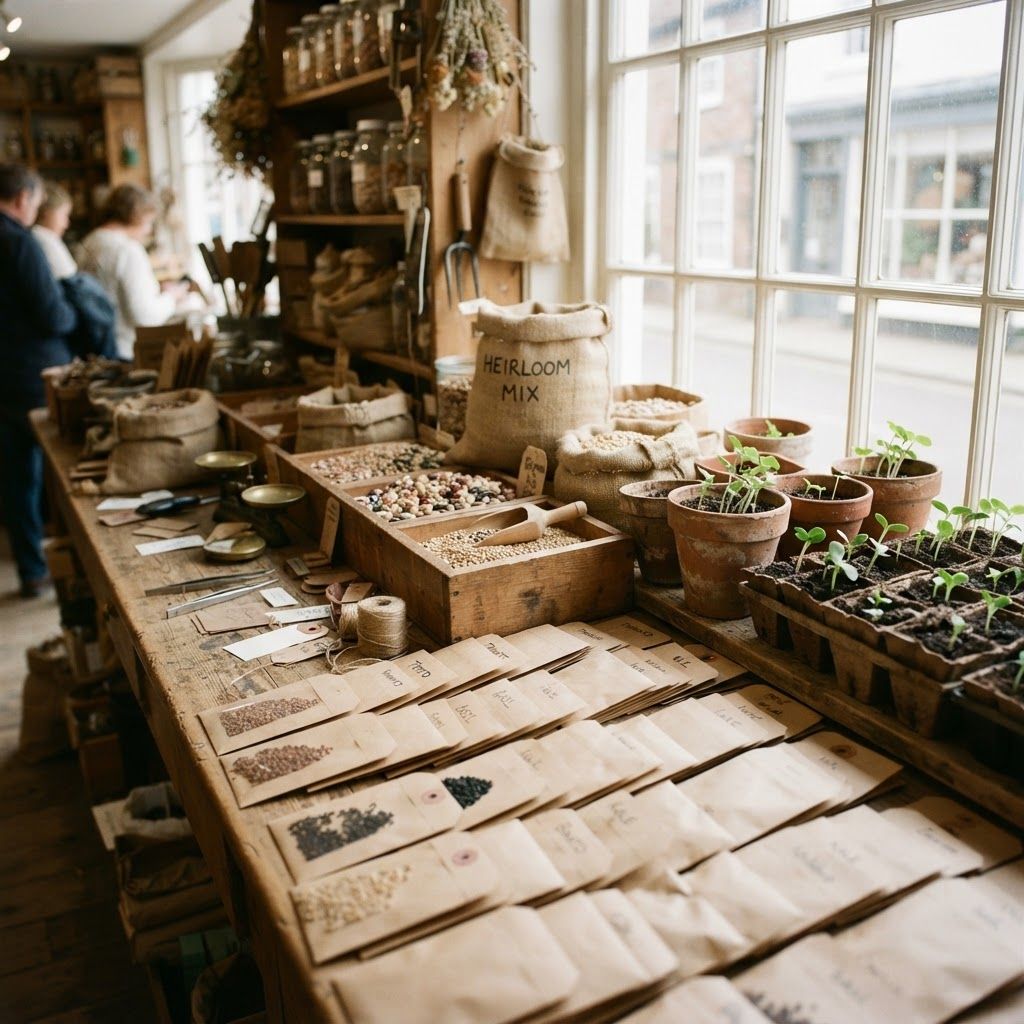
Why Seed Selection Matters Most in a Coastal Climate
Chula Vista sits in a Mediterranean coastal climate zone that offers something rare: an extraordinarily long growing season with mild winters and moderate summers tempered by marine influence. This means growers can produce continuously through the year, but it also means variety selection requires care. Many popular vegetable varieties are bred for regions with hot summers and cold winters, and they perform inconsistently in mild coastal conditions.
Varieties adapted to cool nights, coastal fog, and moderate heat accumulation will substantially outperform generic selections. Downy mildew resistance in lettuce and spinach, bolt resistance in brassicas, and heat tolerance for inland eastern neighborhoods all matter here. Water efficiency has also become a selection criterion, with drought tolerant and deep rooted varieties gaining favor.
Understanding Seed Categories
Before choosing a supplier, understand the distinctions. Open pollinated varieties breed true, allowing growers to save seed across seasons. Hybrid varieties, produced by crossing two parent lines, typically offer superior vigor, uniformity, and disease resistance but must be repurchased annually. Heirloom varieties are open pollinated selections with documented history, valued for flavor and genetic diversity. Certified organic seed is produced under organic management, which is required for certified organic production.
Germination rate, seed treatment, packaging size, and technical support all vary considerably between suppliers. A commercial grower needs bulk pricing, precise variety data, and pelleted seed for mechanical planting. A home gardener needs small packets and clear growing guidance. Choosing a supplier aligned with your scale prevents frustration.
1. Johnny Selected Seeds
Johnny Selected Seeds is widely respected among small commercial growers for the depth of its variety information. Its catalog includes disease resistance data, days to maturity, and honest performance notes, and it serves both market gardeners and home growers with appropriate packet sizes. Its tool and supply selection complements the seed offering well.
2. Territorial Seed Company
Territorial Seed focuses on varieties suited to the cool and mild conditions of the West Coast, which makes it particularly relevant for coastal Southern California. Growers struggling with varieties that underperform in mild summers often find better results with Territorial selections, especially for brassicas, alliums, and greens.
3. Baker Creek Heirloom Seeds
Baker Creek specializes in rare and heirloom varieties from around the world. For growers targeting farmers markets and restaurants where distinctiveness commands premium pricing, its catalog is a genuine competitive resource. Unusual tomatoes, peppers, squash, and greens differentiate a market stall immediately.
4. High Mowing Organic Seeds
High Mowing offers exclusively certified organic seed, which simplifies compliance for certified organic operations. Its varieties are selected for performance under organic management, where disease resistance and vigor matter more because chemical intervention is limited. Its trial data is transparent and useful.
5. Botanical Interests
Botanical Interests has built a strong reputation on packaging that actually teaches. Its seed packets include detailed growing instructions, companion planting notes, and harvest guidance printed directly on the package. For community gardens, school programs, and beginning gardeners across Chula Vista, this educational approach measurably improves success rates.
6. Renee Garden
Renee Garden curates gourmet varieties selected for flavor and suitability to small space and container growing. In a city where many residents garden in raised beds, patios, and small yards, this focus is directly applicable. Its Italian, French, and Asian vegetable selections appeal to home cooks who grow specifically for the kitchen.
7. Kitazawa Seed Company
Kitazawa specializes in Asian vegetable varieties, and its catalog is the most authoritative available in this category. Bok choy, mizuna, daikon, edible chrysanthemum, Asian eggplants, and gourds all thrive in the local climate. Growers serving the diverse culinary communities of San Diego County find strong demand for these crops.
8. S and S Seeds and Native Plant Specialists
Native and drought tolerant seed suppliers serve restoration projects, water conscious landscapes, and habitat plantings. As water regulations tighten and interest in native landscaping grows, demand for California native wildflower and grass seed has risen substantially. These suppliers offer regionally appropriate ecotypes rather than generic wildflower mixes, which matters enormously for establishment success.
9. Cover Crop and Soil Building Seed Suppliers
Cover crops have moved from niche practice to mainstream soil management. Suppliers specializing in legumes, grasses, and brassica cover crop mixes help growers fix nitrogen, suppress weeds, break compaction, and build organic matter. For growers on expensive land, improving soil productivity is often more economical than acquiring more acreage.
10. Commercial Vegetable Breeding Programs
Major breeding companies including Rijk Zwaan, Enza Zaden, Bejo, and Sakata supply the varieties behind most commercial production in California. Their investment in disease resistance, shelf life, and uniformity is what allows large scale supply chains to function. Commercial growers typically access these varieties through regional distributors who provide trial support and agronomic guidance.
Trends in the Seed Industry
Disease resistance breeding continues to advance rapidly, particularly against downy mildew and fusarium strains that plague coastal production. Seed treatment technologies including priming and pelleting improve germination consistency and enable precision planting. Interest in regionally adapted and open pollinated varieties has grown among small growers seeking seed sovereignty. And climate adaptation breeding, focused on heat and drought tolerance, is now a stated priority across the industry.
Practical Advice for Local Growers
Trial before you commit. Plant small quantities of three or four varieties alongside your standard selection and record results honestly. Prioritize disease resistance appropriate to coastal conditions, especially for greens. Store seed properly in cool, dry, dark conditions to preserve viability. And build a relationship with a supplier whose technical staff will answer questions, because the right advice at planting time is worth more than the price difference on a seed order.