
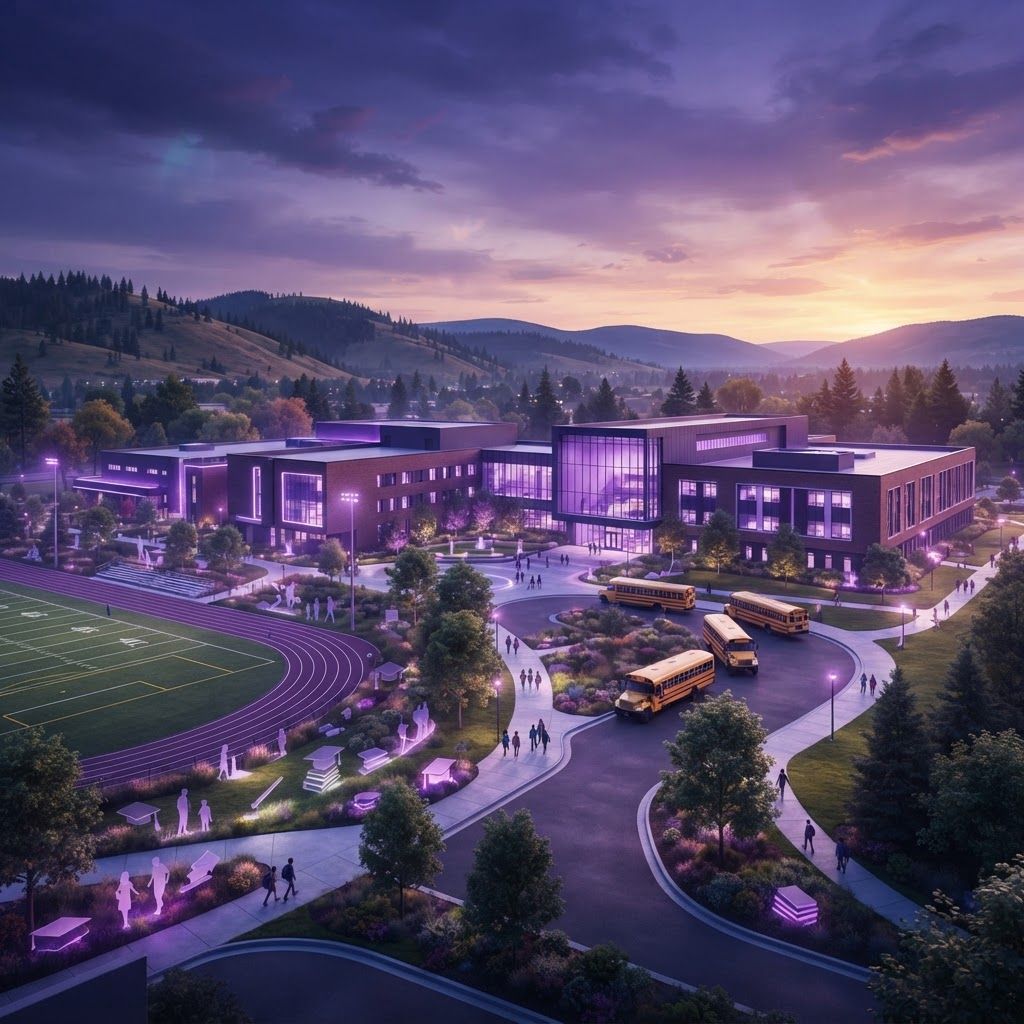
The Spokane Education Landscape
Spokane offers a broader range of school options than most cities of its size. Several public districts serve the metropolitan area, each with distinct character and specialized programs. A well-established Catholic school system operates alongside independent private schools with long histories. Charter and alternative public schools serve students who thrive outside conventional structures. Homeschool cooperatives and online public school programs have grown substantially. The result is genuine choice, but also a decision that deserves careful thought rather than default enrollment.
What Actually Predicts a Good School Experience
Test scores and rankings capture less than families assume. Research consistently points to teacher quality and retention, school culture and safety, appropriate academic challenge, and the availability of programs matching a student's specific interests as the strongest predictors of outcomes. A school that is excellent for a mathematically gifted student may be poorly suited to one who needs arts immersion or hands-on career training. Fit matters more than prestige, and the best way to assess fit is to visit during a normal school day and observe how students and teachers actually interact.
Ten Leading Schools and School Options in Spokane
1. Lewis and Clark High School is among the most recognized public high schools in the region, combining a historic downtown campus with strong academics, extensive Advanced Placement offerings, and a deep tradition in athletics, music, and debate. Its size supports a genuinely broad course catalog, which suits students who want to explore widely.
2. Ferris High School serves the South Hill with a strong academic reputation, robust Advanced Placement participation, and well-regarded music and STEM programs. Families often cite consistent college placement outcomes and an engaged parent community as its defining strengths.
3. Gonzaga Preparatory School is the region's flagship Catholic secondary school, offering Jesuit college-preparatory education with a strong service learning component. Rigorous academics, small class sizes relative to public options, and an explicit emphasis on character formation appeal to families seeking a values-integrated education.
4. Saint George's School operates as an independent day school serving students from the early grades through high school. Very small class sizes, a demanding liberal arts curriculum, and near-universal four-year college matriculation define its profile. Its riverside campus supports an outdoor education program that is unusual for an independent school.
5. Mead High School and the Mead School District north of the city are consistently among the highest performing public options in the region. Strong graduation rates, extensive extracurricular breadth, and substantial community support have made the district a significant factor in residential decisions for families.
6. Central Valley High School and the Central Valley School District serve the Spokane Valley with a well-regarded balance of academic rigor and career and technical education. Programs in health sciences, engineering, and skilled trades prepare students for both university and direct workforce entry, which reflects the regional economy accurately.
7. Spokane International Academy exemplifies the charter and alternative public option, offering an internationally focused curriculum with an emphasis on language learning and global perspective. Schools like this serve families seeking a distinct pedagogical approach within the public system at no tuition cost.
8. On Track Academy and Spokane Public Schools alternative programs provide essential pathways for students whose circumstances make a traditional comprehensive high school unworkable. Flexible scheduling, credit recovery, smaller cohorts, and intensive advising recover students who would otherwise leave education entirely, and the value of this work is considerable.
9. All Saints Catholic School and the parochial elementary and middle school network serve families seeking faith-based education in the earlier grades. Small enrollment, strong parent involvement, and continuity into Catholic secondary education characterize these schools, and academic outcomes are generally strong.
10. Montessori and Waldorf-inspired independent schools in the region serve families committed to alternative developmental pedagogy, particularly in early childhood and elementary years. Multi-age classrooms, extended work periods, and child-directed learning suit some children remarkably well, and parents drawn to these approaches usually know it.
How to Evaluate Schools for Your Child
Begin by articulating what your child specifically needs: academic acceleration, structure, creative outlets, athletic opportunity, small class attention, or career-focused preparation. Then visit. Observe whether students appear engaged, how teachers speak to students, whether hallways feel orderly or chaotic, and whether the physical facilities are maintained. Ask about teacher turnover, because high turnover signals problems that no curriculum can offset. Ask how the school identifies and supports struggling students and how it challenges advanced ones. Talk to current parents rather than relying only on administrator presentations. For high schools, ask about counselor caseloads and college advising specifics.
Special Education and Support Services
Families with children requiring specialized support should investigate this directly rather than assuming equivalence across schools. Ask about staffing ratios for special education, availability of speech, occupational, and behavioral services, experience with the specific profile your child presents, and how individualized plans are actually implemented day to day. Public districts carry legal obligations that private schools generally do not, which is a genuinely important consideration for some families.
Practical Enrollment Considerations
Public school assignment follows residence, so families relocating to Spokane should research boundaries before choosing housing. Choice transfers within and between districts exist but have deadlines and capacity limits. Private and parochial schools have application timelines that typically run months ahead of enrollment, along with tuition and financial aid processes worth starting early. Charter and alternative programs often use lotteries with fixed application windows. Missing a deadline can cost a full year of access.
Making the Decision
Spokane families genuinely have good options across public, parochial, independent, and alternative categories. The strongest approach is to narrow to three or four candidates that plausibly fit your child, visit each in person during instruction, ask specific rather than general questions, and weigh your child's temperament heavily. The best school in the region is not necessarily the best school for your student, and families who internalize that distinction consistently make better choices.