
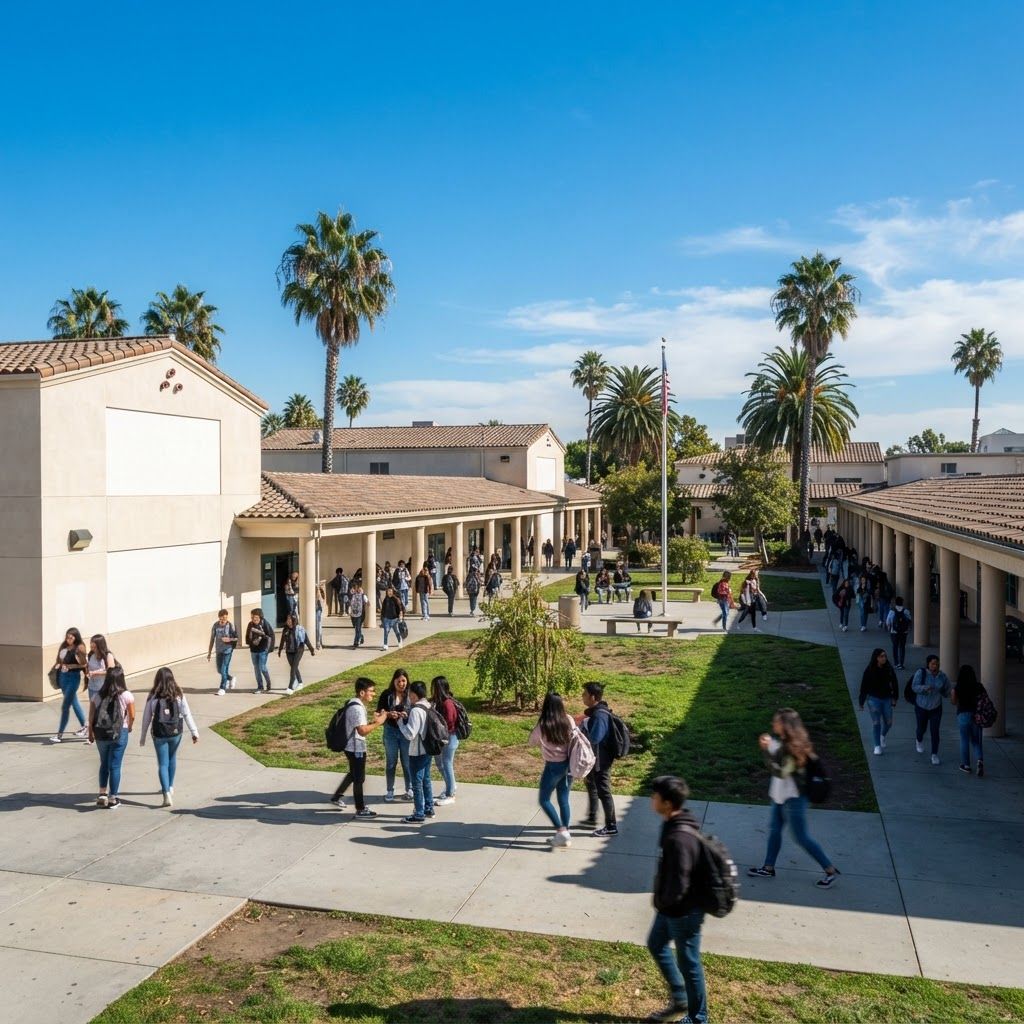
Education in California's Second-Largest South Bay City
Chula Vista's school landscape reflects the community it serves: large, diverse, bilingual, and ambitious. The city's student population spans many home languages, with Spanish and Tagalog especially common, and schools have developed genuine expertise in multilingual education as a result. Families here range from long-established households in western neighborhoods to newer arrivals in the eastern developments, and the schools serving them differ meaningfully in program emphasis, size, and culture.
That variety is an advantage for families willing to research. A student who thrives in a project-based STEM environment may struggle in a traditional college-preparatory structure, and vice versa. A child learning English benefits enormously from a school with mature dual-language programming. An athlete or musician needs a school where those programs are genuinely supported rather than nominally offered.
How to Judge School Quality
Test scores tell part of a story but rarely the most useful part, since they correlate heavily with household income. More informative indicators include academic growth over time, the breadth of advanced coursework available, teacher retention rates, chronic absenteeism, the quality of support for students with learning differences, and how the school communicates with families. Visiting during a normal school day reveals culture in ways that no data set can.
1. Eastlake STEM Academy
Eastlake STEM Academy has built a strong reputation for integrated science, technology, engineering, and mathematics instruction anchored in project work rather than worksheets. Robotics, engineering design, and computer science pathways extend from middle grades through high school. Partnerships with regional employers give students exposure to authentic technical problems.
2. Bayfront Dual Language Elementary
Dual immersion done well produces genuinely bilingual, biliterate students, and Bayfront Dual Language Elementary is a strong example. Instruction is deliberately balanced across two languages, with teachers trained specifically in immersion pedagogy. Families report strong community cohesion and high parental involvement.
3. Sweetwater College Preparatory High School
Focused squarely on university admission outcomes, Sweetwater College Preparatory High School offers a deep advanced-course catalog, structured writing instruction, and dedicated counseling that begins early rather than in senior year. Its alumni matriculation record at selective universities reflects sustained academic rigor.
4. Otay Ranch Arts and Humanities School
For students drawn to creative and interpretive disciplines, this school provides visual arts, theater, music, and strong humanities coursework taught by practicing specialists. Performance and exhibition opportunities occur regularly, giving students authentic audiences. The culture rewards intellectual curiosity as much as measurable achievement.
5. Third Avenue Community Charter School
Third Avenue Community Charter School emphasizes small class sizes, advisory relationships, and community-connected learning projects. Students who felt lost in larger settings frequently do well here. Its social-emotional support structures are more developed than typical for a school of its size.
6. Harborline Montessori School
Serving early childhood through elementary grades, Harborline Montessori School applies child-directed learning with trained guides and carefully prepared classroom environments. Mixed-age classrooms foster mentorship, and the emphasis on independence and concentration produces students comfortable managing their own work.
7. Pacific View International School
Pacific View International School follows an inquiry-based international curriculum framework, emphasizing conceptual understanding, research skills, and global perspective. World language study is substantial, and assessment favors extended projects and oral defense over multiple-choice testing. Families relocating internationally value curricular continuity.
8. Border View Elementary Academy
Border View Elementary Academy has developed particular strength in supporting newcomer students and English learners, with structured language development, bilingual family outreach, and wraparound support services. Teachers are experienced in the specific needs of cross-border families, and the school culture is notably welcoming.
9. Rancho Del Rey Athletics and Wellness School
This school integrates athletics, health education, and academics, with facilities and coaching that support competitive participation without sacrificing coursework. Structured study support for student-athletes prevents the academic slide that sometimes accompanies heavy training schedules. Sports medicine and kinesiology electives extend the theme academically.
10. Chula Vista Independent Day School
An independent institution serving kindergarten through eighth grade, Chula Vista Independent Day School offers low student-teacher ratios, individualized academic planning, and substantial enrichment in arts and languages. Tuition is significant, though need-based aid is available, and families cite the personalized attention as the primary value.
Trends in Local Education
Several developments are influencing schools across the city. Dual-language programs have expanded from remediation-oriented models toward enrichment models that attract native English speakers as well, reflecting recognition of bilingualism as an asset. Computer science and career technical education pathways have grown substantially, often with industry certification opportunities. Mental health support has moved from peripheral to central, with more counselors and structured social-emotional curricula. Assessment practices are shifting toward portfolio and performance evidence alongside standardized measures. And school choice within and across districts has increased, giving families more options but requiring more research.
How to Choose a School for Your Child
Start by articulating your child's needs honestly, including learning style, social temperament, academic strengths, and areas requiring support. Visit candidate schools during instructional hours and observe student engagement, teacher interaction, and how staff handle transitions and conflicts. Ask specific questions: how do you support a student who falls behind, how do you challenge a student who is ahead, what is your teacher retention rate, and how will I hear from you if something changes. Speak with current families rather than relying only on official materials. Finally, weigh logistics realistically, since a long commute erodes sleep, family time, and participation in after-school activities.
Final Thoughts
Chula Vista offers meaningful educational choice across public, charter, and independent options, with genuine strengths in bilingual education, STEM pathways, arts programming, and student support. No single school is best for every child, so the productive question is not which school ranks highest but which environment will help your particular student thrive. Visit, ask hard questions, and trust what you observe.