
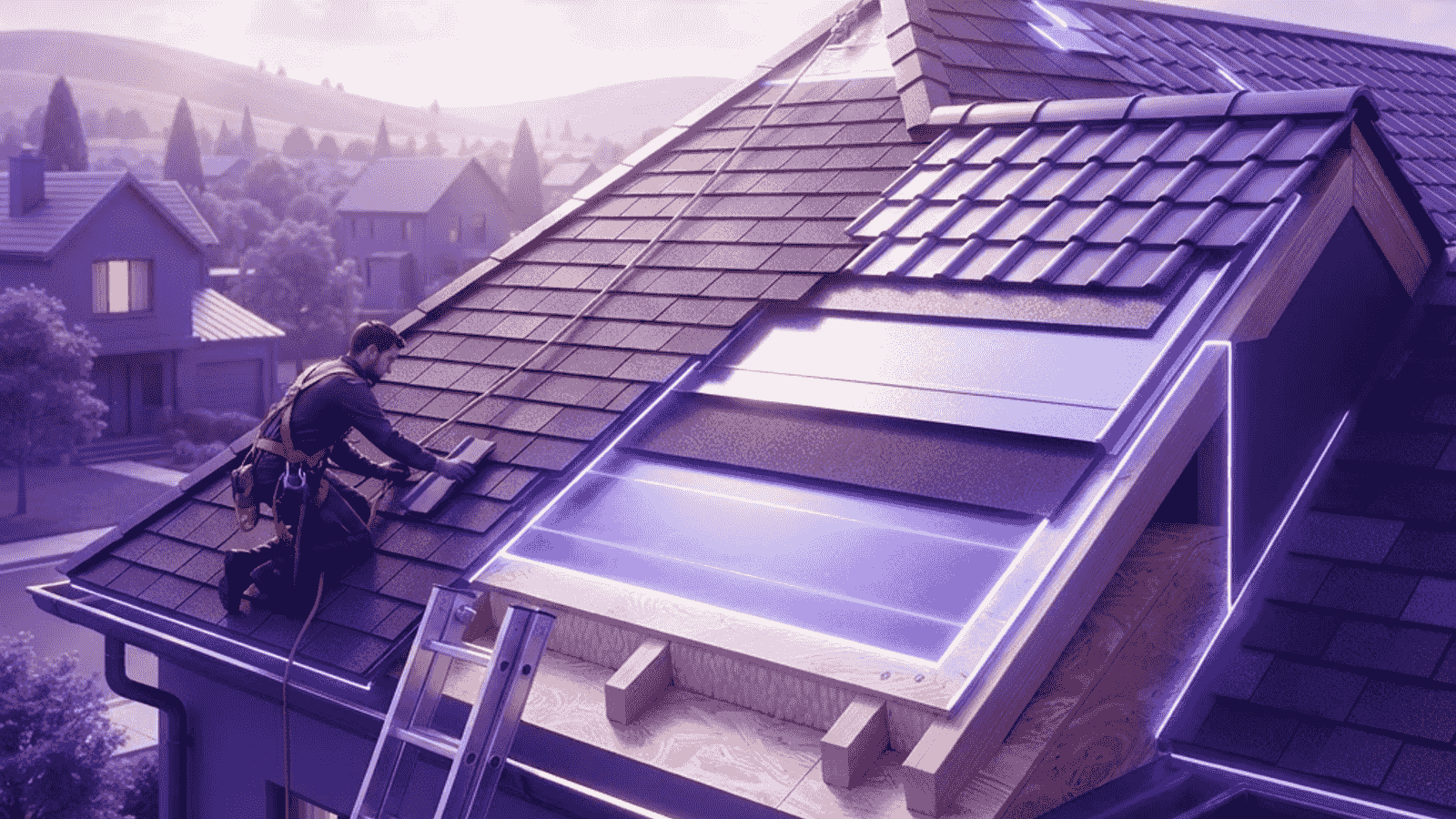
What Santa Ana Weather Does to a Roof
Roofing failure in Southern California rarely looks like the dramatic storm damage seen elsewhere. It is slower and more deceptive. The dominant force is ultraviolet radiation, with roughly three hundred sunny days a year steadily breaking down asphalt binders, drying out sealants, and making underlayment brittle. A roof can look acceptable from the street while its waterproofing layer has effectively expired.
The second force is thermal cycling. Warm days followed by cool coastal nights expand and contract materials daily, working fasteners loose and opening seams around penetrations. The third is wind. Santa Ana wind events can gust hard enough to lift improperly nailed shingles and displace clay or concrete tiles, especially along eaves and ridges. Then comes the actual test: winter atmospheric river storms deliver a large share of annual rainfall in a handful of days, and weaknesses that stayed hidden for months become interior leaks within hours.
Because rain is concentrated, many homeowners discover roof problems at the worst possible moment, when every roofer in Orange County is fully booked. The strategic implication is straightforward. Inspect and repair in the dry season, not during the first storm.
Roofing Materials That Make Sense Locally
Architectural asphalt shingles remain the most common choice, offering a reasonable balance of cost, appearance, and typical service life of twenty to thirty years in this climate. Choosing a lighter or reflective granule blend meaningfully reduces attic heat gain.
Concrete and clay tile suit the region's Spanish Colonial and Mediterranean architecture and can last fifty years or more, but the tile is only the outer shell. The underlayment beneath it typically fails first, which is why many local projects involve lifting and reinstalling existing tile over new underlayment, a process usually far less expensive than full replacement.
Low-slope and flat sections, common on additions, patio covers, and mid-century homes, need single-ply membrane systems such as TPO or PVC, or modified bitumen. These are not areas where shingles belong, and a contractor who suggests otherwise should be excluded. Standing seam metal has grown in popularity for longevity and fire resistance, and it pairs efficiently with solar. Cool roof coatings and Title 24 compliant reflective products deserve consideration for any replacement, since they reduce cooling load throughout a long Santa Ana summer.
Warning Signs You Should Not Postpone
From the ground, look for cupping or curling shingle edges, bald patches where granules have washed off, sagging rooflines, and displaced or cracked tiles. In the attic, check for daylight at the deck, dark staining on rafters or sheathing, and any musty smell after rain. Inside the house, ceiling stains near walls, bubbling paint, and stains around skylights or chimneys point to flashing failure rather than field failure, which is a common and repairable problem.
Granules accumulating in gutters are the clearest single indicator that an asphalt roof is nearing the end of its life. If a roof is over twenty years old and you are already collecting granules, budgeting for replacement is more sensible than repeated patching.
The Top 10 Roofing Services Serving Santa Ana
1. Guardian Roofs
A long-established Orange County contractor with strong depth in tile and shingle replacement. Notable for thorough documentation, clear scope definition, and proper permitting through the City of Santa Ana.
2. Orange County Roofing Solutions
Handles both residential and light commercial work, with particular competence on low-slope membrane systems. Useful for homes that combine sloped and flat roof areas, which many local additions do.
3. Santa Ana Roof Repair Specialists
Repair-focused rather than replacement-driven, which is exactly what many homeowners need. Strong on flashing, skylight curbs, and localized underlayment repair without upselling a full tear-off.
4. Luna Roofing Company
A family-run operation with a reputation for tile expertise, including lift-and-relay underlayment replacement that preserves original clay tile character on historic homes.
5. Coastline Roofing and Waterproofing
Combines roofing with deck and balcony waterproofing, a common pairing on multi-level Santa Ana properties where the two systems meet and most leaks originate.
6. Sunset Roofing Contractors
Focused on energy-efficient assemblies including cool roof shingles, radiant barriers, and improved attic ventilation. A good choice if summer cooling cost is part of your motivation.
7. Titan Metal Roofing
Specializes in standing seam and metal shingle systems, including installations coordinated with solar mounting so panels are attached without compromising the water barrier.
8. All Seasons Roofing Orange County
Broad service range with responsive emergency tarping during winter storms, and a straightforward approach to insurance documentation when wind damage is involved.
9. Mendoza Brothers Roofing
Frequently recommended for value on straightforward shingle replacement, with crews that finish on schedule and clean up thoroughly, including magnetic nail sweeps.
10. Precision Roof Inspection and Consulting
Provides independent inspection and reporting without selling installation, which makes them useful for pre-purchase due diligence, second opinions, and evaluating whether a proposed replacement is genuinely necessary.
Reading a Roofing Bid
Compare assemblies, not just totals. A complete proposal should specify tear-off layers, deck inspection and sheathing replacement allowance, underlayment type and weight, ice and water or self-adhered membrane at valleys and penetrations, flashing replacement rather than reuse, ventilation details, fastener type, and cleanup. A bid that says only replace roof with thirty-year shingles tells you almost nothing.
Verify a California C-39 roofing license, current general liability, and workers compensation coverage, and insist on a pulled permit. Distinguish the manufacturer material warranty from the contractor workmanship warranty, since the second is the one that covers installation error and is only as good as the company standing behind it. Finally, be cautious with large upfront deposits. Reasonable progress payments tied to milestones protect both parties.