
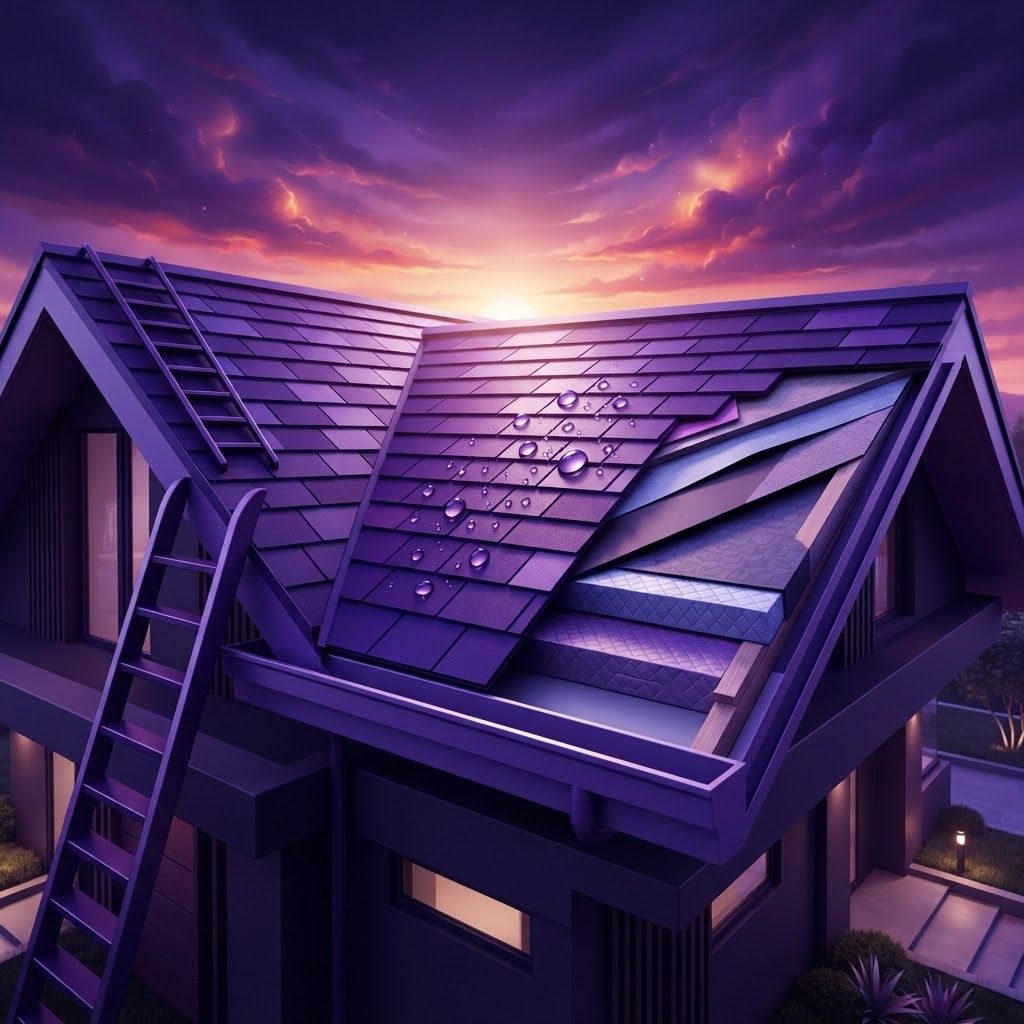
Why Roofing Standards Are Especially Important Here
Lancaster receives substantial annual rainfall and regular winter storms driven in from the west. Roofs in the area are therefore subjected to sustained wetting, wind uplift and freeze-thaw cycling, a combination that finds every weakness. Slipped slates, corroded nails, failed flashings, blocked valleys and tired flat roof membranes all progress from minor defects to interior damage far faster here than in drier regions.
Much of the local housing stock uses natural slate, a superb material that can last well over a century. The usual failure point is not the slate itself but the fixings, known as nail sickness, where iron nails corrode and slates begin slipping in groups. Recognising that distinction is important, because a roof that appears to be failing may need re-fixing or partial renewal rather than complete replacement.
Ten Roofing Services Serving Lancaster
1. Lancaster Roofing Company covers pitched and flat roofing, repairs, renewals and full re-roofs with scaffold management included.
2. Castle Slate and Tile specialises in natural slate work, including heritage properties and matched reclaimed materials.
3. Lune Valley Roofing Contractors serves rural properties, barns and outbuildings alongside domestic housing.
4. Northgate Flat Roof Systems installs single-ply membrane, EPDM rubber and liquid-applied systems for extensions and garages.
5. Summit Leadwork Specialists focuses on lead flashings, valleys, chimney work and bay roofs using traditional techniques.
6. Quayside Guttering and Roofline handles fascias, soffits, guttering and downpipes, which are a frequent source of damp problems.
7. Storm Response Roofing provides emergency make-safe work, temporary covering and insurance-documented repairs.
8. Heritage Roof Restoration works on listed and conservation-area buildings with appropriate materials and detailing.
9. Ecoloft Roofing and Insulation combines roof renewal with insulation and ventilation upgrades for energy efficiency.
10. Beacon Commercial Roofing completes the list serving industrial units, schools and larger commercial premises.
Recognising Roof Problems Early
Warning signs are visible from the ground for anyone who looks deliberately. Slipped or missing slates, a sagging ridge line, vegetation growing in gutters, staining on external walls below the roofline, and mortar debris collecting at the base of the building all indicate attention is needed. Internally, watch for damp patches on ceilings near external walls, daylight visible in the loft, and damp or discoloured timbers.
Flat roofs show different symptoms: ponding water that never drains, blistering or splitting in the membrane, and lifted edge detailing. Ponding is particularly damaging because standing water accelerates material degradation and exploits any small defect.
Repair Versus Full Replacement
Localised repair is appropriate where the underlying structure and battens are sound and failures are isolated. Where widespread nail sickness, deteriorated battens or failed underlay are present, patch repairs become a false economy, because each visit disturbs adjacent slates and the pattern of failure continues.
Honest roofers will explain which category your roof falls into and will usually provide photographic evidence from the roof or from drone survey. Any contractor pushing for full replacement without inspecting the loft interior or providing evidence should be treated with caution.
Ventilation and Insulation Matter as Much as Waterproofing
A roof does more than keep rain out. Modern insulation levels have made roof ventilation critical, because warm moist air rising from the house condenses on cold roof surfaces if it cannot escape. The result is damp timbers, mould on the underside of sarking and eventually rot, all occurring without any leak at all.
Good roofing practice therefore includes eaves ventilation, ridge ventilation where appropriate, breathable membranes and correct insulation detailing that does not block airflow paths. Roofers who discuss this proactively are demonstrating a broader building physics understanding that consistently produces better outcomes.
Safety, Insurance and Guarantees
Roofing is high-risk work. Proper scaffolding, edge protection and trained operatives are non-negotiable, and any quotation that omits access costs should be questioned closely. Confirm public liability insurance, and ask about guarantees, which typically run from ten to twenty years on full re-roofs and shorter periods on repairs.
For storm damage claims, documentation is essential. Photographs before and after, a written report of the cause and a detailed scope of works make insurance processing significantly smoother.
Maintenance That Extends Roof Life
Clear gutters twice yearly, particularly in autumn. Remove moss growth carefully rather than aggressively, since heavy pressure washing damages slate surfaces and drives water under overlaps. Inspect flashings around chimneys, dormers and abutments annually, as these interfaces fail long before the main roof covering does. After major storms, carry out a quick visual check to catch displaced units before the next rainfall.
Final Thoughts
Roofing is not an area for compromise. The Lancaster contractors listed here combine traditional slating and leadwork skill with modern membrane systems and a proper understanding of ventilation. Choosing a roofer who inspects thoroughly, explains findings with evidence and works safely protects the entire building beneath, which is ultimately what a roof exists to do.