
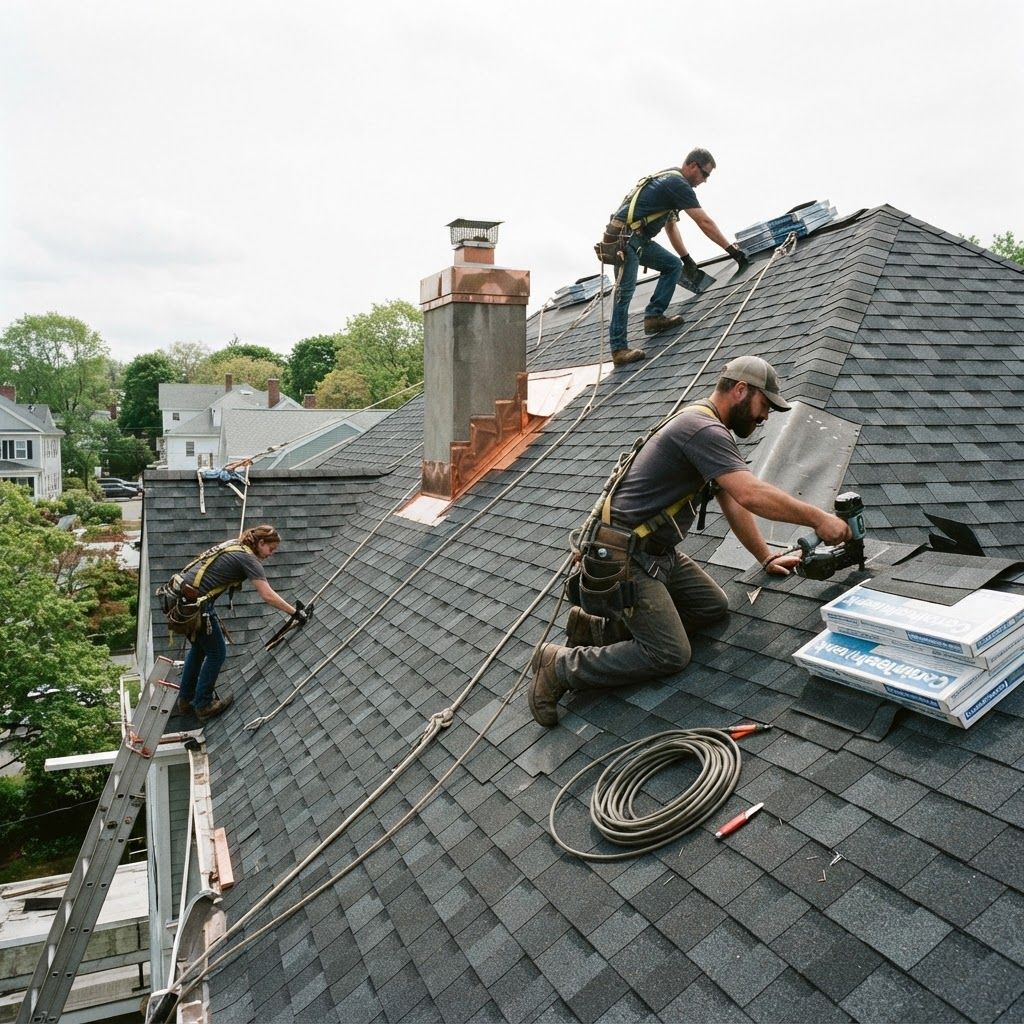
Why Buffalo Roofs Fail Differently
A roof in a mild climate fails slowly from ultraviolet exposure. A Buffalo roof fails from water and ice. Snow accumulates, heat escaping from a poorly insulated attic melts the underside of that snowpack, meltwater runs to the cold eave, refreezes, and builds an ice dam. Water then backs up under the shingles and finds its way into the sheathing, the wall cavity, and eventually the ceiling below. This is the single most common cause of roof-related damage in Western New York, and it is fundamentally an insulation and ventilation problem as much as a roofing problem.
Snow load compounds it. Lake-effect events can deposit substantial accumulation in a short window, and wet snow is heavy. Older Buffalo homes with generations of layered roofing and undersized framing are the most vulnerable. Freeze-thaw cycling then attacks every flashing joint, chimney counterflashing, valley, and penetration, opening gaps that a single warm-climate summer would never produce.
What a Proper Buffalo Roof System Includes
Contractors who understand the region specify a system, not just shingles. Ice-and-water shield membrane should extend well up from the eaves, generally beyond the point where the roof crosses the exterior wall line, and should be used in all valleys and around penetrations. Drip edge and properly integrated step flashing are non-negotiable. Balanced ventilation matters enormously: intake at the soffits paired with continuous ridge venting keeps the deck cold and dramatically reduces ice dam formation. Attic insulation depth and air sealing at ceiling penetrations complete the picture.
Tear-off versus overlay is another regional issue. New York code limits the number of roofing layers, and in a snow-load climate, a full tear-off that allows inspection of the sheathing is almost always the right decision. It also lets the crew install the ice barrier correctly, which an overlay cannot.
Ten Roofing Companies Serving Western New York
1. Ivy Lea Construction is a well-established Buffalo-area roofing and exterior contractor known for thorough scopes and long-term workmanship warranties.
2. Roofs by Rodger serves the metro with residential replacement work and a reputation for clear, itemized proposals.
3. Buffalo Roofing and Exteriors handles roofing alongside siding and gutters, useful when ice damage has affected multiple building systems.
4. Sonny's Roofing is a long-running local name recognized for shingle and flat roof work across Erie County.
5. Zoltan Roofing focuses on residential replacement and repair with attention to ventilation and ice-dam mitigation.
6. Grove Roofing Services works with both residential and commercial clients, including flat and low-slope membrane systems common on Buffalo's older commercial stock.
7. Marshall Exteriors covers roofing, windows, and siding, appealing to homeowners planning a coordinated exterior envelope upgrade.
8. Kenmore Roofing and comparable neighborhood specialists serve the inner-ring suburbs with steep-slope replacement and chimney flashing repair.
9. Southtowns roofing contractors serving Hamburg, Orchard Park, and East Aurora handle the higher snowfall belts south of the city, where load and ice performance requirements are even stricter.
10. Certified manufacturer installers for GAF, Owens Corning, and CertainTeed systems can offer extended system warranties that cover both material and labor, which is meaningful protection on a major investment.
Costs and Warranties
Roof replacement in the Buffalo market is priced per roofing square and varies with pitch, number of layers to remove, complexity of valleys and dormers, and material grade. Architectural asphalt shingles remain the volume choice for good reason: strong wind and impact ratings at a reasonable cost. Metal roofing carries a higher upfront price but sheds snow effectively and lasts decades. Always distinguish between the manufacturer's material warranty and the contractor's labor warranty. A fifty-year shingle installed with poor flashing will leak in five.
Inspections, Insurance, and Timing
Have the roof inspected in spring after winter stress and again in fall before the first freeze. Document conditions with photographs, since insurance claims for ice-dam or wind damage depend on evidence. Be cautious with unsolicited door-to-door crews that appear after major storms and pressure a signature on an insurance assignment. Reputable Buffalo roofers will provide a written estimate, proof of general liability and workers compensation insurance, and references from work completed several winters ago. Late spring through early fall is the practical installation window, and booking early in that season generally means better crews and better scheduling.
The Bottom Line
In Buffalo, hire the contractor who talks about attic ventilation, insulation, and ice barrier coverage before they talk about shingle color. That conversation is the clearest signal that the company understands why roofs fail here and how to build one that will not.