
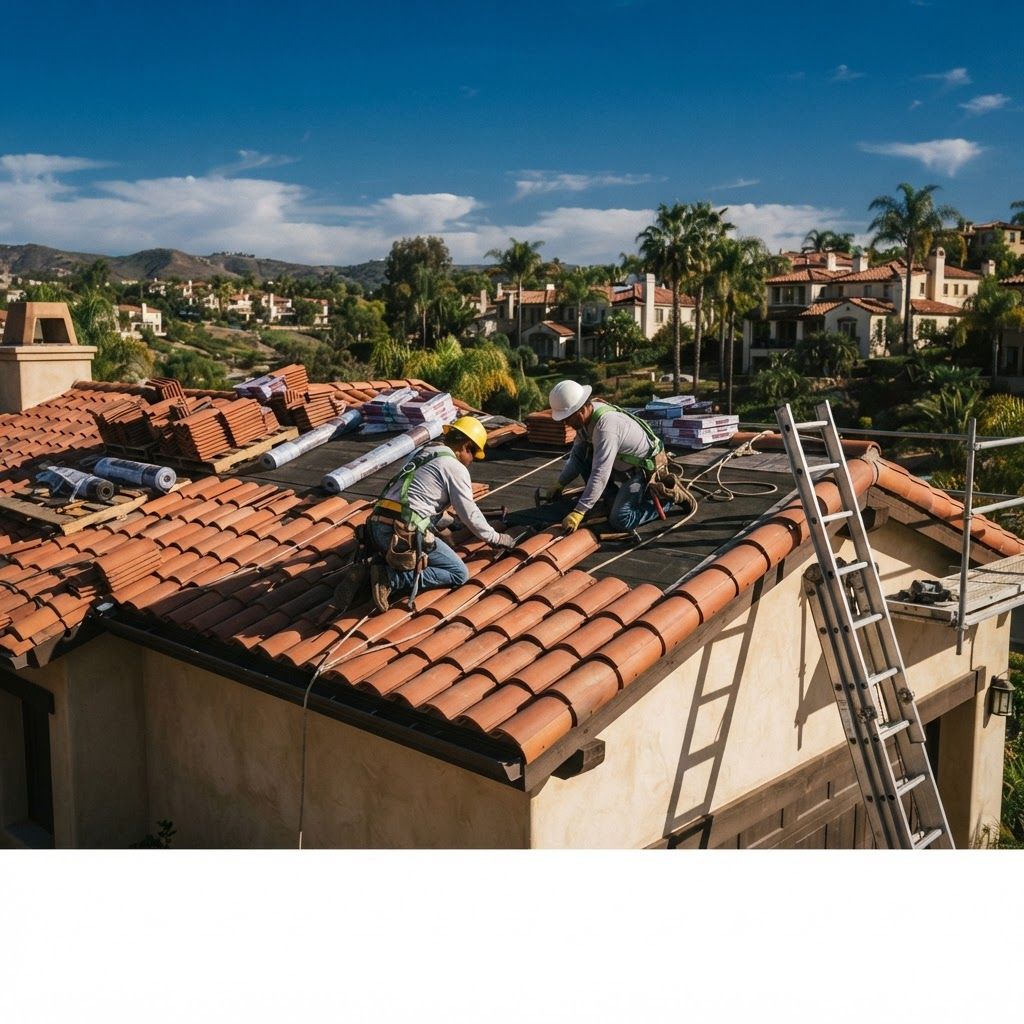
What Makes Roofing Different in Chula Vista
Chula Vista roofs face an unusual combination of stresses. Rainfall is modest and concentrated into a few winter months, which means leaks often go undetected for long periods and then reveal themselves all at once. Intense ultraviolet exposure through long dry summers degrades asphalt, sealants and single-ply membranes faster than in cloudier climates. Proximity to San Diego Bay introduces salt air that corrodes fasteners, flashings and metal edge details. Coastal marine layer moisture creates daily wetting and drying cycles that accelerate material fatigue.
The practical consequence is that material selection and detailing matter more here than raw labor cost. A roof assembly that performs for twenty five years in a mild inland climate may last considerably less near the coast if the flashings, fasteners and penetration details are not specified for the environment. Most roof failures are not field failures in the middle of the roof. They occur at edges, valleys, penetrations, transitions and terminations, which are exactly the places where contractor skill is decisive.
How to Evaluate a Roofing Contractor
Verify licensing, insurance and workers compensation without exception
Roofing is among the most hazardous construction trades, and an uninsured injury on your property can become your liability. Confirm an active California contractors license in the roofing classification, and obtain certificates for general liability and workers compensation directly from the insurer. This is the single most important verification step in this trade.
Distinguish manufacturer warranties from workmanship warranties
A manufacturer warranty covers material defects and is often prorated. A workmanship warranty covers installation error and is backed only by the contractor's continued existence. Since the overwhelming majority of roof problems are installation related, the workmanship warranty is the one that protects you. Ask for its length in writing, what it excludes, and how long the company has operated under its current name.
Insist on a written scope that names materials and details
A credible proposal specifies the exact underlayment, the fastener type and pattern, the flashing metal and gauge, how valleys and penetrations will be treated, whether the deck will be inspected and repaired, and how ventilation will be handled. Proposals that simply list a shingle brand and a price conceal the decisions that determine performance.
Require documentation of the deck condition
The most common source of roofing change orders is damaged sheathing discovered after tear-off. Ask how the contractor prices deck repair, request a per-sheet unit price in the contract, and require photographs of the exposed deck before the new assembly goes on. This single requirement prevents most roofing disputes.
Beware storm-chasing and high-pressure sales
Contractors who appear after weather events, pressure immediate signature, request large upfront deposits or offer to absorb your insurance deductible should be avoided. Established local companies with a verifiable physical address and a long local history are a far safer choice.
The Ten Types of Roofing Contractor Serving Chula Vista
1. Full-service residential roofing companies
These firms handle inspection, repair, replacement and maintenance across common residential systems. They suit most homeowners because they can diagnose honestly rather than defaulting to full replacement, and they maintain crews trained on multiple assemblies.
2. Tile roofing specialists
Concrete and clay tile are widespread across eastern Chula Vista neighborhoods. Tile roofs rarely fail because of the tile itself. They fail because the underlayment beneath reaches the end of its life. Specialists who understand tile lift-and-relay work can renew the waterproofing layer while reusing existing tile, which is often the most economical path.
3. Asphalt shingle contractors
Architectural shingles remain the most common replacement choice for value. Quality in this category comes from correct nailing patterns, proper starter and hip and ridge components, and disciplined flashing work rather than from the shingle brand alone.
4. Flat and low-slope roofing specialists
Single-ply membrane, modified bitumen and built-up systems dominate commercial buildings and many residential additions. Low-slope roofing is a genuinely different discipline requiring drainage design, correct seam welding and careful curb and drain detailing. Never assume a steep-slope roofer is competent on a flat roof.
5. Metal roofing contractors
Standing seam and metal panel systems offer long service life and strong ultraviolet resistance, which suits the local climate well. Installation demands precise panel forming, correct fastening that accommodates thermal movement, and coastal-appropriate coatings and fasteners to resist salt corrosion.
6. Commercial and industrial roofing firms
Large roof areas in the Otay Mesa industrial corridor and along commercial corridors require crews with equipment for scale, safety programs for occupied buildings, rooftop equipment coordination and phased work that keeps tenants operating. Capacity and safety systems distinguish these firms.
7. Roof repair and leak detection specialists
Finding the actual source of a leak is a diagnostic skill separate from installation. Specialists use water testing, moisture scanning and infrared survey to locate origins rather than guessing. For a roof with remaining service life, targeted repair is far better value than premature replacement.
8. Roof coating and restoration contractors
Elastomeric and silicone coating systems can extend the life of a sound low-slope roof significantly at lower cost and disruption than replacement. This is only appropriate when the substrate is dry and structurally sound, so an honest contractor will decline the work when conditions do not support it.
9. Solar-integrated roofing companies
Coordinating a roof replacement with solar installation avoids paying twice for panel removal and reinstallation. Firms that handle both control the mounting and flashing details at penetrations, which is where solar-related leaks originate.
10. Gutter, ventilation and roof system contractors
Drainage and attic ventilation are integral to roof performance. Specialists in gutters, downspouts, ridge and soffit ventilation and skylight installation address the components that surrounding roofers frequently treat as afterthoughts.
Practical Advice for Owners
Schedule an inspection every two years and again after any significant storm, and clear debris from valleys and gutters before the winter rains. Address small flashing and sealant issues immediately, because water intrusion damage to framing, insulation and interior finishes costs many times more than the roofing repair itself. Obtain three written proposals that specify materials and details so you are comparing equivalent assemblies rather than prices attached to unknown scopes.
Conclusion
Roofing quality in Chula Vista is determined at edges, penetrations and transitions, and by whether materials suit an environment of strong sun and salt air. Verify licensing and insurance rigorously, weigh the workmanship warranty above the manufacturer warranty, require a written scope that names materials and details, and lock in deck repair pricing before work begins. Choose the specialist type that matches your roof system, and the result will protect the building for its full expected life.