
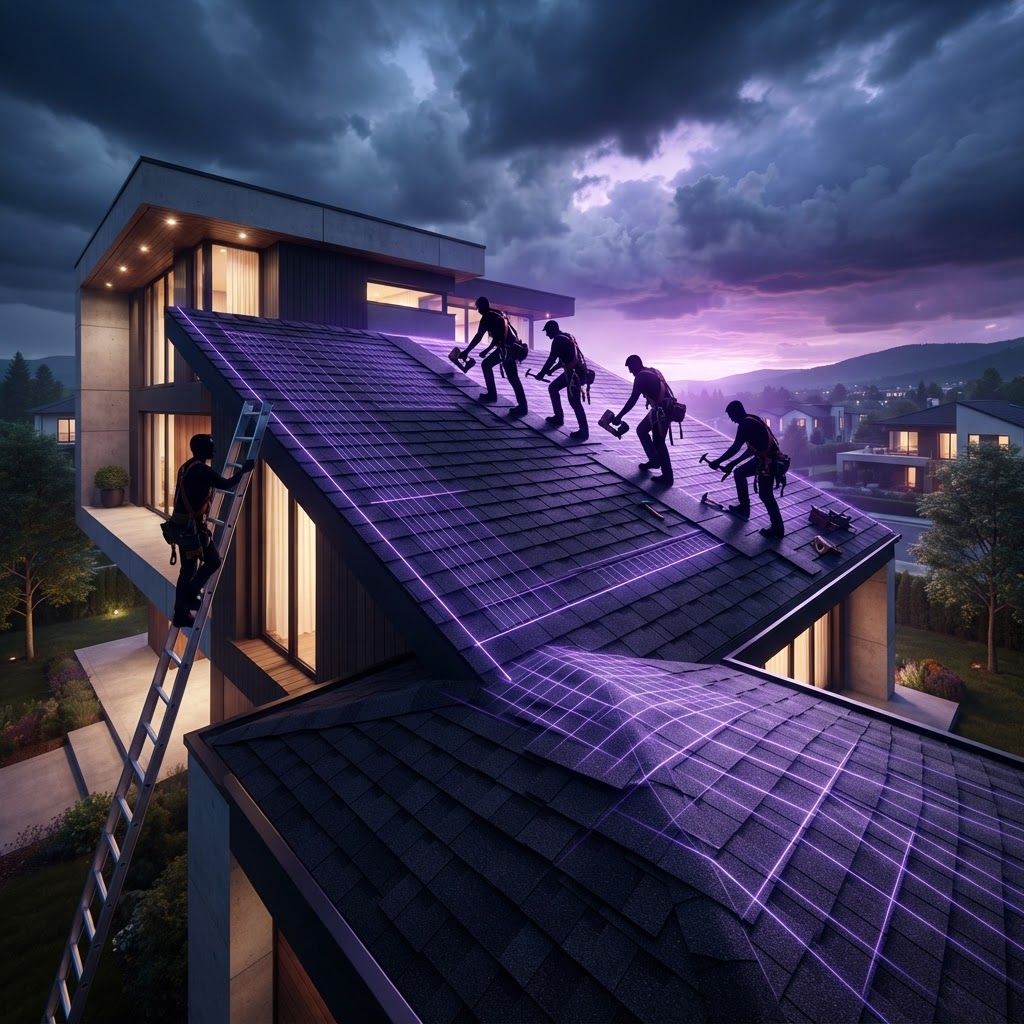
Why Roofing Is Critical in a Coastal Climate
A roof in Chesapeake works considerably harder than one in a milder inland climate. Tropical systems and nor'easters bring sustained high winds and wind-driven rain that can force water past inadequately sealed details. Summer surface temperatures on dark roofing can exceed well above ambient air temperature, accelerating material degradation. High humidity supports algae and moss growth that stains and shortens shingle life. Salt-laden air corrodes metal flashing and fasteners. The practical consequence is that installation quality and detailing matter more here than material brand, and a roof installed without attention to wind uplift and flashing will fail long before its nominal warranty period expires.
What Separates a Good Roofer from a Poor One
The differences are largely invisible after completion, which is why verification matters. Quality contractors properly prepare the deck and replace damaged sheathing rather than covering it. They install ice and water shield or self-adhering underlayment at vulnerable areas, use correct nailing patterns and fastener counts for the wind zone, install starter strips and hip and ridge components as designed rather than improvising from field shingles, replace rather than reuse flashing, and ensure attic ventilation is balanced between intake and exhaust. They also pull permits, carry workers' compensation for their crews, and document the work photographically.
1. Asphalt Shingle Roofing Contractors
Architectural asphalt shingles dominate the residential market for good reason: strong value, wide colour selection and proven performance when correctly installed. Contractors in this segment should be installing shingles rated for high wind speeds with the enhanced nailing pattern the manufacturer specifies for coastal zones. Algae-resistant shingles are worth the modest premium locally, since staining is otherwise nearly inevitable. Full tear-off is generally preferable to overlaying a second layer, because it allows deck inspection and proper flashing replacement.
2. Metal Roofing Specialists
Standing seam and metal shingle systems have grown substantially in coastal markets thanks to excellent wind resistance, long service life, and reflective properties that reduce cooling load. Concealed-fastener standing seam systems avoid the exposed-screw gasket failures common in cheaper panels. Material selection matters near saltwater, where aluminium or properly coated steel outperforms untreated options. Installation demands precise panel forming and flashing work, and this is emphatically not a category for a general roofer's first attempt.
3. Flat and Low-Slope Roofing Contractors
Commercial buildings, warehouses, additions and some modern homes require single-ply membranes such as TPO or EPDM, modified bitumen or built-up systems. In a region with heavy rainfall, positive drainage design and adequate drain and scupper capacity are the primary technical concerns, along with correct membrane seam welding and detailing at penetrations. Reflective white membranes deliver meaningful energy savings on large roof areas during long cooling seasons.
4. Storm Damage and Emergency Roof Repair Firms
Given the region's exposure to tropical systems, storm response contractors form an important segment. They provide emergency tarping, damage assessment and documentation, insurance claim support and full replacement. Reputable firms are locally established year-round rather than arriving only after a major storm, and they document damage thoroughly for adjusters. Homeowners should be cautious of out-of-area operators who solicit door to door after storms, demand large upfront deposits and offer to waive deductibles.
5. Tile and Slate Roofing Contractors
Concrete tile, clay tile and natural or synthetic slate appear on higher-end and architecturally specific homes. These systems are heavy, so structural capacity must be verified before installation or conversion. Their long service life is genuine, but performance depends on underlayment quality and battens or fastening designed for uplift resistance, since the underlayment ultimately provides the waterproofing layer beneath the tile. Repair work requires specialists who can source matching units.
6. Roof Inspection, Maintenance and Coating Companies
Preventive maintenance is the least glamorous and most cost-effective roofing service available. These firms perform annual inspections, clear debris, reseal penetrations and flashing, replace deteriorated boots and pipe collars, treat algae growth and apply elastomeric or silicone coatings that extend low-slope roof life. A modest annual maintenance expenditure routinely defers a full replacement by several years, and documented maintenance also strengthens warranty claims.
7. Gutter, Fascia and Drainage Specialists
Roof drainage is inseparable from roof performance. Specialists install seamless gutters, oversized downspouts sized for high-intensity rainfall, gutter guards, fascia and soffit repair, and underground drainage extensions that carry water away from foundations. In flat terrain with poor soil percolation, discharging water well away from the building is essential; short downspout extensions simply saturate the soil beside the foundation and contribute to crawl space humidity.
8. Skylight, Solar and Roof Penetration Specialists
Every penetration through a roof plane is a potential leak, so specialised installers matter. This category covers skylight and sun tunnel installation and replacement, solar panel mounting with properly flashed attachment systems, and correction of poorly installed vents, satellite mounts and mechanical curbs. Solar installation in particular requires coordination with roof age: mounting an array on a roof nearing the end of its life creates an expensive removal and reinstallation cost later.
9. Attic Ventilation and Insulation Contractors
Roof performance depends heavily on what happens beneath the deck. Contractors in this area balance intake ventilation at soffits with exhaust at ridges, correct blocked baffles, seal attic bypasses that allow humid conditioned air into the attic, and upgrade insulation levels. In a hot, humid climate, an unbalanced attic runs hotter and wetter, shortening shingle life and driving up cooling costs. Correcting ventilation during a roof replacement is far cheaper than addressing it separately.
10. Commercial and Industrial Roofing Contractors
Large-scale roofing on warehouses, retail centres, schools and industrial facilities requires different capabilities: crane and equipment logistics, roof asset management programmes, phased replacement to keep facilities operating, coordination with rooftop mechanical equipment, and compliance with commercial energy and fire code requirements. These contractors typically offer condition surveys with infrared moisture scanning to identify wet insulation, allowing targeted repair instead of full replacement.
Roofing Trends
Impact-resistant and high-wind-rated shingles are increasingly standard rather than upgrades, sometimes accompanied by insurance discounts. Reflective and cool roofing has expanded from commercial into residential use as cooling costs rise. Synthetic underlayments have largely replaced felt due to superior tear resistance and water performance. Full-coverage self-adhering underlayment is being specified more frequently in coastal zones as secondary water protection. Solar-ready roof design is becoming common on new construction. And drone and infrared inspection now allows accurate assessment without walking a roof, improving both safety and diagnostic accuracy.
How to Choose and Contract Confidently
Verify the contractor's Virginia licence and request insurance certificates directly from the carrier, confirming both liability and workers' compensation. Obtain at least three written proposals that specify materials by product line, underlayment type, flashing replacement, ventilation work, deck repair provisions, nailing pattern and debris disposal — vague proposals hide the items where money is saved at your expense. Confirm whether the crew is employed or subcontracted and who supervises on site. Understand the difference between the manufacturer's material warranty and the contractor's workmanship warranty, since most leaks stem from installation rather than materials. Avoid large upfront payments and never pay in full before completion and inspection.
Maintaining a Roof for Maximum Life
Inspect after significant storms and clear gutters at least twice yearly. Trim overhanging branches that abrade shingles and drop debris. Address minor flashing issues promptly rather than waiting for interior staining. Keep attic ventilation paths clear of stored items and insulation blockage. Document all work and retain warranty paperwork. These simple practices routinely add years to a roof's service life in this climate.
Final Thoughts
Roofing in Chesapeake is a durability problem before it is an aesthetic one. Wind uplift resistance, flashing detail, underlayment strategy, drainage capacity and attic ventilation determine whether a roof performs for two decades or fails in five years. Choose a locally established contractor with verifiable licensing and insurance, insist on a detailed written specification, and treat maintenance as an ongoing obligation rather than an afterthought.