
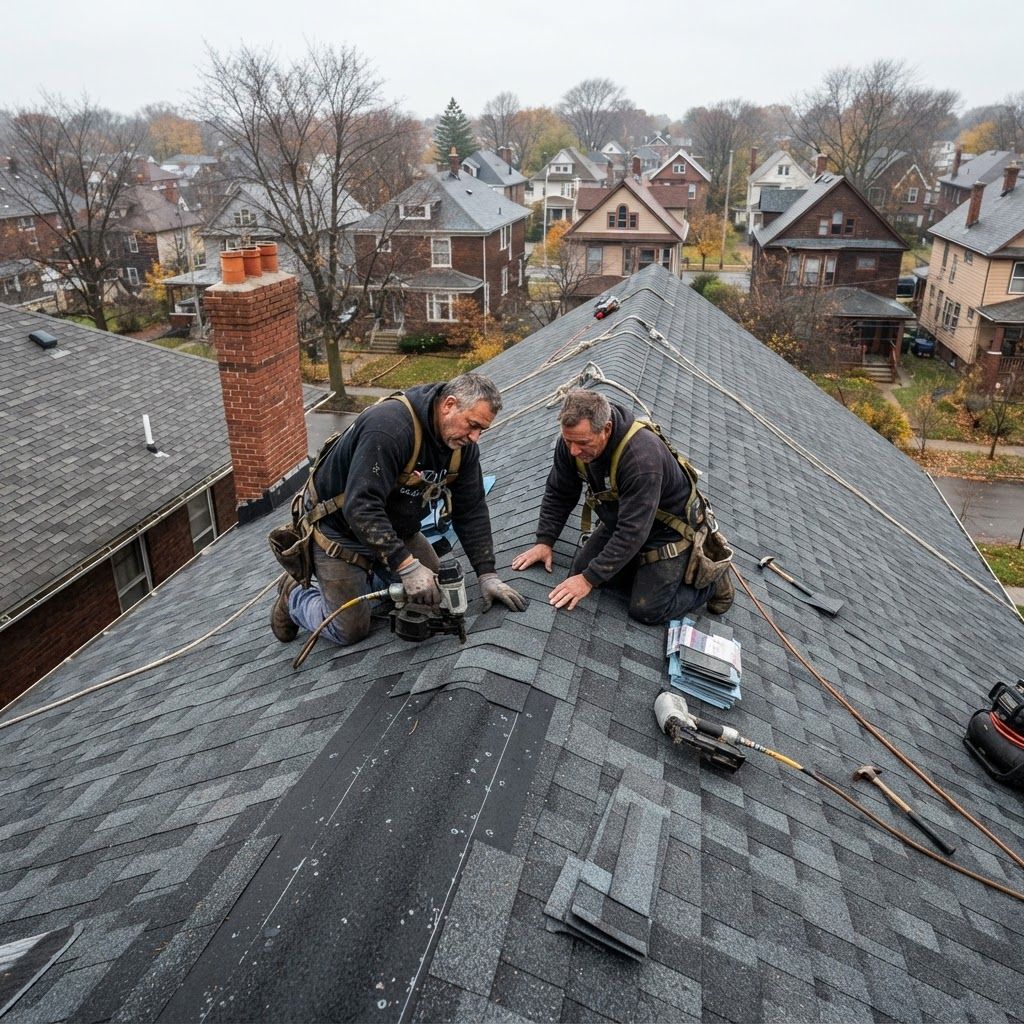
Why Roofing in Buffalo Is a Specialty Trade
Few roofing markets in the United States test materials and workmanship the way Buffalo does. Lake-effect snow off Lake Erie can drop several feet in a single event, loading a roof deck with weight that ordinary framing was never designed to carry. Freeze-thaw cycling runs from November through April, expanding and contracting every fastener, flashing joint and shingle edge. Ice dams form at eaves where escaping attic heat melts snow that refreezes over cold soffits, forcing meltwater backward under the shingle course. A roof that performs adequately in Charlotte or Phoenix can fail in Buffalo within a handful of seasons.
That reality has produced a local contracting community with unusually deep technical knowledge. The best Buffalo roofers talk less about shingle brands and more about ventilation ratios, ice-and-water membrane coverage, drip-edge detailing and attic insulation continuity. They understand that a roof is a system, and that the shingle is only its most visible layer.
The Ten Contractors Buffalo Homeowners Trust
Ridgeline Roofing of Western New York is widely regarded as the technical benchmark in the region. The company specializes in full tear-off replacements with extended ice-and-water shield coverage well beyond code minimums, and its crews document attic ventilation before quoting a job. Ridgeline works primarily in the older housing stock of Elmwood Village, Parkside and North Buffalo, where complex roof geometry and original framing demand experience rather than volume.
Queen City Exteriors pairs roofing with siding and window replacement, which appeals to owners pursuing a single envelope upgrade rather than piecemeal repairs. Their strength is coordination: one project manager sequences roofing, flashing and cladding so the wall-to-roof transitions are detailed as a continuous water-management assembly instead of separate trades meeting at a seam.
Lake Erie Roofing Company concentrates on steep-slope residential work in the southern suburbs, including Hamburg, Orchard Park and West Seneca. The firm has a strong reputation for ice-dam remediation, combining eave membrane upgrades with soffit-to-ridge ventilation corrections and attic air sealing. That integrated approach addresses the cause rather than repeatedly treating the symptom.
Northtowns Roofing Solutions serves Amherst, Williamsville and Clarence with an emphasis on architectural asphalt systems and manufacturer-certified installations that preserve long-term material warranties. The company invests heavily in crew training and certification, which matters because most shingle warranties are voided by installation defects rather than product failure.
Buffalo Metal Roofing Group occupies the premium end of the market with standing-seam metal installations. Metal has gained significant traction in Western New York because snow sheds rather than accumulates, and a properly installed standing-seam roof can last fifty years or more. The firm fabricates panels to length on site, eliminating transverse seams that are the usual failure point on long runs.
Cornerstone Commercial Roofing focuses exclusively on low-slope commercial assemblies across the Buffalo Niagara market: TPO, EPDM and modified bitumen for warehouses, schools and medical buildings. Their preventive maintenance programs, with scheduled inspections and infrared moisture surveys, help facility managers extend membrane life and avoid unplanned capital expense.
Heritage Slate and Tile serves the region's historic properties, where slate, clay tile and copper flashing require restoration rather than replacement. Buffalo has an extraordinary architectural inventory, and Heritage's ability to source matching slate and hand-form copper details makes it a default choice for owners of landmark homes.
Southtowns Roofing and Gutter combines roof replacement with seamless gutter fabrication and oversized downspout systems sized for lake-effect meltwater volumes. Undersized drainage is a common and underappreciated cause of fascia rot and foundation moisture in the region, and integrating both trades produces a more coherent result.
Elmwood Roof Repair Specialists deliberately avoids full replacements and focuses on diagnostics and targeted repair. For homeowners with a roof in mid-life, an honest assessment that recommends flashing and boot replacement rather than a costly tear-off is genuinely valuable, and the firm has earned a reputation for that restraint.
Genesee Roofing Contractors rounds out the list with a strong presence in rental and multifamily property maintenance. Their scheduling reliability and clear per-unit pricing make them a practical partner for landlords managing portfolios across the East Side and Black Rock.
How to Evaluate a Roofing Proposal
Price comparison alone is misleading in roofing because proposals frequently describe different scopes of work. A meaningful evaluation reads the specification: How many feet of ice-and-water membrane are included at the eaves and in the valleys? Is the existing decking being inspected and replaced where deteriorated, or simply covered? Will new drip edge and step flashing be installed, or will existing metal be reused? Is ridge and soffit ventilation being brought into balance?
Licensing, workers compensation coverage and general liability insurance should be verified rather than assumed. Written manufacturer warranty registration matters as well, since only certified installers can register the enhanced system warranties that cover labor in addition to materials.
Regional Trends Shaping the Market
Three trends are reshaping Buffalo roofing. First, standing-seam metal continues to move from niche to mainstream as homeowners weigh lifecycle cost over initial price. Second, attic air sealing and insulation upgrades are increasingly bundled with roof replacement, because contractors have recognized that ventilation and thermal performance determine ice-dam behavior. Third, synthetic underlayments have almost entirely displaced felt paper, improving tear resistance and worker safety during cold-weather installations.
Timing and Seasonality
Buffalo roofing has a compressed installation season. Asphalt shingles require adequate temperature for sealant strips to bond, which effectively limits quality work from late spring through autumn. The strongest contractors book months in advance, so homeowners planning a replacement benefit from securing a contract in winter for summer installation rather than calling in October when schedules are full and weather is closing in.
Conclusion
Roofing in Western New York rewards technical rigor over marketing. The ten contractors above have earned standing because they treat the roof as an integrated assembly of deck, membrane, ventilation and drainage rather than a surface to be covered. For Buffalo property owners, choosing a contractor who understands ice dams, snow load and freeze-thaw behavior is the single most consequential decision in protecting the building beneath.