
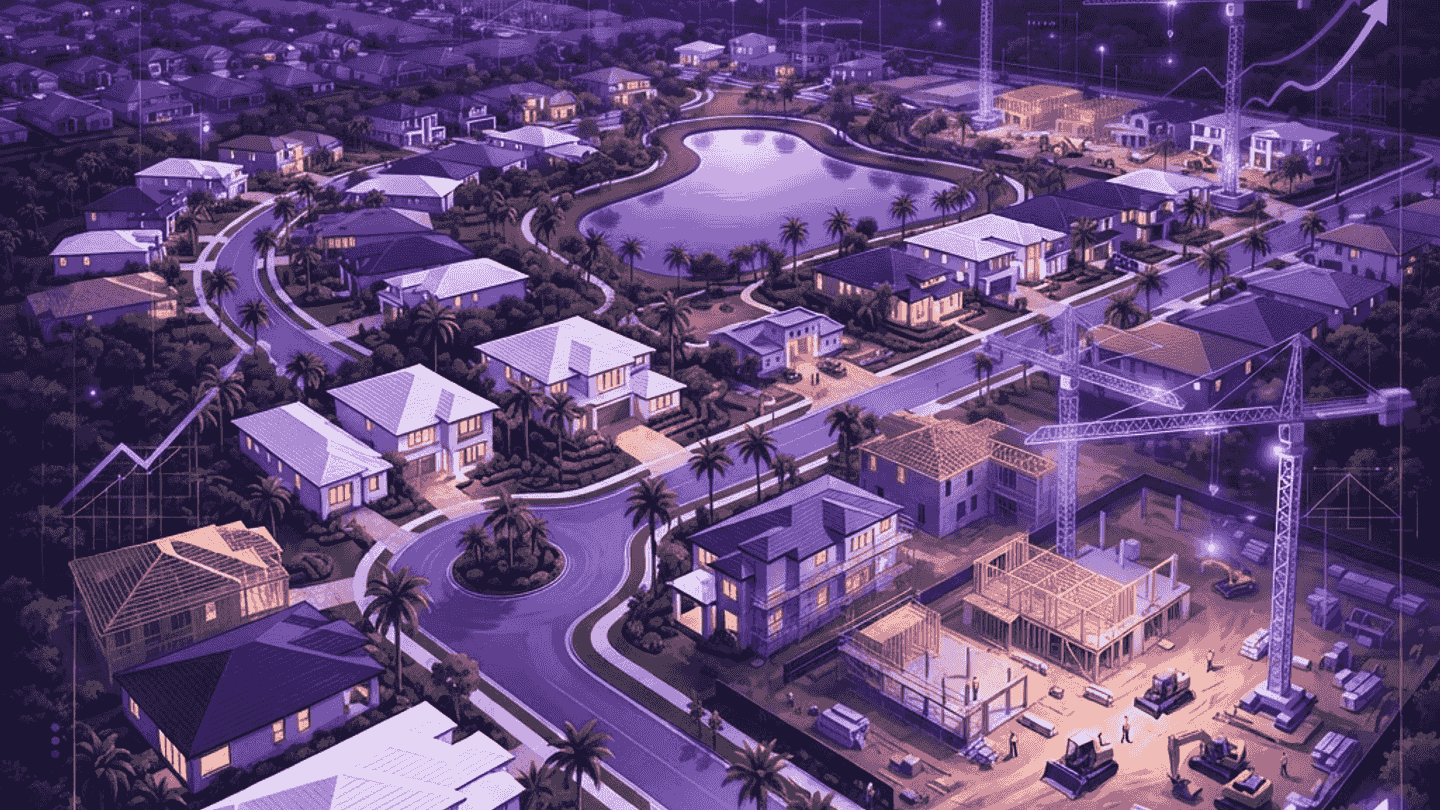
How Port St. Lucie Became a Development Story
Few American cities have grown as quickly as Port St. Lucie over the past twenty-five years. The city was platted decades ago on an unusually generous grid, leaving an enormous inventory of individual residential lots alongside room for large master-planned communities. The result is a market where a buyer can choose between a custom home on a scattered lot and a production home in a community with amenities, schools, and commercial development built in.
The Tradition corridor is the clearest expression of the master-planned model, combining residential villages with medical, retail, and research employment. Farther west and north, newer communities continue to open as infrastructure extends. Meanwhile the older eastern sections near the river offer mature landscaping and larger lots that no new development can replicate.
Understanding the Developer Categories
Buyers often conflate builders and developers. A developer entitles the land, installs infrastructure, and establishes the community structure. A builder constructs the homes. In large communities the two roles are sometimes separate, meaning the community you love and the house you buy may come from different companies with different track records. It is worth knowing which is which before you evaluate reviews.
Ten Developers Shaping the City
1. Large National Production Builders
The national builders dominate volume in Port St. Lucie, and their strength is predictability. Floor plans are refined across thousands of homes, supply chains keep pricing competitive, and financing arms can buy down interest rates in ways smaller companies cannot match. The tradeoff is limited customization and standardized finishes.
2. Master-Planned Community Developers
These are the companies that create entire villages with clubhouses, trails, and commercial pads. Buying here means buying the amenity package and the long-term plan as much as the house. Review the development phasing map carefully so you know what will be built behind you in three years.
3. Active Adult Community Developers
Age-restricted communities are a major segment given Florida's demographics. The developers in this category compete on amenity depth, from pickleball complexes to resort pools and organized social programming. Maintenance-included models appeal strongly to buyers who split time between states.
4. Regional Florida Builders
Mid-sized builders operating across Florida understand local code, hurricane engineering, and permitting better than out-of-state entrants. They often offer more structural flexibility than national builders while retaining enough scale for reliable warranty service.
5. Custom Home Builders on Scattered Lots
Port St. Lucie's platted lot inventory supports a healthy custom market. Custom builders handle site evaluation, impact fees, and design from scratch, which suits buyers with specific requirements or a particular lot in mind. Timeline and cost variability are the accepted tradeoffs.
6. Waterfront and Riverfront Specialists
Building near the St. Lucie River or on canal lots involves seawalls, dock permitting, and elevation requirements that generalists underestimate. Specialists in this niche navigate environmental review and flood-zone construction routinely.
7. Townhome and Attached Product Developers
As lot prices rose, attached housing became a meaningful share of new supply. Developers here target first-time buyers and downsizers with lower maintenance and lower entry price. Pay close attention to how the HOA handles roofs, exteriors, and reserve funding.
8. Build-to-Rent Community Developers
A newer category. Institutional developers build entire neighborhoods of single-family homes for rental rather than sale. For buyers nearby this affects neighborhood character and comparable sales, so it is worth knowing whether an adjacent parcel is designated for this use.
9. Infill and Small-Scale Developers
Smaller operators building a handful of homes per year fill gaps in established neighborhoods. Quality varies most widely in this group, which makes independent inspection and reference checks essential rather than optional.
10. Luxury and Estate Developers
At the top of the market, developers deliver estate lots with high-end structural specifications, impact glass throughout, and generator infrastructure. Volume is low and the buyer relationship is closer to a custom process even within a planned community.
What to Verify Before You Sign
Read the contract for the completion timeline and what remedies exist if it slips. Understand whether your deposit is refundable and under what conditions. Confirm what the base price includes, since lot premiums, structural options, and design center selections commonly add a meaningful percentage to the advertised figure.
Then investigate the community documents. HOA and CDD assessments materially change monthly cost, and community development district debt attached to the lot can persist for decades. Ask for the reserve study if the community is established, and ask for the projected budget if it is not.
Construction Quality and Warranty in Practice
Florida construction is governed by demanding wind-load requirements, and new homes here are generally well engineered for storms. Still, hire an independent inspector for a pre-drywall inspection and a final walkthrough. Builders expect this, and reputable ones cooperate. Ask specifically how the warranty is administered, who to call, and what the typical response time is, because the answer separates good builders from good salespeople.
Bringing It Together
Port St. Lucie offers unusually wide choice, from production homes with amenity-rich communities to custom builds on quiet platted lots. Match the developer category to how you actually want to live, verify the assessments and the contract terms rather than the brochure, and bring your own inspector. The city will keep growing, and the buyers who read the phasing plan tend to be happiest five years later.