
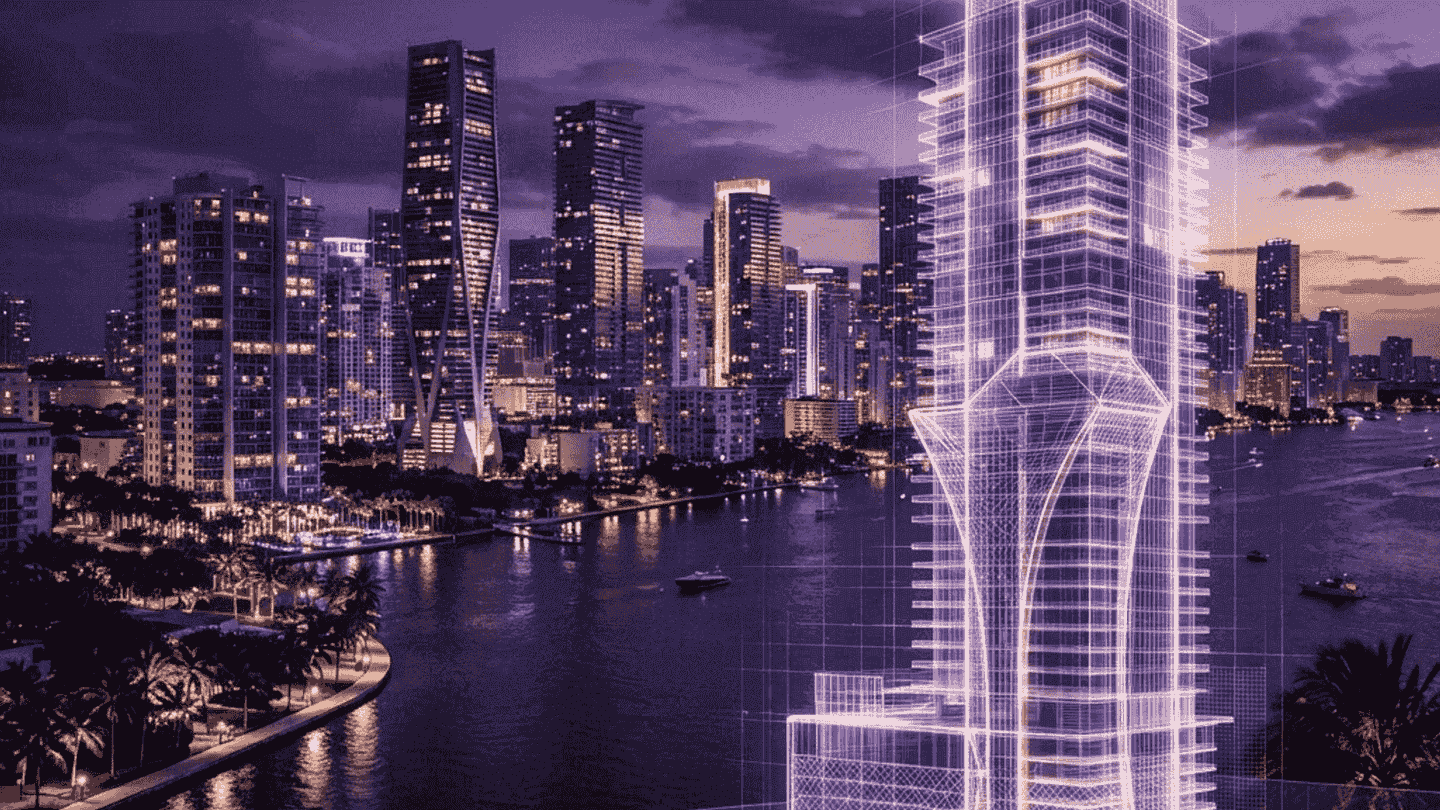
A Development Market Unlike Any Other in America
Miami's residential development sector is defined by three forces. The first is international capital, particularly from Latin America and Europe, which has historically funded pre-construction condominium purchases through substantial deposit structures rather than traditional mortgages. The second is land scarcity, bounded by the ocean to the east and the Everglades to the west, which concentrates development vertically and drives redevelopment of existing parcels. The third is climate, which now shapes elevation decisions, insurance costs, structural specification and building code compliance more than at any previous point.
Recent years have added domestic migration and corporate relocation to the demand picture, pushing development beyond luxury waterfront into workforce and mid-market housing, and accelerating growth in Brickell, Edgewater, Wynwood, Little River, Doral and Kendall.
The Ten Leading Residential Developers in Miami
1. Related Group. Founded in Miami and arguably the most influential residential developer in Florida, Related has delivered tens of thousands of units across luxury condominiums, market-rate rentals and affordable housing. Its portfolio spans branded towers, art-integrated developments and large mixed-use projects, and its scale gives it unusual ability to execute in difficult market cycles.
2. Terra Group. A Miami-based developer known for design-led residential projects in Coconut Grove, Miami Beach, Doral and Brickell, with a strong emphasis on architectural quality, sustainability certification and landscape integration. Terra is frequently cited for delivering long-term value rather than purely investment product.
3. Swire Properties. The developer behind Brickell Key and the transformative Brickell City Centre, Swire brought large-scale integrated mixed-use development to Miami with residential towers, retail, hotel and office components connected by climate-responsive design.
4. Lennar Corporation. Headquartered in Miami and one of the largest homebuilders in the United States, Lennar delivers single-family and townhome communities across Miami-Dade's suburban corridors, with standardised specification and included-feature packages that appeal to first-time and move-up buyers.
5. GL Homes. A major Florida builder of master-planned communities featuring clubhouses, resort amenities and age-restricted sections. Its communities are known for consistent construction quality and amenity programming aimed at families and active adults.
6. Related Companies and Branded Residence Developers of Miami Beach. Miami has become the global centre for branded residences, with hospitality and fashion brands partnering on residential towers offering hotel-level service, private amenities and managed rental programmes. Buyers should evaluate the durability of the brand licence and the associated service costs.
7. OKO Group. A developer of high-end waterfront and Brickell residential towers with an emphasis on architectural collaboration and limited-unit buildings. Lower density per floor typically means better light, larger layouts and higher resale differentiation.
8. Fortune International Group. A Miami developer and brokerage with a long record in luxury oceanfront condominiums, particularly in Sunny Isles Beach and along the coastal corridor, serving a largely international buyer base.
9. Mast Capital and Emerging Neighborhood Developers. Developers active in Edgewater, Little River, Allapattah and Wynwood are converting industrial and underused parcels into mid-rise residential, often with a stronger rental focus and closer alignment to transit. These areas carry higher elevation than the immediate coastline, which matters for insurance and long-term risk.
10. Affordable and Workforce Housing Developers of Miami-Dade. Nonprofit and public-private developers using tax credit financing and county land programmes to deliver income-restricted housing. In a market where affordability is the central civic issue, these organisations are among the most consequential builders in the county.
What Buyers Should Evaluate
For new construction condominiums, read the offering documents carefully. Understand the deposit schedule, developer reservation of rights to modify plans, estimated closing costs, and the projected association budget. Ask about developer guarantees for early operating deficits and how reserves will be funded, since Florida law now requires structural reserve studies and full funding, which has materially increased monthly assessments in older buildings.
Verify the developer's track record on delivery timing and quality. Ask about completed projects and speak with owners in those buildings about construction defects, association management and assessment history. Confirm which units are investor-owned and whether short-term rental is permitted, because rental-heavy buildings behave differently in both financing and resale.
For single-family communities, evaluate the builder's warranty terms, standard versus upgrade specification, homeowner association fees and community development district assessments, which can add substantially to monthly cost.
Climate, Insurance and Resilience
Elevation is now a financial variable, not only an environmental one. Confirm flood zone designation, base flood elevation and whether the building includes elevated mechanical systems, impact glazing, backup generation and hardened parking. Obtain an insurance quote before committing, as property insurance in South Florida has risen sharply and can materially change affordability calculations.
For condominiums, request the most recent structural inspection report and reserve study. These documents are the clearest indicator of future special assessment risk.
Market Trends
Development is shifting inland and upward, toward higher-elevation neighbourhoods with transit access. Rental product now competes directly with condominiums for the same tenants and locations. Sustainability certification, wellness amenities, coworking space and electric vehicle infrastructure have become standard expectations rather than differentiators.
Final Thoughts
Miami's residential developers range from globally significant luxury builders to essential affordable housing organisations. Whether buying pre-construction or in an established community, prioritise developer delivery record, association financial health, elevation and insurability, and read the governing documents thoroughly before committing capital.