
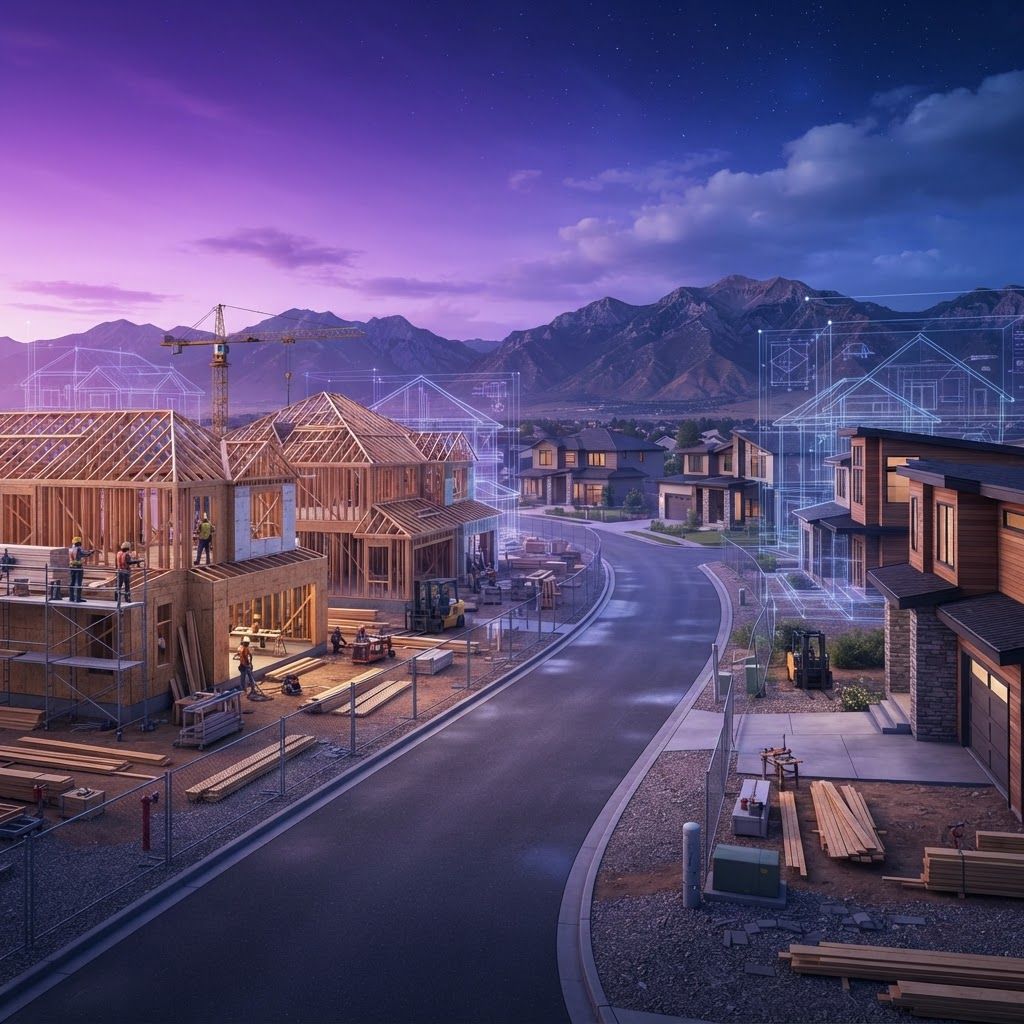
The State of Residential Construction in San Bernardino
Residential construction across the Inland Empire has been shaped by a simple imbalance: strong housing demand from households priced out of coastal Los Angeles and Orange County, combined with a limited supply of buildable, entitled land. San Bernardino sits at the center of that dynamic. The result is a market that supports several distinct types of residential builder, each solving a different problem.
Production builders deliver volume in master-planned communities with standardized floor plans and predictable pricing. Semi-custom builders offer plan modification and finish selection within a defined framework. Custom builders execute one-off homes from architectural drawings. And a rapidly expanding accessory dwelling unit sector adds density on existing lots, which has become one of the most active segments in California residential construction.
Builders Active in the Local Market
Large national and regional production builders maintain a significant presence throughout the greater San Bernardino area. Lennar, KB Home, Richmond American Homes, D.R. Horton, and Century Communities style builders develop planned communities with included solar, energy-efficient packages, and structured warranty programs. Their advantage is process maturity and financing integration; their constraint is limited design flexibility.
Frontier Homes and Pacific Communities style regional developers occupy the middle ground, offering more localized plan libraries and often better responsiveness on options and upgrades. On the custom side, firms such as Inland Custom Homes, Highland Custom Builders, and Sierra Ridge Construction style companies build individual residences on private lots, including hillside sites in the foothill neighborhoods where grading, retaining structures, and access design become substantial parts of the project.
The accessory dwelling unit sector deserves separate mention. Specialists including modular and panelized providers, along with local general contractors who have standardized their ADU offerings, now deliver detached units, garage conversions, and junior units on a considerably shorter timeline than traditional custom construction. Because state law limits how much local jurisdictions can restrict these projects, they have become a practical option for multigenerational households and rental income alike.
Designing for the San Bernardino Climate
A home that performs well here looks different from one built for a coastal climate. Cooling load dominates, so orientation, glazing, shading, and insulation carry outsized importance. Deep overhangs, strategically placed windows, low solar heat gain coefficient glazing, radiant barrier roof sheathing, and properly sealed and insulated duct runs collectively determine whether a home is comfortable in August or merely survivable.
California's Title 24 energy standards now push new residential construction toward high-efficiency heat pump systems, heat pump water heating, substantial envelope air tightness verified by blower door testing, and solar photovoltaic installation on most new homes. Battery storage is increasingly specified alongside solar, both for resilience during grid events and to shift consumption away from peak rate periods.
Seismic design is equally fundamental. Southern California's fault activity means foundation design, shear wall placement, hold-down hardware, and proper connection detailing are engineered rather than assumed. Homes in areas with expansive soils require appropriate foundation systems, which is why geotechnical investigation early in the process prevents expensive redesign later.
In foothill and interface areas, wildfire-resistant construction has moved from optional to central. Class A roof assemblies, ember-resistant attic and foundation venting, non-combustible siding and decking, dual-pane tempered glazing, and maintained defensible space around the structure materially improve a home's survivability and can also affect insurance availability.
The Construction Process, Realistically
A custom residential project in San Bernardino typically progresses through site acquisition and feasibility review, geotechnical and survey work, architectural design, structural and Title 24 engineering, plan check with the relevant building department, permit issuance, site preparation and grading, foundation, framing, rough mechanical, electrical and plumbing, inspections, insulation and drywall, exterior finishes, interior finishes, final inspections, and certificate of occupancy.
Realistic timelines matter. Design and permitting frequently consume as long as construction itself, particularly on hillside lots or parcels requiring variances. Long-lead materials including windows, electrical service equipment, and HVAC units should be ordered as soon as plans are final. Owners who understand this sequence make better decisions, because the cost of changing a plan escalates dramatically once framing begins.
Budgeting and Contracts
Residential construction budgets fail for predictable reasons: an incomplete initial scope, finish selections made late and priced as allowances, and no contingency for hidden site conditions. A disciplined budget separates hard construction costs from soft costs such as design, engineering, permits, school fees, and utility connections, and reserves a contingency of at least ten to fifteen percent on new construction and more on hillside or complex sites.
Contractually, verify the builder's Contractors State License Board license and classification, confirm general liability and workers compensation coverage, and review the warranty structure. California provides statutory protections for residential construction defects with defined timeframes for different building components, and a reputable builder will explain its own warranty terms clearly rather than deflecting the question.
Selecting the Right Residential Builder
Start by matching builder type to your actual priorities. If predictable pricing, financing convenience, and a defined timeline matter most, a production builder in an established community is the rational choice. If site-specific design, material quality, and personal involvement matter most, a custom builder is worth the additional cost and schedule.
Then verify substance over presentation. Tour completed homes and, where possible, homes currently under construction, since framing quality and mechanical layout reveal a builder's standards more honestly than a model home's staging. Speak with owners whose homes are two to five years old to learn how the builder handled warranty items after the sale. Review the specification sheet line by line, because two homes at similar prices can differ enormously in window quality, insulation values, HVAC sizing, and structural detailing.
San Bernardino's residential market rewards buyers who engage with these technical details. Homes built thoughtfully for the local climate cost less to operate, remain comfortable through severe summers, and hold value considerably better than those built to minimum standard.