
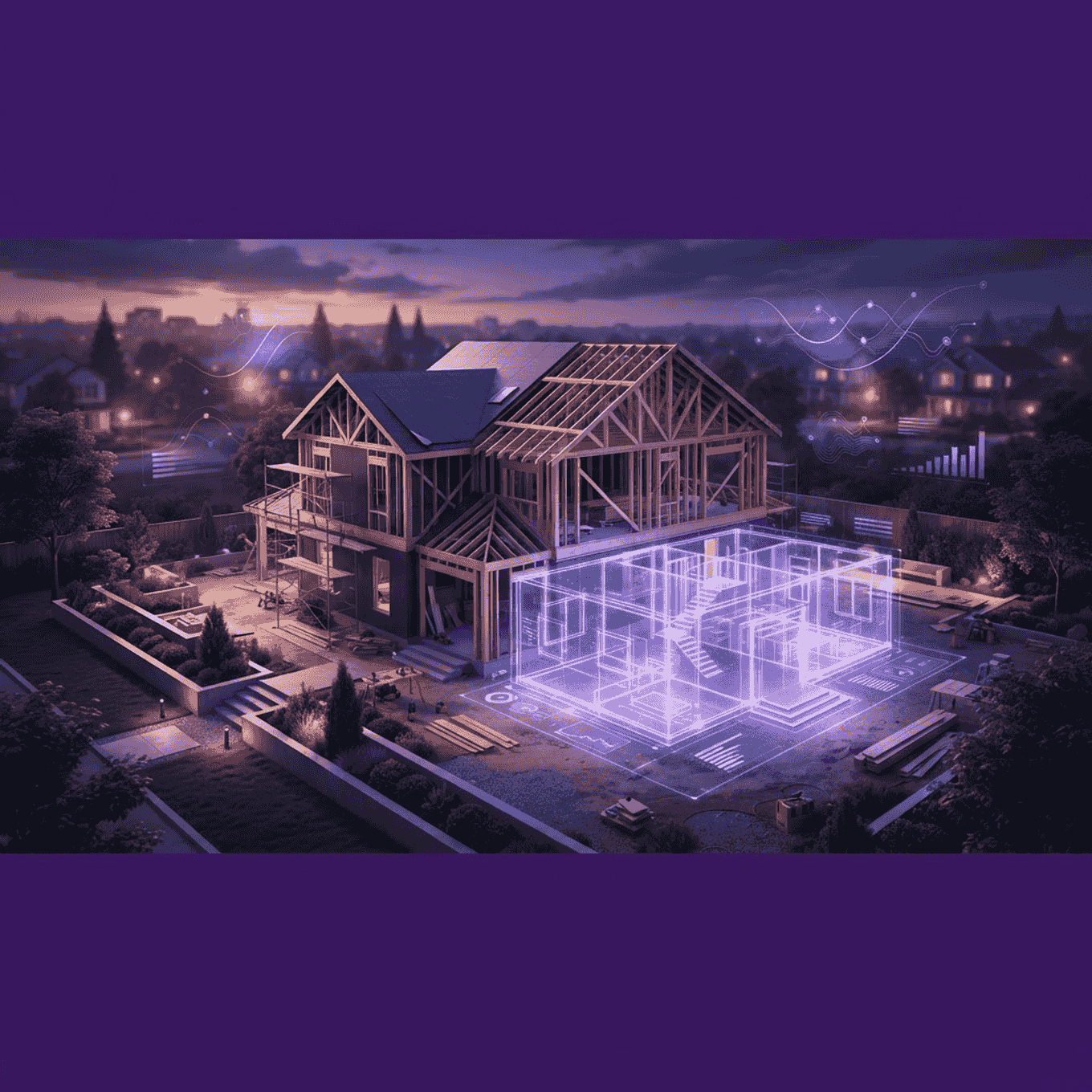
A Housing Market Built on Growth
Sacramento has become one of California's most closely watched housing markets. Relative affordability compared with the Bay Area, expanded remote work flexibility, and steady employment in state government, healthcare, logistics, and technology have drawn sustained migration into the region. That demand has fueled residential construction across a wide spectrum, from master-planned subdivisions in Elk Grove, Roseville, Rancho Cordova, and Natomas to infill projects and accessory dwelling units in established neighborhoods.
Residential construction here is not simply a matter of erecting structures quickly. Valley conditions impose real design requirements: expansive clay soils that swell and shrink with seasonal moisture, summer temperatures that regularly exceed one hundred degrees, floodplain considerations near the American and Sacramento rivers, and some of the strictest energy efficiency standards in the country.
What Distinguishes a Strong Residential Builder
The best residential construction companies in the region combine engineering discipline with communication. On the technical side, that means properly engineered foundations based on current soils reports, correctly detailed moisture and air barriers, right-sized mechanical systems, and framing quality that holds up under inspection without rework. On the client side, it means realistic schedules, transparent allowance structures for finishes, documented change orders, and a project manager who returns calls.
Warranty performance is the ultimate test. Builders who service warranty items promptly during the first two years, when settling cracks and mechanical adjustments naturally appear, earn the referrals that sustain reputations in a market where buyers talk to their neighbors.
1. Production Home Builders
Production builders develop entire subdivisions using refined plan sets and established supply chains. Their advantage is predictability: fixed pricing, defined timelines, model homes buyers can walk, and warranty programs backed by substantial organizations. Buyers select from curated structural options and finish packages rather than designing from scratch, which keeps costs and schedules controlled.
2. Semi-Custom Builders
Semi-custom builders occupy the middle ground, starting from proven floor plans and allowing meaningful modification, such as relocating walls, expanding great rooms, adding casitas, or upgrading to premium mechanical systems. For buyers who want individuality without the timeline and cost of full custom design, this category delivers the strongest value in the Sacramento market.
3. Luxury Custom Home Builders
Custom builders serve clients constructing one-of-a-kind homes in areas such as Granite Bay, El Dorado Hills, Land Park, and the Sierra foothills. Their scope encompasses architect coordination, structural engineering, high-end millwork, integrated smart home systems, resort-quality outdoor living, and finish tolerances measured in fractions of an inch. Projects run longer because craftsmanship, not throughput, governs the schedule.
4. Accessory Dwelling Unit Specialists
California's supportive legislation has made accessory dwelling units a defining feature of Sacramento residential construction. Specialists handle detached cottages, garage conversions, and junior units, managing setback requirements, utility connections, fire separation, and streamlined permit pathways. For homeowners, these units provide rental income, housing for aging parents, or dedicated work space without relocating.
5. Infill and Small-Lot Builders
Infill construction in Midtown, Oak Park, and East Sacramento demands a different skill set than greenfield subdivisions. Builders navigate narrow lots, tight equipment access, neighbor relations, aging sewer and electrical infrastructure, tree preservation requirements, and design review intended to maintain neighborhood character. Firms experienced in this niche plan logistics as carefully as construction.
6. Whole-Home Renovation Builders
A substantial share of Sacramento's housing stock dates from the postwar decades through the 1980s, meaning original systems have reached or passed replacement age. Renovation builders reconfigure closed floor plans into open living spaces, replace plumbing and electrical systems, add insulation and modern windows, and update kitchens and bathrooms. Working within existing structures requires strong problem-solving because concealed conditions always differ from assumptions.
7. Energy-Efficient and High-Performance Builders
California's energy code has pushed the market toward all-electric design, heat pump heating and cooling, heat pump water heating, solar generation, and battery storage. High-performance builders go further with rigorous air sealing, continuous exterior insulation, and blower door verification. In a climate with extended cooling seasons, these measures reduce utility bills substantially and improve comfort during heat events.
8. Modular and Panelized Construction Companies
Factory-built modular and panelized systems have gained credibility as labor availability tightens. Components are manufactured under controlled conditions, reducing weather exposure and material waste, then assembled on prepared foundations. The approach compresses on-site schedules significantly, which is particularly valuable for accessory units and repetitive multi-unit projects.
9. Multifamily Residential Developers
Townhome, duplex, and small apartment construction has expanded across the region as zoning reforms permit greater density in formerly single-family areas. Builders in this category manage shared wall assemblies, acoustic separation, fire-rated construction, common area amenities, and parking design, plus the financing and public approval processes that accompany larger projects.
10. Foundation and Structural Retrofit Specialists
Given the region's expansive soils, specialists in foundation repair and structural retrofit form an essential part of the residential landscape. Their work includes pier installation, slab repair, crawl space reinforcement, seismic bracing, and drainage correction. Because these firms work from engineered plans and are inspected closely, documentation quality is a reliable indicator of competence.
Design Considerations Specific to Sacramento
Successful local homes respond to climate deliberately. Deep overhangs and shaded west-facing glazing reduce afternoon heat gain. Radiant barriers and generous attic insulation cut cooling loads. Whole-house fans exploit the Delta breeze that cools summer evenings, often reducing air conditioning hours considerably. Drought-tolerant landscaping and efficient irrigation reflect long-term water realities, and proper site grading protects foundations from the moisture swings that drive clay soil movement.
Questions to Ask Before You Build
Confirm license status, insurance, and bonding. Ask how many homes the builder currently has under construction, since overextended firms deliver late. Request a sample contract, a detailed specification sheet, and a written warranty. Clarify how allowances are set, whether they reflect realistic finish costs, and how change orders are priced. Finally, ask to speak with clients whose homes are two or three years old to learn how the builder handled warranty service after final payment.
Final Thoughts
Sacramento's residential construction market offers genuine choice at every level, from efficient production subdivisions to bespoke custom homes and code-leading high-performance builds. Selecting a builder whose specialty matches your project, verifying credentials, and prioritizing climate-appropriate design produces a home that performs well through Valley summers and holds its value for decades.