
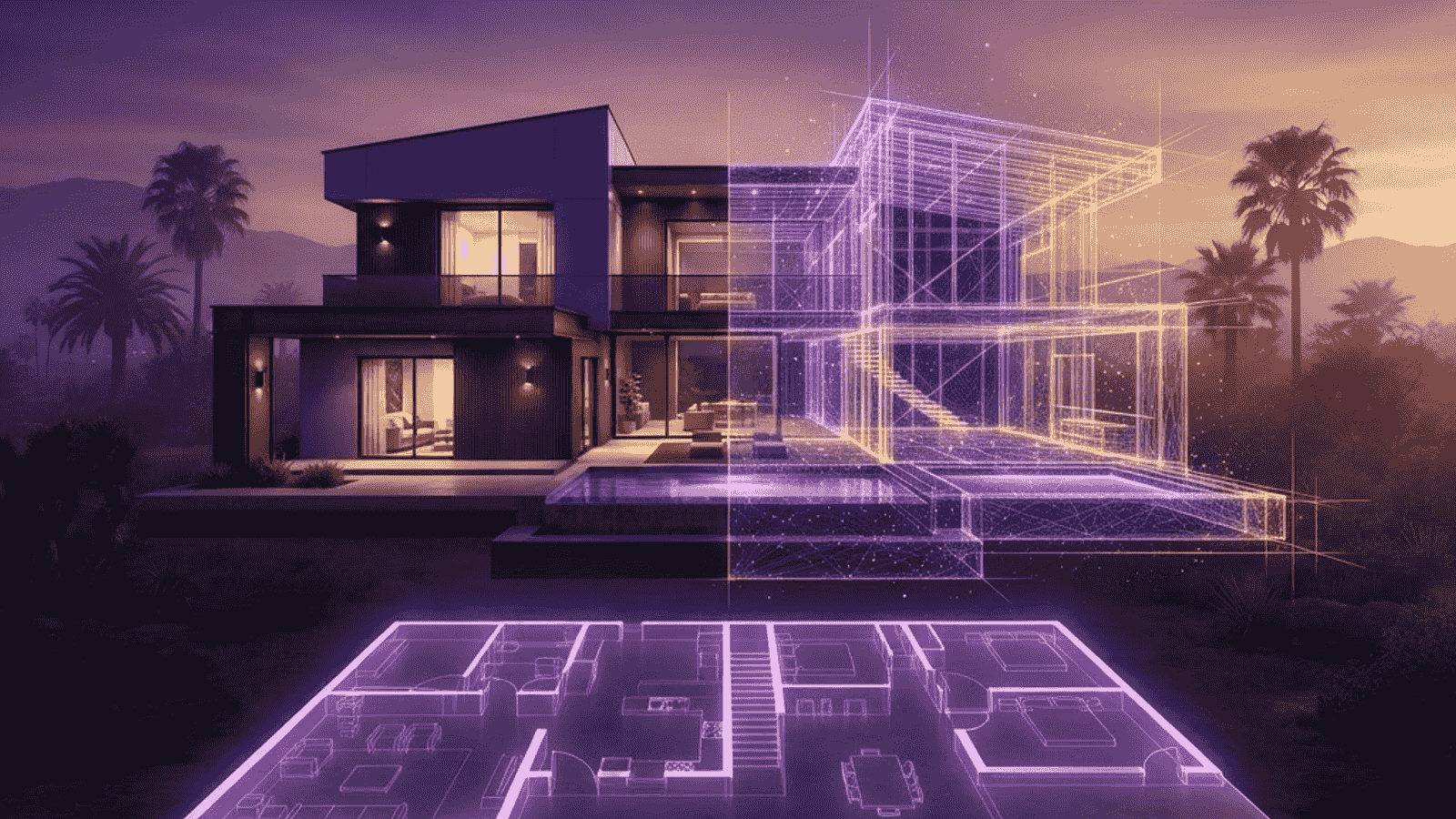
A Housing Market That Rewards Building Well
Riverside occupies an unusual position in Southern California housing. Land remains more attainable than along the coast, lot sizes are generally larger, and demand from families priced out of Orange and Los Angeles counties has stayed persistently strong. That combination makes building a home here a genuinely rational alternative to buying an existing one, which is why residential construction activity in the city and surrounding Inland Empire has remained robust through several market cycles.
Building well matters more than it once did. California's energy code has tightened substantially, requiring high-performance envelopes, efficient mechanical systems, and in most new residential construction, solar generation. Meeting those standards is not optional, and builders who treat compliance as an afterthought produce homes that fail inspection, cost more to correct, and perform poorly for decades afterward.
The Cost Drivers That Actually Matter
Owners consistently underestimate site work and overestimate finishes. On a flat, serviced infill lot the foundation and utilities are relatively predictable. On a sloped parcel in the hills, grading, retaining structures, drainage engineering, and deep foundations can consume a substantial share of the budget before a single wall is framed. Soils reports and civil engineering are therefore not administrative expenses — they are the documents that reveal whether a lot is affordable.
Riverside's climate adds specific requirements. Extended summer heat makes insulation quality, radiant barriers, window specification, and shading strategy far more consequential than in milder coastal zones. Getting the envelope right costs money once and saves money every month for the life of the building. Wildfire exposure in the foothill areas introduces additional ignition-resistant material requirements that materially affect roofing, cladding, venting, and landscaping decisions.
Ten Residential Construction Companies Active in Riverside
1. Riverside Heritage Homes
Custom builder with deep experience in the city's established neighbourhoods, including new homes designed to sit comfortably alongside period architecture. Strong relationships with local design review processes.
2. Canyon Crest Residential Builders
Specialises in hillside and view-lot construction. Leads with geotechnical and civil work rather than treating it as a hurdle, which produces fewer mid-project budget shocks.
3. Orange Grove Custom Construction
Semi-custom homebuilder offering a curated set of plans with meaningful personalisation. Efficient, predictable, and popular with families building their first new home.
4. Inland Valley Home Builders
Volume-capable builder working across Riverside and neighbouring communities. Competitive pricing, standardised construction detailing, and reliable delivery schedules.
5. Alessandro Estate Builders
Luxury residential specialist with in-house project management and a small annual project load. Known for structural precision and high-specification mechanical systems.
6. Riverside ADU Collective
Focused entirely on accessory dwelling units, garage conversions, and junior units. Genuinely expert in a permitting category that has changed significantly and confuses generalist builders.
7. Mission Grove Construction Group
Handles new builds and substantial whole-house reconstructions. Practical, communicative, and well regarded for realistic scheduling rather than optimistic promises.
8. Victoria Avenue Homes
Builds architect-designed contemporary residences with an emphasis on daylight, passive cooling, and indoor-outdoor transitions suited to the local climate.
9. La Sierra Family Builders
Mid-market builder with a reputation for fair change-order handling and strong subcontractor loyalty, which translates into consistent trade quality across projects.
10. Sycamore Canyon Residential
Energy-performance focused builder producing homes that substantially exceed minimum code, including near-net-zero projects with high-efficiency heat pump systems and thorough air sealing.
Design-Build Versus Separate Architect and Builder
Design-build consolidates responsibility. One contract covers design and construction, which reduces finger-pointing and often compresses the schedule, because construction knowledge informs drawings from the outset. Separating the architect from the builder preserves independent advocacy — the architect represents the owner's interests during construction — and generally produces more ambitious design outcomes. Neither model is universally better. Owners who value certainty and speed usually prefer design-build; owners pursuing distinctive architecture usually benefit from separation.
Questions to Ask a Prospective Homebuilder
Ask how many homes the company completed in the past two years, and request addresses you can drive past. Ask which trades are in-house and which are subcontracted, and how long the key subcontractors have worked with the builder. Ask how allowances are set and what happens when selections exceed them. Ask about warranty terms and, more usefully, how the builder handled a specific warranty claim last year. Ask who will actually be on site daily and how often the owner will hear from them.
Timeline Expectations Grounded in Reality
A straightforward single-family home on a serviced lot typically moves from permit issuance to completion over a period measured in many months, not weeks, and the pre-construction phase of design, engineering, and permitting frequently takes as long as construction itself. Hillside projects, custom structural systems, and long-lead mechanical equipment extend that further. Builders who quote aggressively short timelines are usually describing best-case conditions that rarely materialise.
Building for the Next Thirty Years
The homes that hold value in Riverside are those built for the climate rather than against it: well-shaded, tightly sealed, properly ventilated, roofed with durable materials, and served by mechanical systems sized correctly rather than generously. Those decisions are made on paper before construction begins and are difficult to retrofit afterward. Choosing a builder who argues for envelope quality over visible upgrades is usually the sign of a company worth hiring.