
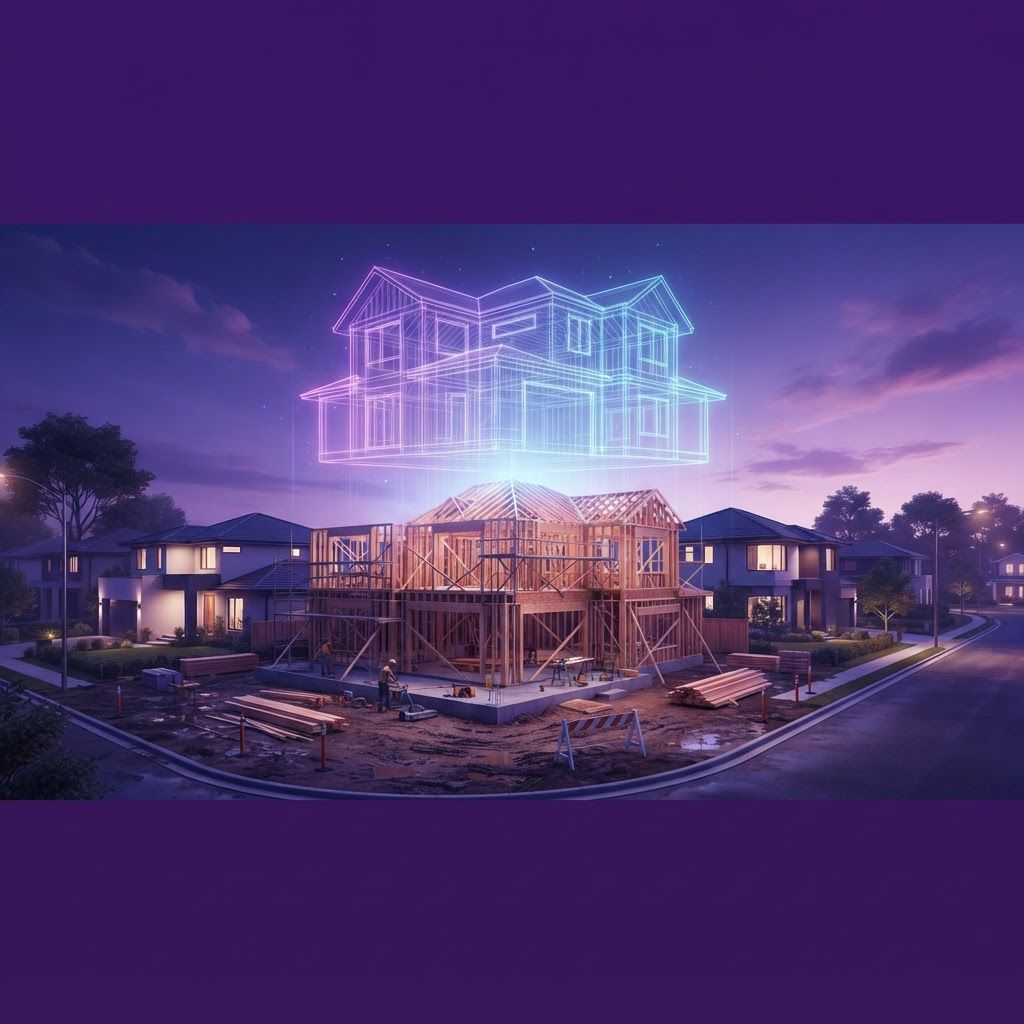
Residential Building in a Coastal City
Home construction in Newport News is shaped by its setting. The city stretches along the James River, mixing established neighborhoods of mature housing stock with newer development toward the north. Humidity, summer storms, and occasional tropical weather place real demands on building envelopes, while proximity to the water introduces flood elevation and drainage considerations in certain areas.
The builders who succeed here understand that a house is a system. Framing, air sealing, insulation, ventilation, roofing, and mechanical equipment all interact, and a weakness in one area creates problems in another. Moisture management in particular separates durable homes from ones that develop issues within a decade.
Types of Residential Construction
Custom home building starts with a client-specific design and typically offers the greatest control over layout, materials, and performance. It requires the most owner involvement and the longest timeline.
Production and semi-custom building works from a set of proven plans with selectable finishes. It is generally faster and more cost-predictable because the builder has refined the process across many similar homes.
Major additions and whole-home rebuilds form a third category that is especially relevant in Newport News, where many owners choose to expand or substantially modernize an existing home in an established neighborhood rather than relocate.
The Ten Leading Residential Builders
Peninsula Custom Homes builds one-of-a-kind residences with a strong emphasis on client collaboration, offering detailed selection guidance and regular walkthroughs during construction.
Warwick Residential Builders focuses on semi-custom homes with refined floor plans, delivering predictable schedules and a well-organized selection process that keeps decisions manageable.
James River Homebuilders specializes in waterfront and elevated construction, with expertise in pile foundations, flood-resistant materials, and wind-rated assemblies.
Denbigh Family Construction serves the move-up market with well-built family homes, emphasizing practical layouts, generous storage, and durable everyday finishes.
Oyster Point Residential Group works on infill lots and neighborhood redevelopment, designing homes that fit comfortably into existing streetscapes rather than overwhelming them.
Shipyard City Home Builders has a reputation for structural quality and solid craftsmanship, appealing to buyers who prioritize how a house is built over how it is decorated.
Hilton Village Craftsman Homes produces traditional architecture with authentic detailing, including real trim profiles, porch proportions, and window patterns consistent with the area's historic character.
Coastal Virginia Green Builders concentrates on high-performance construction with advanced air sealing, continuous insulation, heat pump systems, and optional solar readiness.
Menchville Home Construction handles both new builds and large additions, offering a practical option for families who want to stay in their neighborhood while gaining space.
Hampton Roads Modern Living focuses on contemporary design with open plans, large glazing, and clean detailing, executed with attention to the thermal performance those designs require.
Trends Shaping New Homes
Energy efficiency has moved from a premium feature to a baseline expectation. Heat pump heating and cooling, improved insulation, high-performance windows, and balanced ventilation are now standard requests. Buyers increasingly ask about projected utility costs, not just purchase price.
Flexible space planning is another clear shift. Dedicated home offices, multi-generational suites with separate entrances, and adaptable bonus rooms reflect how households actually use their homes today.
Durability has also gained attention. Fiber cement siding, standing seam metal roofing, impact-rated windows, and elevated mechanical equipment all reduce long-term maintenance and improve resilience against coastal storms. Many owners now view these as insurance against future expense rather than optional upgrades.
Planning a Successful Build
Begin with a realistic budget that includes site work, utility connections, permits, landscaping, and a contingency reserve of roughly ten percent. Site conditions are the most common source of unexpected cost, particularly where soil, drainage, or tree removal are involved.
Evaluate builders by visiting completed homes and, if possible, a project currently under construction. A jobsite reveals a great deal: whether it is organized, whether materials are protected from weather, and whether the crew works carefully. Ask to see the builder's standard specification sheet so you can compare what is actually included between proposals.
Clarify the warranty structure, which typically covers workmanship for a defined period, systems for longer, and structural elements longest of all. Understand who to call after closing and how service requests are handled, because responsiveness after move-in is a strong measure of a builder's integrity.
Understanding the Construction Timeline
A typical custom home in this market moves through several distinct phases. Design and permitting often consume several months before any ground is broken, particularly when a site requires stormwater review or flood elevation documentation. Site work and foundation follow, then framing, which progresses quickly and gives owners their first real sense of the house.
The middle phase is where schedules usually slip. Mechanical, electrical, and plumbing rough-in must be inspected before insulation and drywall can proceed, and a single failed inspection can cost a week. Finish work is the longest stretch relative to its visible progress, because trim, cabinetry, tile, and paint all require careful sequencing.
Owners who understand this rhythm tend to be far more satisfied, because they recognize which quiet periods are normal and which genuinely warrant a conversation with the builder.
Final Thoughts
Residential construction in Newport News rewards builders who take the local climate seriously and who treat energy performance and moisture control as core requirements rather than upgrades. The firms listed here have distinguished themselves through craftsmanship, transparent process, and homes that continue performing well years after handover, which is ultimately the only measure that matters.