
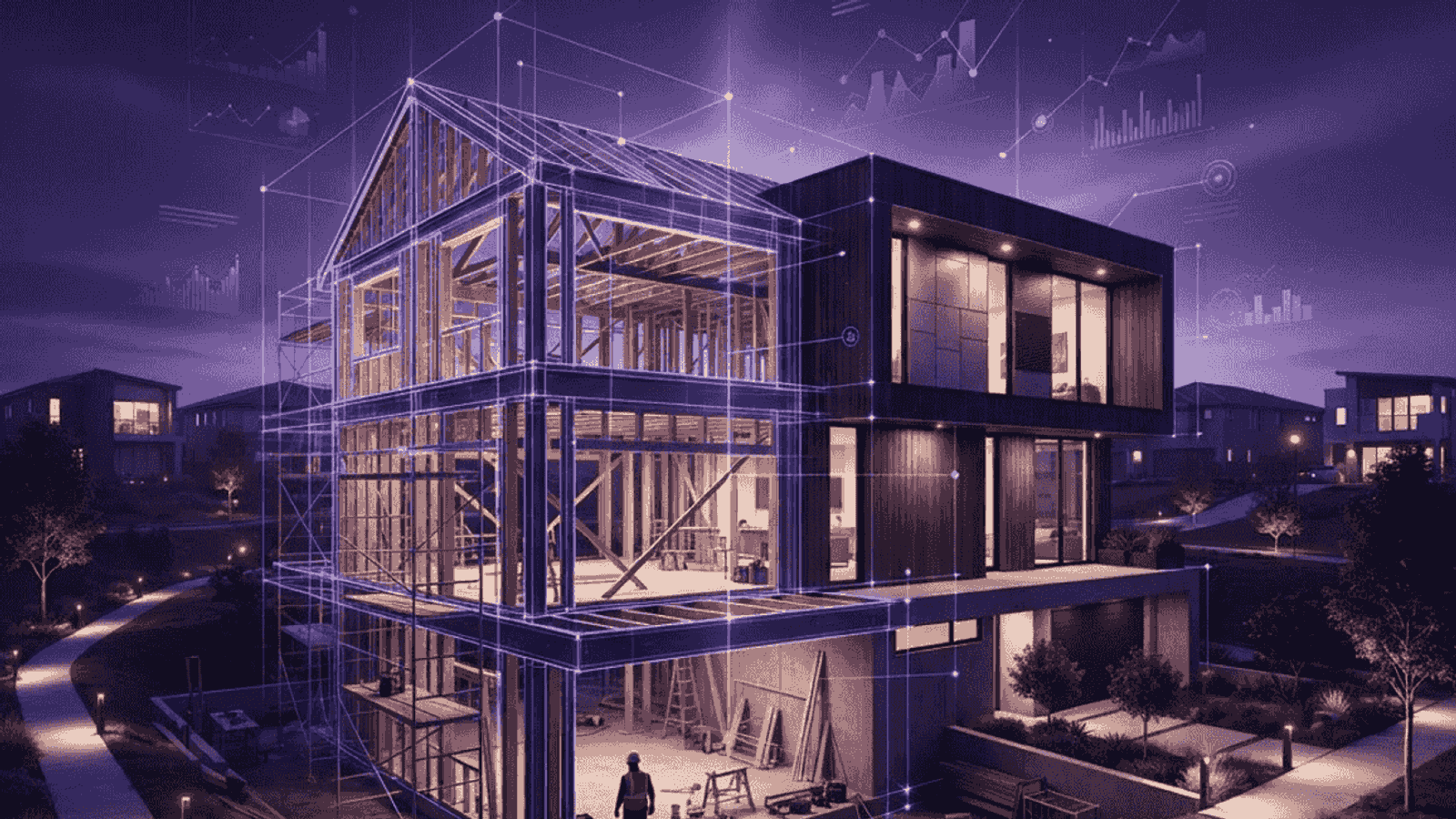
Understanding the Residential Construction Market
Residential builders occupy different positions along a spectrum from fully custom to production housing, and the differences affect price, timeline, flexibility and buyer experience profoundly. Custom builders design around a specific family and site, offering maximum control at the highest cost per square foot. Production builders repeat proven plans efficiently, offering value and predictability with limited customization. Between them sit semi-custom builders who modify established plans, which is where a large share of Brookhaven's new construction falls.
Local knowledge matters more in residential construction than buyers often expect. Soil conditions, frost depth, stormwater requirements, lot setbacks and inspection practices all vary, and a builder fluent in Brookhaven's approval process avoids delays that can add months to a project.
1. Custom Home Builders
Custom builders manage projects from land evaluation through final walkthrough, coordinating architects, engineers, interior designers and dozens of subcontractors. They excel at unusual sites, specific family requirements and high-quality material execution. Buyers should expect a longer pre-construction phase, since design, engineering and permitting typically consume several months before ground is broken, and should evaluate builders on the quality of their allowance and selections process, which is where custom budgets most often escape control.
2. Semi-Custom and Plan-Modification Builders
These companies maintain a portfolio of proven floor plans and allow structural and finish modifications within defined limits. The approach captures much of the efficiency of production building while accommodating real family needs, such as a modified kitchen layout or an added main-floor bedroom. Because the plans have been built before, cost estimates tend to be more reliable than in fully custom work.
3. Production and Community Builders
Production builders develop multiple homes within a subdivision using standardized plans, material packages and crews. The result is competitive pricing, predictable schedules and warranty programs backed by established organizations. Buyers trade design flexibility for cost certainty, and should focus their diligence on the standard specification level and the cost of upgrades, since base specifications vary widely between companies.
4. Energy-Efficient and High-Performance Builders
High-performance builders design for a tight, well-insulated envelope with balanced mechanical ventilation, advanced framing details and, frequently, solar readiness. Their homes carry higher upfront cost offset by substantially lower operating expenses and better comfort, with fewer drafts and more consistent temperatures. Third-party verification through blower-door testing and energy modeling separates genuine performance builders from those using efficiency as marketing language.
5. Modular and Prefabricated Home Companies
Modular construction builds sections in a controlled factory environment, then assembles them on a prepared foundation. Benefits include reduced weather exposure, consistent quality control and shorter on-site timelines. These homes meet the same building codes as site-built construction. The main planning considerations are crane access, transport routes and coordination between the factory schedule and site preparation work.
6. Townhome and Multi-Unit Residential Developers
Builders in this segment construct attached housing, duplexes and small multi-unit projects. Their expertise includes party-wall fire assemblies, acoustic separation between units, shared utility infrastructure and the association documentation that governs maintenance responsibilities. As Brookhaven addresses housing demand, this segment has grown considerably.
7. Accessory Dwelling Unit and Small-Home Specialists
ADU builders construct garage conversions, basement apartments and detached small homes used for family members, rental income or home offices. The work requires close attention to zoning, separate utility metering, egress and parking requirements. Specialists in this niche add value primarily through navigating approvals that generalists find unfamiliar.
8. Luxury Custom Estate Builders
At the top of the market, estate builders manage complex architecture, imported materials, integrated smart-home and audiovisual systems, pools and extensive landscape architecture. Projects run long and involve substantial design coordination. The distinguishing capability is procurement and scheduling of specialty trades and long-lead materials, along with a documentation standard that supports very high finish tolerances.
9. Renovation-to-New-Construction Builders
Some Brookhaven lots are more valuable than the aging structures on them, which has created demand for builders who handle deep gut renovations, second-story additions and full teardown-rebuild projects. This work requires demolition management, careful evaluation of what existing structure can be retained and clear communication with neighbors about site impacts.
10. Owner-Builder Support and Construction Management Firms
Construction managers work for a fee rather than a fixed contract price, providing scheduling, subcontractor coordination and cost oversight while the owner holds contracts directly. This model offers transparency into actual costs and can reduce overall expense, but it requires meaningful owner involvement and tolerance for risk. It suits organized owners with time and some construction familiarity.
Contracts, Draws and Timeline Expectations
Residential construction contracts are typically either fixed-price or cost-plus with a guaranteed maximum. Fixed-price offers budget certainty and rewards the builder for efficiency; cost-plus offers transparency and flexibility for evolving selections. Either way, insist on a detailed specification document listing brands, models and grades rather than vague descriptions, and confirm how allowances are calculated and reconciled.
Construction lending usually operates on a draw schedule tied to inspected milestones such as foundation, framing, mechanical rough-in, drywall and completion. Aligning the builder's payment schedule with the lender's draw schedule prevents cash-flow disputes. Realistic timelines for a custom home in Brookhaven run several months of design and permitting followed by roughly nine to fourteen months of construction, depending on complexity and material availability.
Verifying Quality Before You Sign
Visit a home currently under construction, not just finished models. Framing quality, straightness of walls, neatness of mechanical runs and site cleanliness reveal standards that finish materials later conceal. Speak with clients whose homes were completed two or three years ago, since warranty responsiveness matters more than move-in enthusiasm. Confirm the written warranty covers workmanship, systems and structure on distinct terms, and ask who performs the final quality inspection and whether independent third-party inspection is welcomed.
Local Trends in Residential Construction
Flexible floor plans that accommodate remote work have become standard rather than optional. Electrification is advancing, with heat pumps, induction cooking and electric vehicle charging rough-ins appearing in more base specifications. Outdoor living space continues to expand as a design priority. And resilience considerations, including improved drainage, moisture-tolerant assemblies and backup power provisions, are increasingly part of initial planning rather than later additions.