
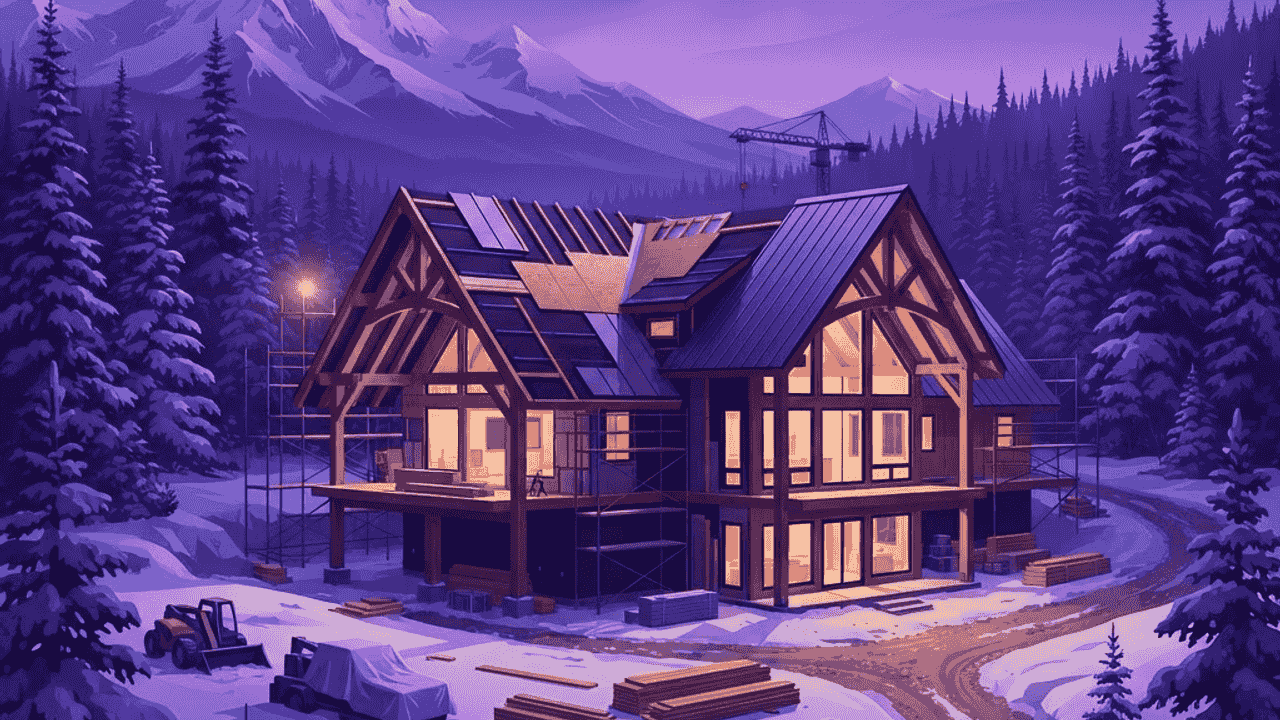
What a Home Has to Survive in Anchorage
A house in Anchorage faces a combination of stresses that few housing markets impose. Winter temperatures regularly drop well below zero, creating enormous differences between indoor and outdoor conditions that push moisture through building assemblies. Snow loads demand roof structures engineered for real weight. Deep frost requires foundations placed below the frost line with drainage and insulation detailing that prevents heaving. Seismic activity adds structural requirements around shear walls, hold-downs, and connection detailing. Wind exposure in certain neighborhoods stresses cladding and window assemblies.
The result is that residential construction quality in Anchorage is measurable in ways it is not elsewhere. Heating bills reveal envelope performance immediately. Ice dams reveal insulation and ventilation failures. Mold and rot reveal vapor control mistakes, usually several years after the builder has moved on. The best local companies build to withstand these tests deliberately.
The Building Science That Matters Most
Air sealing comes first. Uncontrolled air movement carries far more moisture into assemblies than vapor diffusion does, and it is the leading cause of both high heating costs and hidden damage. Builders who conduct blower door testing and treat air barrier continuity as a design element rather than an afterthought produce dramatically better homes.
Insulation strategy follows. Meeting minimum code is a low bar in this climate. Continuous exterior insulation reduces thermal bridging through framing members, which both improves efficiency and keeps sheathing warm enough to avoid condensation. Deep attic insulation paired with proper venting prevents the ice dams that plague poorly built Anchorage roofs.
Vapor control requires genuine understanding. Assemblies must be designed so moisture can dry in at least one direction. Double vapor barriers trap water and destroy sheathing. This is the area where inexperienced builders cause the most expensive long-term damage.
Mechanical ventilation is not optional in a tight home. Heat recovery ventilators supply fresh air while recapturing warmth from exhaust, maintaining indoor air quality without punishing energy penalties. Any builder constructing a tight envelope without a ventilation plan is creating a problem.
Finally, window and door selection carries outsized weight. High-performance triple-glazed units with warm-edge spacers and low air leakage rates reduce condensation, improve comfort near glazing, and lower heating demand substantially.
The Ten Best Residential Construction Companies in Anchorage
1. Spinell Homes is one of the most recognized residential builders in the region, delivering new homes across multiple Anchorage-area developments. Its production systems and long local track record give buyers a predictable process and homes designed for the climate.
2. Hultquist Homes has built a reputation in the custom and semi-custom segment, working closely with buyers on layout and finish decisions while maintaining attention to envelope performance.
3. Alaska Quality Builders focuses on custom homes and substantial renovations, with an emphasis on construction detail. Companies in this tier tend to attract clients who prioritize long-term performance over lowest initial cost.
4. Chugach Custom Homes serves buyers seeking individualized design, often on challenging hillside or wooded lots where site conditions require thoughtful foundation and drainage solutions.
5. Northern Design and Construction combines design services with construction delivery, which streamlines communication and reduces the gap between architectural intent and built result. Integrated delivery is particularly useful on complex sites.
6. Denali Homes works across new construction and major remodel projects, addressing the substantial Anchorage market of aging housing stock that needs envelope upgrades, window replacement, and mechanical modernization.
7. Turnagain Construction serves the residential remodel and addition segment, where working within an existing structure demands both diagnostic skill and careful integration of new assemblies with old ones.
8. Frontier Building Company handles residential builds with attention to energy efficiency, reflecting growing buyer interest in homes that cost less to operate through a long heating season.
9. Alaska Green Building represents the high-performance and sustainable segment, pursuing advanced air tightness, heat pump heating, and in some cases near-passive-house performance levels. This category is small but influential in raising local standards.
10. Established Independent Custom Builders collectively complete the list. Anchorage supports numerous small builders with strong reputations earned over decades. Their advantage is direct owner involvement, tight quality control, and accountability that survives long after the project closes.
How to Evaluate a Residential Builder
Ask specific technical questions and listen for specific answers. What air tightness result do your homes typically achieve? How do you insulate the foundation and rim joist? What is your attic ventilation approach? Which ventilation system do you install? A builder who answers precisely is a builder who thinks about these systems daily.
Request references from homeowners who have lived in their houses for at least three winters, and ask them about heating costs, ice dams, drafts, and condensation on windows. These are the questions that reveal build quality.
Review the contract carefully for allowances and exclusions. Vague allowances for flooring, cabinetry, and fixtures are a common source of budget overruns. Confirm warranty terms and who handles callbacks.
Visit an active job site if possible. Organized sites with protected materials and clean framing generally indicate disciplined work. Sheathing left exposed to weather for extended periods does not.
Where the Market Is Heading
Heat pump adoption is expanding as cold-climate models perform reliably at temperatures that would have been impractical a decade ago, often paired with backup heat for the coldest stretches. High-performance envelopes are shifting from premium option toward buyer expectation as energy costs stay prominent. Accessory dwelling units are drawing interest as families seek rental income or multigenerational flexibility. And prefabricated wall panels are gaining ground because factory assembly reduces exposure during Anchorage's short building season.
The constant is that in this climate, construction quality is not cosmetic. It determines comfort, operating cost, and durability, and choosing a builder who understands that is the most consequential decision a homeowner makes.