
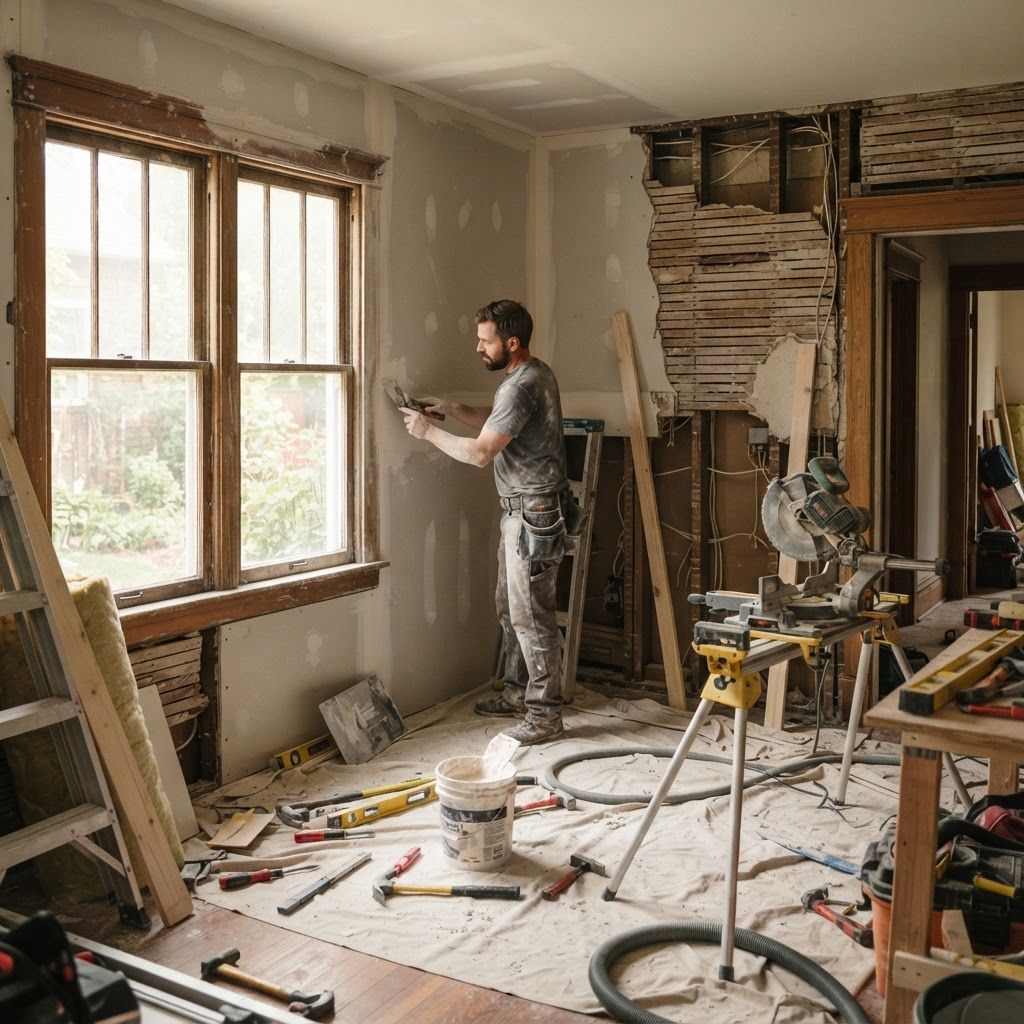
Why Renovation Work in St. Paul Is Its Own Discipline
Renovation is fundamentally different from new construction. A new build starts from a known condition, while a renovation starts from a mystery. St. Paul housing stock spans more than a century, and a single home may contain original balloon framing, a 1950s electrical panel, a 1970s bathroom addition, and a 2000s kitchen refresh layered on top of each other. Contractors who thrive in this environment build contingency into both schedule and budget, and they investigate before committing to fixed pricing.
Common discoveries include undersized floor joists that fail current deflection standards, plumbing drain lines in poor condition behind finished walls, insufficient electrical service capacity, and insulation that has settled or was never installed. None of these are unusual, and none should surprise an experienced renovation contractor. What matters is whether they were anticipated and communicated.
Scoping a Renovation Properly
The most successful renovation projects begin with a discovery phase. Selective demolition, a professional inspection, and an existing conditions assessment cost a fraction of the total project and dramatically reduce change orders later. Homeowners who resist this step often pay for it several times over during construction.
Structural changes deserve early engineering input. Removing a wall between a kitchen and living room frequently requires a beam, posts, and a load path to the foundation, sometimes including footing modifications. Getting this designed before demolition prevents costly rework and permit delays.
Ten Renovation Contractors Serving St. Paul Homeowners
Heritage Home Renovations focuses on period-appropriate work in historic districts, with in-house plaster repair and salvaged material sourcing capability.
Twin Cities Remodel Collective operates as a design-build firm, handling architectural design, interior selections, and construction under one contract to reduce coordination burden on clients.
Bungalow Restoration Works specializes in the arts and crafts bungalows common throughout Macalester-Groveland and Como, with strong trim and built-in cabinetry craftsmanship.
Stonebridge Renovation Group handles large-scale whole-house renovations and gut rehabs where nearly every system is replaced.
Kitchen and Bath Craftsmen of St. Paul concentrates exclusively on wet rooms, where waterproofing detail, ventilation, and fixture rough-in accuracy determine long-term durability.
Northland Basement Specialists converts unfinished basements into livable space while addressing moisture management, egress window requirements, and ceiling height constraints.
Frost Creek Contracting is known for structural remodels including additions, dormers, and load-bearing modifications supported by engineered drawings.
Cathedral Hill Interiors and Build serves clients seeking high-end finishes with detailed material specifications and dedicated project management.
Riverside Accessibility Remodelers focuses on aging-in-place modifications such as zero-threshold showers, widened doorways, and main-floor bedroom conversions.
Union Park Renovation Company completes the list with mid-range full-service remodeling and a reputation for clear fixed-price contracts.
Renovation Trends in the St. Paul Market
Open-plan enthusiasm has moderated. Homeowners increasingly want defined zones, particularly a dedicated home office and a functional entry with storage for winter gear. Kitchens are trending toward warmer wood tones, mixed metal finishes, and larger pantry allocations rather than maximum island size.
Energy retrofits have gained momentum. Air sealing attic bypasses, adding cellulose or dense-pack insulation, replacing single-pane windows, and upgrading to cold-climate heat pumps deliver comfort improvements that homeowners notice immediately during Minnesota winters. Utility rebates frequently offset part of the cost.
Basement and attic conversions remain popular because they add usable square footage without expanding the building footprint, which matters on the compact lots typical throughout the city.
Budgeting Realistically
Renovation costs per square foot commonly exceed new construction because of demolition, protection of existing finishes, working in confined spaces, and integrating new systems into old ones. Kitchen and bathroom work carries the highest cost density due to plumbing, electrical, tile, and cabinetry concentration.
A sensible approach is to establish a contingency of ten to twenty percent for homes older than fifty years. Prioritize invisible infrastructure first. Electrical service, plumbing supply lines, roof integrity, and insulation deliver more long-term value than premium countertops, and they are far more disruptive to address later.
Choosing Your Contractor
Verify Minnesota residential contractor licensing and confirm insurance coverage directly with the carrier. Ask for a written scope that specifies materials by manufacturer and model rather than vague allowances. Understand the payment schedule and never fund substantially ahead of completed work. Confirm who will be on site daily and how decisions get communicated.
Request references from projects completed two or more years ago and ask specifically about warranty follow-through. Renovation defects often reveal themselves after a full seasonal cycle, so a contractor who returns calls a year later is demonstrating something meaningful.
Conclusion
The right renovation contractor in St. Paul is one who investigates before promising, prices transparently, and treats older homes with the respect and caution they require. The ten firms profiled here span historic restoration, structural remodeling, accessibility work, and full design-build service. Define your priorities, invest in proper discovery, and choose a contractor whose past work looks like the project you are planning.