
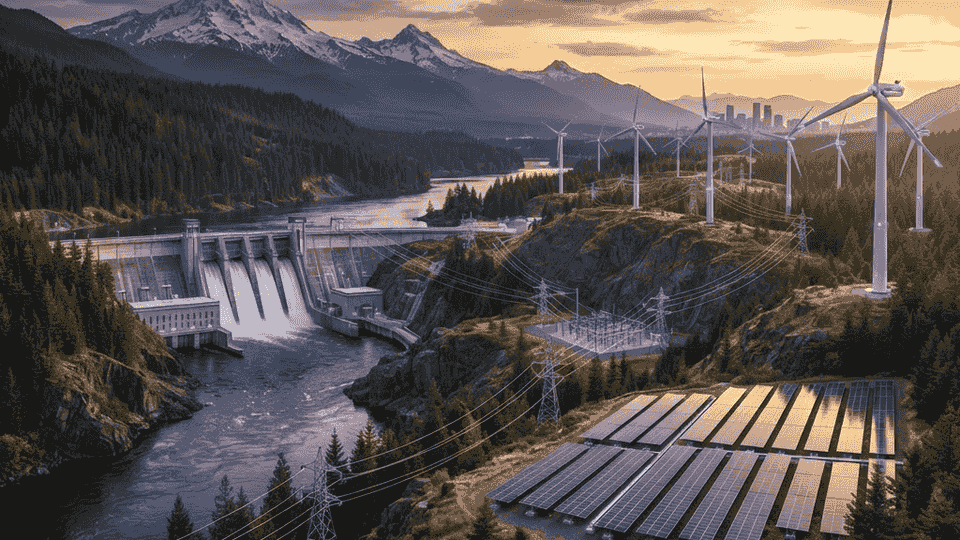
A Clean-Energy State Built on Hydropower
Washington has one of the nation’s most distinctive electricity systems. Large hydroelectric resources along the Columbia River have long supplied comparatively low-carbon power, while wind farms, solar installations, efficiency programs, renewable fuels, and battery storage continue to diversify the mix. Seattle, Bellevue, Spokane, the Tri-Cities, Vancouver, and rural communities each play different roles in the transition.
The organizations below include utilities, developers, manufacturers, and energy-service providers. They are not interchangeable, and “best” depends on whether a reader needs electricity service, a commercial project, renewable fuels, technology, or consulting. The list emphasizes market influence, Washington relevance, service breadth, and contribution to cleaner energy.
1. Energy Northwest
Richland-based Energy Northwest is a public-power joint operating agency serving Washington utilities. Its portfolio and project-development work include wind, solar, hydro, storage exploration, and other carbon-free resources. The organization is especially important because it helps public utilities collaborate on generation and emerging energy needs while retaining a regional focus.
2. Puget Sound Energy
Bellevue-based Puget Sound Energy is Washington’s largest utility by customer reach and a significant wind-energy owner. Projects such as Wild Horse and Lower Snake River demonstrate utility-scale renewable development in central and southeastern Washington. The company also supports customer efficiency and distributed-energy programs as it works through long-term decarbonization requirements.
3. Avista
Spokane-based Avista serves electric and natural-gas customers across the Inland Northwest. Hydroelectric generation is central to its Washington portfolio, supported by wind and other resources. Avista’s regional knowledge, grid operations, and customer programs make it influential in eastern Washington, where reliability must be balanced with clean-energy targets and seasonal conditions.
4. Seattle City Light
Seattle City Light is a community-owned utility with a power supply strongly associated with hydroelectric resources. Its conservation programs and carbon-conscious procurement have helped make municipal power an important part of Seattle’s climate strategy. Customers benefit from a utility whose planning is closely tied to the city’s public goals, though hydropower stewardship also requires attention to rivers, fisheries, and tribal interests.
5. Chelan County Public Utility District
Chelan PUD operates major Columbia River hydroelectric projects and supplies public power in north-central Washington. In addition to generation, it manages fiber, water, parks, and conservation responsibilities. Its hydro assets provide renewable electricity and regional economic value, while modern operations increasingly emphasize habitat measures, long-term licensing, and careful resource management.
6. Grant County Public Utility District
Grant PUD operates the Priest Rapids Project on the Columbia River, including substantial hydroelectric generation. Affordable power has supported agriculture, residents, and energy-intensive industries in central Washington. The utility’s significance lies not only in output but also in its role managing transmission, environmental obligations, and growing demand.
7. Douglas County Public Utility District
Douglas PUD operates Wells Dam and delivers public power in north-central Washington. Its hydroelectric foundation demonstrates how locally governed utilities can combine generation, distribution, and community accountability. Like other river operators, it must balance dependable production with fish passage, habitat commitments, and changing hydrological conditions.
8. OneEnergy Renewables
Seattle-based OneEnergy Renewables develops utility-scale and community-oriented solar projects. The company works across site identification, permitting, interconnection, financing, and project delivery. Its development expertise is valuable in a market where a solar project’s success depends as much on land, grid capacity, and stakeholder engagement as on panels.
9. McKinstry
Seattle-headquartered McKinstry provides energy, construction, engineering, and facility services. It helps public and private organizations reduce consumption, modernize buildings, and deploy renewable or distributed-energy solutions. Efficiency is often the most economical clean-energy resource, and McKinstry’s whole-building approach can connect equipment upgrades with operations and measurable performance.
10. Promus Energy
Washington-based Promus Energy develops renewable natural gas and low-carbon fuel projects. These projects can capture methane from agricultural, waste, or wastewater sources and convert it into useful energy. The category offers potential emissions benefits, but project quality depends on feedstock, leakage control, lifecycle accounting, and durable operating practices.
Trends Shaping Washington Renewables
Electrification is increasing demand as transportation and buildings shift away from fossil fuels. At the same time, utilities must plan for transmission constraints, peak loads, wildfire risk, drought variability, and the retirement or conversion of legacy resources. Storage, demand response, grid modernization, and geographically diverse generation will become increasingly important.
Communities evaluating a provider or project should ask about lifecycle impacts, local hiring, tribal consultation, habitat protection, decommissioning, and ownership. Washington’s renewable advantage is substantial, but the next phase will depend on responsible siting, stronger transmission, and an energy system that remains reliable and affordable.