
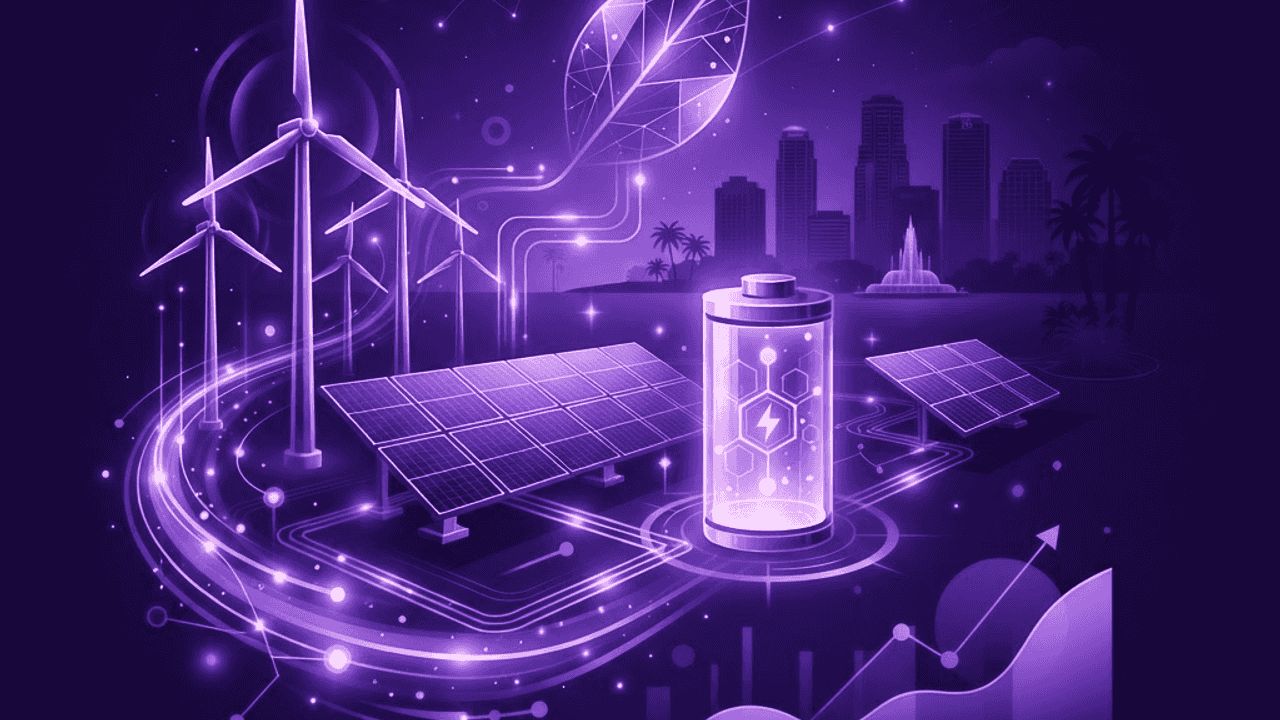
Central Florida's Renewable Energy Position
Florida's nickname is not marketing when it comes to energy. The state receives among the highest solar irradiance levels in the continental United States, and Central Florida sits in a particularly favorable band. Combined with population growth that continuously increases electricity demand, rising commercial energy costs, and a large inventory of flat commercial rooftops and available land, the region has become one of the more active renewable energy markets in the southeast.
Utility-scale solar has expanded substantially across Central Florida, with large arrays developed throughout Orange, Osceola, Lake, and surrounding counties. Municipal utilities in the region have pursued their own renewable commitments, including community solar programs that allow customers to participate without installing equipment. Meanwhile commercial property owners, warehouses, agricultural operations, hotels, and institutional campuses have adopted onsite generation as energy costs have risen.
Renewable Energy Segments in the Region
Utility-scale solar development involves large ground-mounted arrays selling power to utilities under long-term agreements. Commercial and industrial solar covers rooftop and carport installations for businesses offsetting their own consumption. Residential solar serves homeowners, typically paired with monitoring and increasingly with battery storage. Battery energy storage has become a distinct segment, driven by resilience concerns during hurricane season and by the value of shifting solar production to evening demand. Energy efficiency services reduce consumption before generation is added, often producing better returns per dollar. And electric vehicle charging infrastructure has emerged as an adjacent business for many renewable contractors.
The Top 10 Renewable Energy Companies in Orlando
1. Florida Power & Light Solar Development
The dominant utility-scale developer in the state, operating extensive solar generation across Central Florida along with community solar subscription programs.
2. Orlando Utilities Commission Renewable Programs
The municipal utility has pursued significant solar capacity and offers community solar participation, making renewable energy accessible to customers who cannot install onsite.
3. Solar Bear Orlando
A regional installer serving residential and small commercial customers with system design, permitting, and installation across the metro.
4. ESA Solar Energy
A Central Florida based developer with experience in larger commercial and utility-scale projects, including engineering and construction management.
5. PowerPro Solar
Handles residential and commercial installations with attention to Florida-specific structural and wind load requirements that affect roof mounting design.
6. Sunshine Commercial Energy Partners
Focused on warehouse, industrial, and hospitality properties, combining rooftop solar with efficiency measures and demand management.
7. Central Florida Battery Storage Solutions
Concentrates on energy storage design and installation, addressing both resilience during outages and optimization of solar self-consumption.
8. Nona Clean Energy Group
Serves institutional and campus clients in southeast Orlando with integrated generation, storage, and charging infrastructure planning.
9. Meridian Energy Efficiency Services
Provides audits, lighting and mechanical upgrades, and building controls work, typically producing faster payback than generation projects alone.
10. Gulf Atlantic Renewable Development
Develops mid-scale ground-mounted projects on agricultural and industrial land, handling site control, interconnection, and offtake structuring.
Understanding Project Economics
Renewable project value depends on four variables: installed cost, energy production, the rate being offset, and available incentives. Florida's high irradiance improves production, but the rate structure matters enormously. A commercial customer with demand charges may find that solar alone does not reduce peak demand billing, which is why storage or efficiency work often accompanies generation. Federal tax credits and depreciation treatment significantly affect commercial returns, and structures such as power purchase agreements or leases shift who captures those benefits.
Florida-specific factors also apply. Wind load requirements for hurricane resilience increase mounting costs relative to inland states. Roof condition and remaining life matter, because installing on a roof needing replacement in five years creates an expensive removal and reinstallation. Property insurance carriers may have requirements regarding installations. And interconnection timelines with the serving utility vary and should be built into project schedules realistically.
Trends Shaping the Market
Battery storage adoption has accelerated sharply, driven both by hurricane resilience and by improving economics. Community solar has expanded access to customers who rent or have unsuitable roofs. Commercial adoption has grown faster than residential in recent periods as energy costs pressured operating budgets. Electric vehicle charging has become a standard component of commercial site planning. And agrivoltaics, combining agricultural use with solar generation, has drawn interest given Central Florida's substantial agricultural land base.
How to Evaluate a Provider
Confirm licensing, insurance, and workmanship warranty terms separately from equipment warranty. Ask for production estimates with the modeling assumptions disclosed, and be skeptical of projections notably higher than comparable local systems. Request references for installations at least three years old, since early failures reveal workmanship quality. Understand who handles permitting, inspection, and utility interconnection. Read financing terms carefully, particularly on residential agreements where lease and power purchase structures can complicate later home sales. And verify what happens to the roof warranty after penetration.
Conclusion
Central Florida has genuine renewable energy fundamentals: strong solar resource, growing demand, and a maturing contractor base spanning utility-scale development to residential installation and storage. Property owners who evaluate efficiency alongside generation, model economics against their actual rate structure, and select providers based on verified installation history rather than aggressive sales projections consistently achieve the returns and resilience they were looking for.