
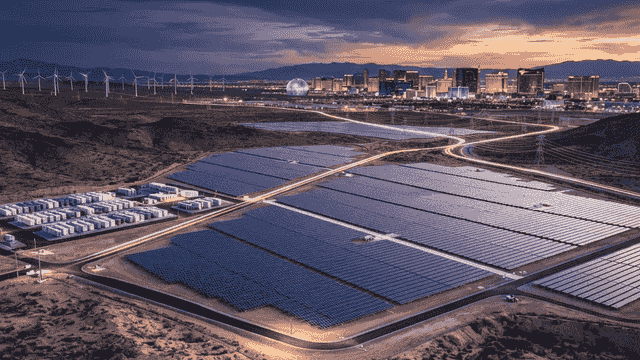
Las Vegas and the Renewable Energy Opportunity
Southern Nevada pairs abundant sunshine with rapid population growth, large commercial loads, and ambitious sustainability goals. Renewable energy decisions here are influenced by extreme heat, utility rules, transmission capacity, water scarcity, federal land, and the round-the-clock demands of resorts and data centers. The organizations below represent different parts of the market, so this list is a research starting point rather than a direct ranking of identical services.
1. NV Energy
NV Energy is the primary electric utility serving the Las Vegas Valley and plays a central role in Nevada's renewable transition. It procures utility-scale solar, geothermal, and storage resources while operating the grid that connects customers and generators. Businesses should study available tariffs, interconnection requirements, and renewable programs when planning on-site or purchased clean energy.
2. Arevon Energy
Arevon Energy develops, owns, and operates large renewable and battery storage projects, with substantial activity in the desert Southwest. Its utility-scale focus supports long-term power supply and grid reliability. The company's capabilities span project development, finance, construction oversight, operations, and asset management.
3. First Solar
First Solar manufactures thin-film photovoltaic modules designed for utility-scale projects. Its technology is recognized for performance in hot climates and a differentiated manufacturing and recycling approach. Although module selection is only one part of a project, temperature behavior and lifecycle considerations are particularly relevant in Southern Nevada.
4. NextEra Energy Resources
NextEra Energy Resources is a major North American developer and operator of wind, solar, and battery storage assets. Its scale supports sophisticated financing, power purchase agreements, and project operations. Large energy users evaluating off-site renewable supply may encounter the company through regional development and contracted generation opportunities.
5. EDF Renewables North America
EDF Renewables develops and operates wind, solar, storage, and distributed energy projects. The company serves utilities and commercial customers through large projects and tailored energy solutions. Its portfolio approach can be useful when reliability, procurement, and decarbonization goals require more than one technology.
6. Invenergy
Invenergy develops and operates renewable generation, storage, transmission, and other energy infrastructure. The company is known for managing complex projects from siting through long-term operation. In Nevada and neighboring markets, transmission access and land strategy are critical differentiators for utility-scale development.
7. Clearway Energy Group
Clearway Energy Group develops and operates clean energy assets across the United States. Its experience covers utility-scale and distributed projects, commercial agreements, and long-term asset management. Buyers seeking renewable contracts should compare delivery structure, environmental attributes, credit terms, and project timing.
8. Sunrun
Sunrun serves residential customers with rooftop solar, battery storage, monitoring, and financing options. Batteries can provide added value during outages or high-cost periods, although savings depend on system design and tariff details. Homeowners should compare ownership, lease, and power-purchase structures carefully.
9. Tesla Energy
Tesla Energy provides solar panels, energy storage, controls, and charging-related products for homes and larger facilities. Its integrated battery ecosystem is a major differentiator. Las Vegas customers should assess equipment placement, heat exposure, usable capacity, warranty conditions, installer support, and compatibility with utility programs.
10. ION Solar
ION Solar has served Nevada homeowners with rooftop solar design and installation. A regional residential provider can offer familiarity with local permitting, utility interconnection, and common roof types. Customers should still verify licensing, production assumptions, equipment specifications, subcontracting, and post-installation service.
How to Compare Renewable Energy Providers
Start by distinguishing a utility, project developer, equipment manufacturer, and installer; each solves a different problem. Request production estimates built from site-specific shading and weather, not broad averages. Evaluate degradation, warranties, inverter replacement, battery capacity, financing escalation, insurance, and maintenance. Commercial buyers should also examine contract credit, curtailment, renewable certificate ownership, interconnection risk, and delivery profile. In Las Vegas, heat performance and afternoon demand are especially important. A credible provider will explain assumptions clearly and show how the proposed system or contract performs under realistic Nevada conditions.