
Why Brownsville Matters in the Energy Transition
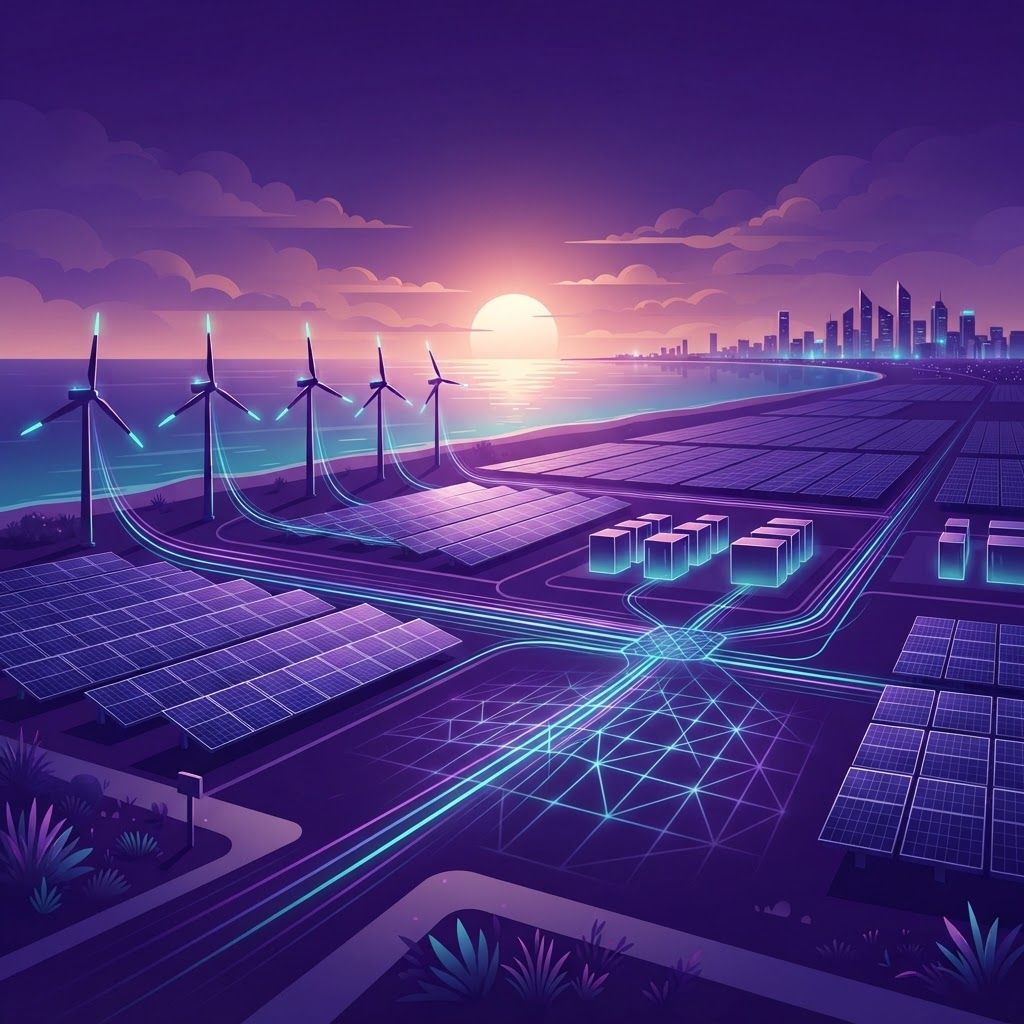
Geography has handed Brownsville an unusual combination of advantages. The city sits at the southern end of the Texas coast, where Gulf breezes produce consistent wind resources that peak in the afternoon and evening — precisely when electricity demand is highest. Solar irradiance across the Rio Grande Valley is among the strongest in Texas. The Port of Brownsville offers deepwater access and thousands of acres of industrial land, making it one of the few locations in the state capable of handling the enormous components that offshore wind and large-scale energy projects require.
Add a state electricity market that connects generators to load with fewer barriers than most jurisdictions, a workforce with industrial and maritime experience, and aggressive local economic development posture, and it becomes clear why developers have concentrated attention here.
The Segments of the Local Renewable Market
Utility-scale solar development. Large photovoltaic projects across Cameron, Willacy and Hidalgo counties have added substantial generating capacity to the grid. National and international developers — the kind of firms that build hundreds of megawatts at a time — have secured land, interconnection positions and long-term power purchase agreements across the region. These projects generate significant construction employment and ongoing property tax revenue for local taxing entities.
Wind generation. South Texas hosts an extensive onshore wind fleet, with turbines visible across the coastal plain north and west of Brownsville. Operators manage these assets with local technician workforces, and repowering older projects with more efficient turbines has become an active segment in itself.
Offshore wind support. The Gulf of Mexico has been identified as a future offshore wind region, and the Port of Brownsville is among the leading candidates for staging, assembly and manufacturing of components. The port's existing heavy fabrication capability, deepwater channel and available acreage position it well for this market as it develops.
Distributed and commercial solar. Rooftop and ground-mount installations for homes, businesses, schools, agricultural operations and municipal facilities constitute a growing local industry served by regional installers and electrical contractors.
Battery energy storage. Storage has become one of the fastest-growing categories in Texas, smoothing renewable output and providing grid services during peak demand. Standalone and solar-paired storage projects are increasingly common across South Texas.
Hydrogen and emerging technologies. Proposals for green hydrogen production using renewable electricity, along with related ammonia and fuel projects, have targeted the Gulf Coast industrial corridor. These remain earlier-stage but represent significant potential industrial investment.
Manufacturing and supply chain. Component manufacturing, steel fabrication, tower and foundation production, and logistics services supporting renewable projects form an industrial cluster around the port that may ultimately employ more people than generation itself.
The Companies Operating Here
The market includes several categories of participants. Large independent power producers and renewable developers with national portfolios — firms that develop, own and operate generation assets — hold most of the utility-scale projects. Engineering, procurement and construction contractors, including national renewable specialists and Texas-based industrial contractors, build them.
Operations and maintenance providers employ technicians who service turbines and solar plants across the region, often recruiting graduates from local technical programs. Regional electrical contractors and solar installers serve the distributed market, with several Valley-based companies having grown substantially over the past decade.
Port tenants engaged in heavy fabrication, steel and marine services increasingly serve renewable projects alongside traditional energy work, and this diversification has been a deliberate strategy for the port's industrial base.
Economic and Workforce Impact
Renewable development has delivered measurable benefits to the region. Construction phases employ hundreds of workers per project across civil, electrical and mechanical trades. Permanent operations roles — technicians, plant managers, control room staff — offer above-average wages with pathways that do not require four-year degrees.
Land lease payments provide steady income to landowners, particularly on ranch and agricultural property where energy revenue stabilizes operations subject to weather and commodity volatility. Property tax contributions support school districts, county services and community colleges.
Workforce development has responded accordingly. Texas State Technical College, Texas Southmost College and the University of Texas Rio Grande Valley have built programs in wind energy technology, electrical systems, industrial maintenance and engineering that feed directly into these employers.
Challenges Facing the Sector
Transmission constraints remain a genuine limitation. South Texas generates more power than local demand requires, and moving it north depends on transmission capacity that has not kept pace with generation growth. Congestion affects project economics and has slowed some development.
Interconnection queues are long, with projects waiting years for studies and approvals. Developers with experienced teams navigate this better than newcomers.
Hurricane exposure requires engineering for high wind loads and flooding, raising capital costs and insurance expense along the coast.
Land use coordination matters in a region with active agriculture, ranching, wildlife habitat and important bird migration corridors. Responsible developers invest in environmental study and community engagement early.
Supply chain and policy variability affect project timing, as equipment availability, trade measures and incentive structures shift.
What to Look for in a Renewable Energy Partner
For landowners considering a lease, experience matters more than the headline payment. Ask how many projects the developer has actually built, not just optioned. Review decommissioning obligations, access provisions and payment escalation carefully, and retain counsel familiar with energy leases.
For businesses pursuing on-site solar, verify electrical licensing, request production estimates based on actual site modeling rather than generic assumptions, confirm equipment warranties and check how long the installer has operated locally. Service after installation is where quality differences appear.
For communities and institutions, engagement with developers who have a track record of local hiring, local procurement and transparent communication produces better long-term outcomes than the highest bidder.
Final Thoughts
Brownsville occupies a genuinely advantaged position in the energy transition, with resources, infrastructure and industrial capacity that few markets can match. Wind, solar, storage, potential offshore development and an emerging hydrogen conversation all point toward sustained investment. For landowners, workers, contractors and local businesses, the practical opportunity is substantial — and the companies that succeed here will be those that pair technical capability with genuine commitment to the region.