
Why Kern County Became a Renewable Energy Capital
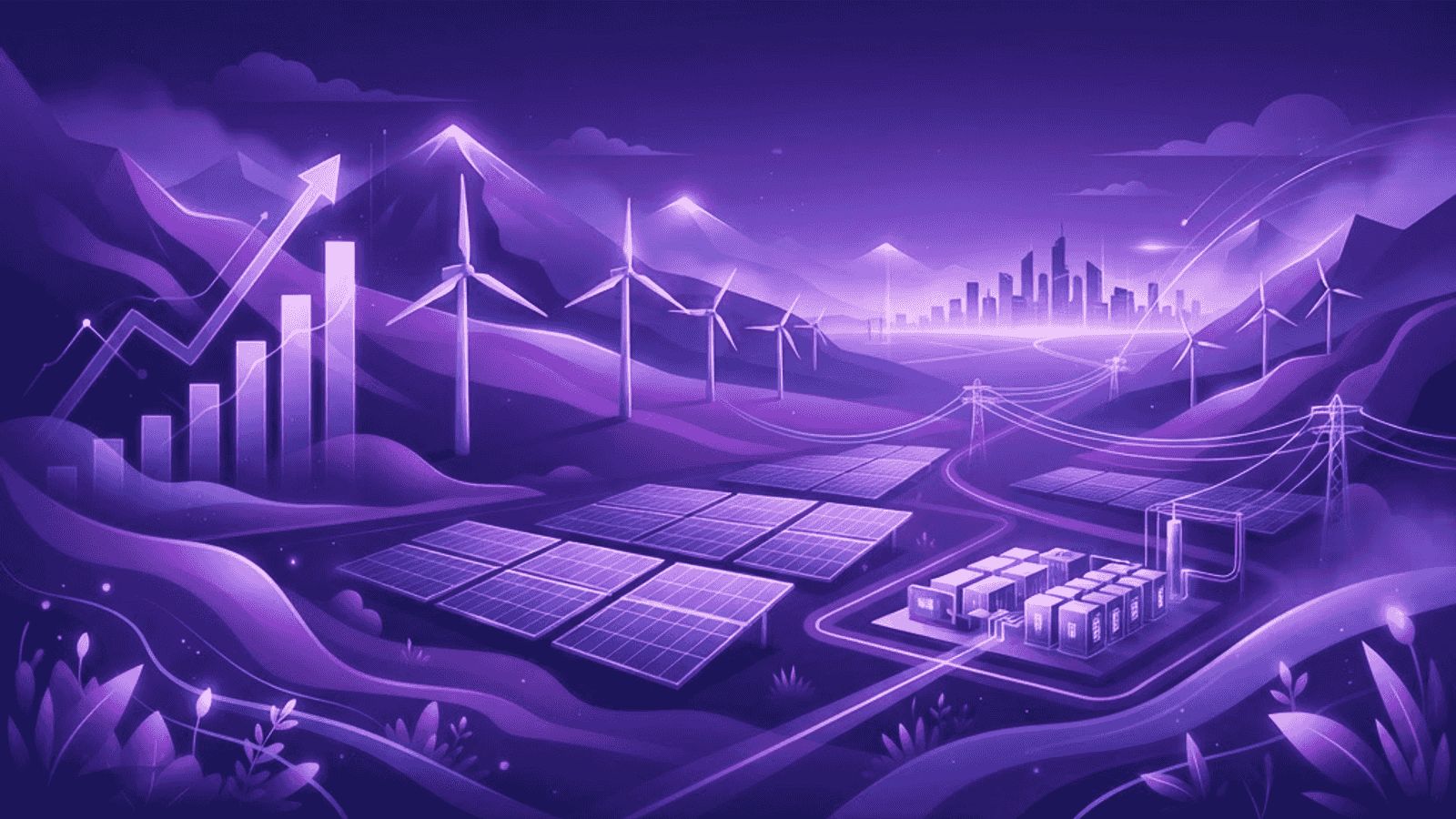
Few places in the United States combine renewable resources as favorably as Kern County. The Tehachapi Pass funnels persistent, high quality wind through a mountain corridor. The valley floor and Mojave edge receive intense, reliable solar irradiance. Vast tracts of relatively low conflict land sit near existing transmission infrastructure built originally for conventional energy. Add a workforce already skilled in heavy industrial construction and field operations, and the result is a region that hosts gigawatts of installed clean generation.
Bakersfield functions as the commercial and logistical center of that activity. Development offices, engineering contractors, equipment yards, operations and maintenance crews, and trade training programs cluster in and around the city even when the generating assets themselves stand miles away in the passes or on the desert margin. For the local economy, renewable energy has become a significant employer and tax base contributor alongside the traditional oil and agriculture sectors.
The Structure of the Local Renewable Industry
Renewable energy is not a single business. Independent power producers develop and own generating projects. Engineering, procurement and construction firms build them. Operations and maintenance companies keep them running for decades. Component manufacturers supply turbines, modules, trackers, inverters and batteries. Residential and commercial installers serve rooftop customers. Utilities and load serving entities purchase the output. Each of these functions has meaningful representation in the Bakersfield area.
Increasingly, storage is the integrating layer. As solar output concentrated in midday hours exceeded demand, battery energy storage became essential to shifting that energy into evening peak periods. Nearly every new project proposal in the region now includes storage, and retrofitting storage onto existing solar sites has become a growth business of its own.
The Top 10 Renewable Energy Companies in the Bakersfield Area
1. Terra-Gen. A major developer and operator with deep roots in the Tehachapi wind corridor and broader Kern County resource areas, Terra-Gen has built and operated large scale wind, solar and storage assets. Its long operating history in the region gives it institutional knowledge of local interconnection, permitting and land relationships that newer entrants must acquire from scratch.
2. NextEra Energy Resources. One of the largest renewable generators in North America, NextEra holds substantial wind and solar capacity in the Kern County region. Its scale enables competitive power purchase pricing and sophisticated portfolio management across generation and storage, and its long term ownership model supports stable local operations employment.
3. Clearway Energy Group. With significant solar and wind holdings in California including Central Valley and desert region assets, Clearway focuses on long term ownership and operational optimization. The company is recognized for pairing storage with existing solar to increase the value of delivered energy.
4. EDF Renewables. Active across wind, solar, storage and distributed generation in California, EDF Renewables brings international engineering depth to Kern County projects. Its distributed and commercial scale segment also serves agricultural and industrial customers looking to offset on site load.
5. Avangrid Renewables. A large scale wind and solar operator with California portfolio assets, Avangrid emphasizes repowering older wind sites with modern, higher capacity turbines. Repowering is particularly relevant in the Tehachapi area, where some of the earliest American wind farms are being modernized in place, delivering far more energy from fewer machines.
6. Pattern Energy. Known for wind development and transmission scale thinking, Pattern Energy operates in the broader Southern California renewable landscape. Its projects are often notable for grid integration strategy, recognizing that generation without transmission capacity delivers nothing.
7. First Solar. As a leading American thin film photovoltaic manufacturer whose modules are widely deployed in Southern California utility scale plants, First Solar influences the region generation profile through technology choice. Thin film performance characteristics in high temperature desert conditions are a meaningful advantage in this climate.
8. Vestas and GE Vernova wind operations. Turbine manufacturers maintain substantial service presences supporting Kern County wind fleets. Their local technician workforce handles blade inspection and repair, gearbox and generator service, and control system upgrades. These service roles represent some of the most durable skilled employment in the sector, since turbines require maintenance for their entire operating life.
9. Regional engineering, procurement and construction contractors. Firms building solar and storage plants in Kern County handle civil work, racking and tracker installation, electrical assembly, substation construction and commissioning. Many maintain Bakersfield offices and yards, drawing on local trade labor. Their capability determines whether projects finish on schedule, and schedule discipline drives project economics more than almost any other factor.
10. Local commercial and agricultural solar specialists. A meaningful segment of Bakersfield renewable activity serves farms, packing houses, dairies, cold storage and industrial facilities with behind the meter solar and storage. These installers understand agricultural load profiles, pump scheduling and utility rate structures, and they deliver savings that improve operating margins for growers facing rising energy and water pumping costs.
Challenges Facing the Sector Locally
Growth has not been frictionless. Transmission capacity constrains how much new generation can be connected, and interconnection queues stretch for years. Land use conflicts arise where solar development competes with agriculture or habitat, prompting careful siting analysis. Grid curtailment during periods of oversupply reduces revenue, which is precisely why storage has become central. Supply chain volatility for modules, transformers and batteries has affected project timing. And workforce development must keep pace, since specialized technicians are in demand nationwide.
What the Next Decade Looks Like
Several trajectories are clear. Storage will continue to be added at scale, both standalone and paired with generation. Older wind sites will be repowered with modern equipment. Hydrogen production and carbon management projects are being explored using the region industrial skill base and geology. Agricultural land retired from irrigation under groundwater regulation may find a second economic life hosting generation. And Bakersfield institutions, including community colleges and trade programs, are expanding technical training pipelines to supply the workforce these projects require.
Final Thoughts
Renewable energy in Bakersfield is not an aspiration or a pilot program. It is an established industry with operating assets, long term contracts, skilled employment and a growing local supply chain. The companies above illustrate the range of the sector, from global developers to hands on local installers, and together they explain why Kern County remains one of the most important clean energy regions in the country.