
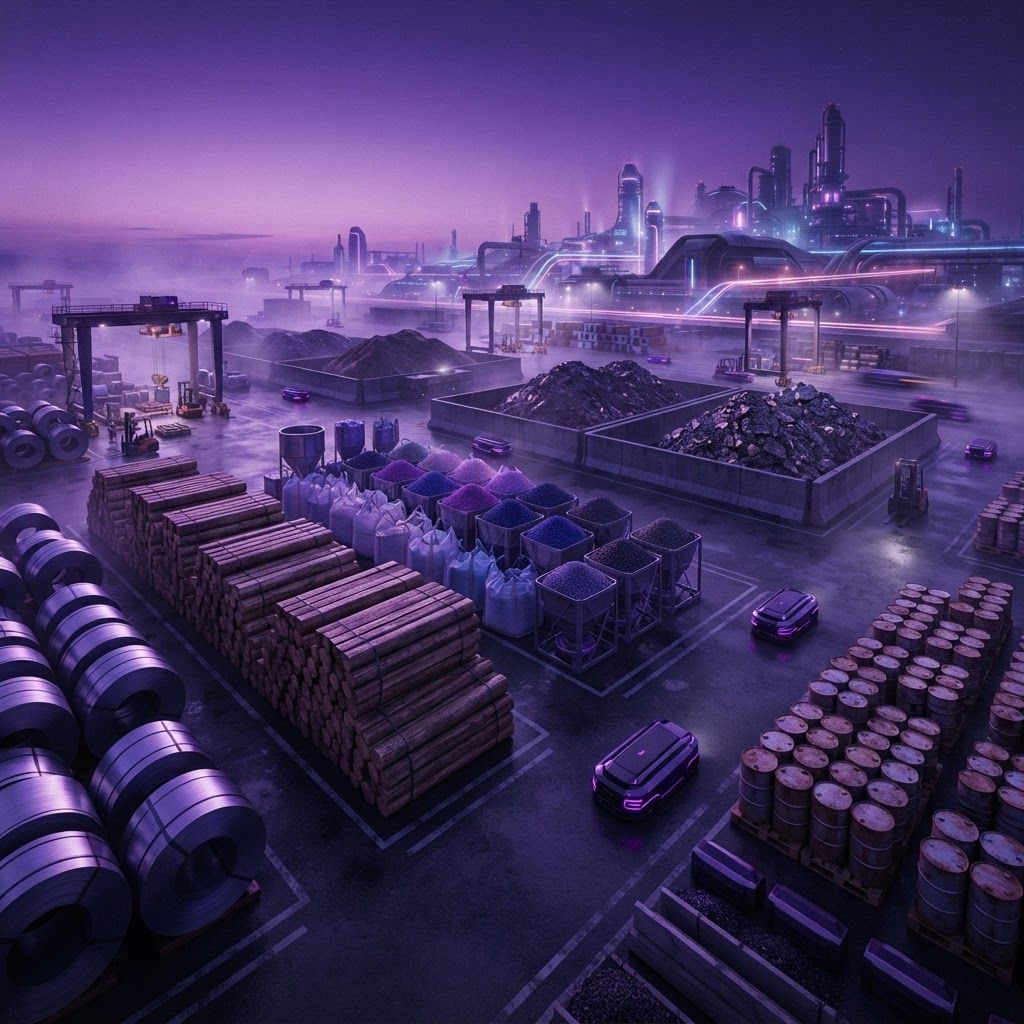
The Foundation of Ontario Manufacturing
Every finished product begins as raw material, and Ontario's manufacturing economy rests on a supply base that delivers steel, aluminum, resins, chemicals, lumber and specialty materials to thousands of producers. The province's advantages are considerable: primary steel production within its borders, deepwater access through the Great Lakes and Saint Lawrence Seaway, extensive rail infrastructure and proximity to the industrial heartland of the United States.
Raw material sourcing is a different discipline from component purchasing. Prices move with global commodity markets, lead times fluctuate with mill schedules, and quality is defined by certificates rather than visual inspection. Buyers who understand these dynamics protect their margins far more effectively than those who simply request quotations.
Top 10 Best Raw Material Suppliers in Ontario
1. ArcelorMittal Dofasco
Located in Hamilton, Dofasco is one of Canada's largest flat-rolled steel producers, supplying automotive, construction, packaging and appliance manufacturers. Its investment in electric arc furnace technology represents one of the most significant decarbonisation projects in Canadian heavy industry.
2. Algoma Steel
Algoma in Sault Ste. Marie produces hot rolled, cold rolled and plate steel serving a wide range of Ontario fabricators and manufacturers. Its plate products are particularly important to heavy equipment, shipbuilding and structural applications.
3. Samuel, Son and Co.
Samuel is a leading metals distributor and processor with numerous Ontario facilities. Rather than simply reselling coil, it provides slitting, levelling, cut-to-length and tube production, allowing manufacturers to receive material closer to finished dimensions.
4. Russel Metals
Russel Metals operates metals service centres across Ontario carrying steel, aluminum and stainless products in a wide range of shapes and grades. Its inventory breadth supports fabricators who need small quantities of many specifications rather than mill-quantity purchases.
5. Ryerson Canada
Specialising in aluminum, stainless steel and alloy products, this class of service centre serves aerospace, food processing and architectural customers where material traceability and surface quality are critical.
6. Nova Chemicals
With Ontario operations, Nova produces polyethylene and related plastics used in packaging, film and industrial applications. Domestic resin supply reduces exposure to international freight disruption for Ontario converters.
7. Univar Solutions Canada
Chemical distribution in Ontario supplies solvents, acids, surfactants and specialty additives to manufacturers across food processing, coatings, water treatment and personal care. Regulatory compliance, safe handling and documentation are central to this business.
8. EACOM and Ontario Lumber Producers
Ontario's forest products sector supplies dimensional lumber, engineered wood and panel products to construction and furniture manufacturers. Sustainable forest management certification has become a standard requirement for major buyers.
9. Vale and Glencore Ontario Operations
The Sudbury basin remains a globally significant source of nickel, copper and platinum group metals. These operations feed downstream refiners and alloy producers whose output eventually reaches Ontario fabricators.
10. Specialty Polymer and Composite Distributors
A growing group of Ontario suppliers distributes engineering plastics, resins, fibreglass and composite materials to manufacturers replacing metal components with lighter alternatives. Technical datasheets and application support distinguish the strongest players.
Managing Price Volatility
Commodity prices can move sharply, and manufacturers who quote fixed prices on long-term contracts without protection can see profitable programs turn into losses. Several tools help. Indexed pricing ties material cost to a published benchmark so both parties share movement. Forward purchasing locks in volume at an agreed price. Surcharge clauses pass through defined increases transparently.
Inventory strategy also matters. Holding more material reduces exposure to short-term spikes but ties up working capital and creates obsolescence risk. Most Ontario manufacturers settle on a buffer sized to their lead time plus a safety margin, reviewed as market conditions change.
Quality Documentation and Traceability
Mill test certificates are the backbone of raw material quality assurance, recording chemical composition and mechanical properties for each heat. For regulated industries such as pressure equipment, aerospace or food contact applications, maintaining an unbroken documentation chain from mill to finished product is a legal requirement rather than a preference.
Ask suppliers how they handle certificate retrieval, whether they can supply documents electronically at the time of shipment, and how they segregate and identify material in their warehouse. A service centre with poor material identification practices is a genuine risk regardless of price.
Trends Affecting Ontario Raw Material Supply
Decarbonisation is transforming primary materials. Low-carbon steel produced through electric arc furnaces, recycled aluminum and bio-based polymers are increasingly requested by customers who must report on supply chain emissions.
Supply chain resilience has become a board-level concern. After several years of disruption, manufacturers are dual-sourcing critical inputs and favouring domestic or nearshore suppliers even at modest cost premiums.
Critical minerals are another area of focus. Ontario's mineral resources have gained strategic importance as battery and electronics supply chains seek secure sources outside traditional dominant producers.
Practical Sourcing Advice
Consolidate spend to gain leverage, but qualify a second source for anything that would stop your line. Qualification takes time and should be done before a crisis, not during one.
Communicate forecasts honestly. Suppliers allocate capacity to customers who provide reliable projections. Inflated forecasts damage credibility and eventually service levels.
Finally, involve engineering in sourcing decisions. Substituting a more available grade or adjusting a tolerance can dramatically improve availability and cost without affecting product performance.
Final Thoughts
Ontario offers manufacturers an enviable raw material base combining primary production, sophisticated service centres and specialty distribution. Manage price risk deliberately, insist on rigorous documentation, and build supplier relationships grounded in accurate forecasting. Those practices turn raw material sourcing from a recurring headache into a genuine competitive advantage.