
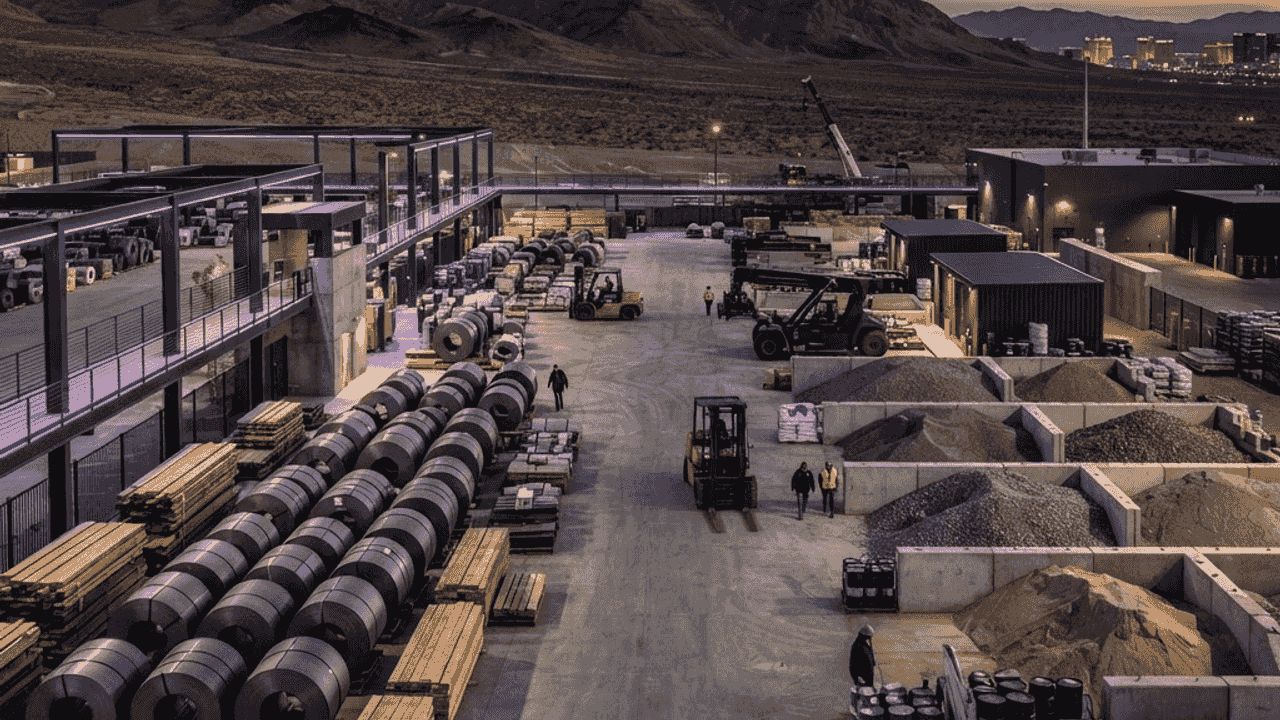
Raw Materials for a Growing Desert City
Las Vegas development depends on steady access to steel, concrete, aggregates, lumber, plastics, landscaping materials, and specialty metals. The region's heat, water constraints, seismic considerations, and long freight lanes make specification and logistics especially important. Contractors and fabricators need suppliers that can document grades, deliver accurately, and resolve shortages without delaying crews.
The companies below cover different material categories and may serve through local branches, yards, or regional distribution. Buyers should confirm availability, account terms, and project-specific compliance.
1. L&W Supply
L&W Supply distributes interior building materials such as gypsum wallboard, steel framing, ceilings, insulation, and related products. Its focus on professional contractors can support commercial and residential projects across the Las Vegas Valley. Delivery coordination matters because staging large quantities too early can create damage and congestion on active sites.
2. White Cap
White Cap supplies concrete accessories, reinforcing products, chemicals, tools, safety equipment, and construction materials. Its category depth is relevant to structural and civil contractors. Buyers should ensure anchors, repair materials, sealants, and other engineered products match approved submittals and environmental conditions.
3. CEMEX
CEMEX provides ready-mix concrete, aggregates, and related building materials in major markets. For Las Vegas projects, mix design, placement timing, temperature management, and plant-to-site logistics are critical. Contractors should coordinate closely on slump, admixtures, testing, truck spacing, and hot-weather concrete procedures.
4. CalPortland
CalPortland supplies cement, ready-mix concrete, aggregates, and asphalt across the Western United States. Its materials support buildings, roads, and infrastructure. Project teams should evaluate plant capacity, haul distance, environmental documentation, and quality-control capabilities for the specific job.
5. Jensen Precast
Jensen Precast manufactures precast concrete products for utility, drainage, transportation, and site applications. Precast solutions can reduce field labor and improve consistency when correctly specified. Buyers need accurate drawings, lifting plans, access routes, and delivery sequencing because large components are difficult to reposition after arrival.
6. Pacific Steel & Recycling
Pacific Steel & Recycling supplies steel products and recycling services across the region. Fabricators and contractors may source structural shapes, plate, tubing, sheet, rebar, or related materials depending on local availability. Material grade, dimensions, mill documentation, cutting services, and lead time should be confirmed on every critical order.
7. Ryerson
Ryerson is a major metals distributor and processor offering carbon steel, stainless steel, aluminum, and specialty metals. Processing capabilities can reduce in-house cutting and handling for manufacturers and fabricators. Buyers should compare yield, tolerances, packaging, and delivered pieces—not merely raw weight pricing.
8. Industrial Metal Supply
Industrial Metal Supply serves the Southwest with metals, shapes, sheet, plate, tubing, and fabrication-related products. It can be useful for smaller production runs, maintenance work, custom fabrication, and prototyping. Confirm service to Southern Nevada and account for freight when comparing against local stock.
9. Boise Cascade
Boise Cascade distributes building materials and manufactures engineered wood products. Its categories can support framing, structural systems, panels, and general construction supply chains. Contractors should protect wood from weather and jobsite damage and follow engineered specifications for storage, handling, and installation.
10. SiteOne Landscape Supply
SiteOne Landscape Supply distributes irrigation, hardscape, agronomic, outdoor-lighting, and landscape materials. In water-conscious Las Vegas, efficient irrigation components and climate-appropriate landscape systems are especially important. Professionals should design to local requirements and prioritize maintainability, pressure compatibility, and water performance.
How to Evaluate Material Suppliers
Begin with approved specifications. Record grade, standard, dimensions, finish, test documentation, acceptable substitutions, and quantity tolerances. Compare total delivered cost, including cutting, waste, pallets, fuel surcharges, unloading, storage, and return limitations. A cheaper material that increases field labor or scrap can cost more overall.
Supplier reliability should be measured using on-time, in-full delivery and nonconformance rates. For scheduled pours, crane picks, or road closures, timing has direct labor and equipment consequences. Establish escalation contacts and inspect loads promptly. Preserve lot numbers and certificates when traceability is required.
Las Vegas Material Trends
Growth in logistics facilities, housing, entertainment venues, data infrastructure, and public works is influencing demand. Contractors are also evaluating lower-carbon concrete options, recycled-content metals, engineered wood, efficient irrigation, and prefabricated assemblies. Claims should be supported by product documentation and considered alongside durability, code compliance, and lifecycle performance.
Building a Strong Supply Network
L&W Supply and White Cap support building contractors; CEMEX and CalPortland cover concrete and aggregate needs; Jensen Precast serves infrastructure; Pacific Steel, Ryerson, and Industrial Metal Supply address metals; Boise Cascade supports wood products; and SiteOne focuses on landscapes. No single source fits every project, so qualify suppliers by material family and maintain alternatives for schedule-critical items. Hold preconstruction conversations with vendors when quantities are large or specifications are unusual. Early visibility allows suppliers to reserve production, propose compliant processing options, and identify transportation constraints before they affect field crews. After completion, compare estimated and actual waste, freight, and handling costs to improve the next carefully planned strategic buy.