
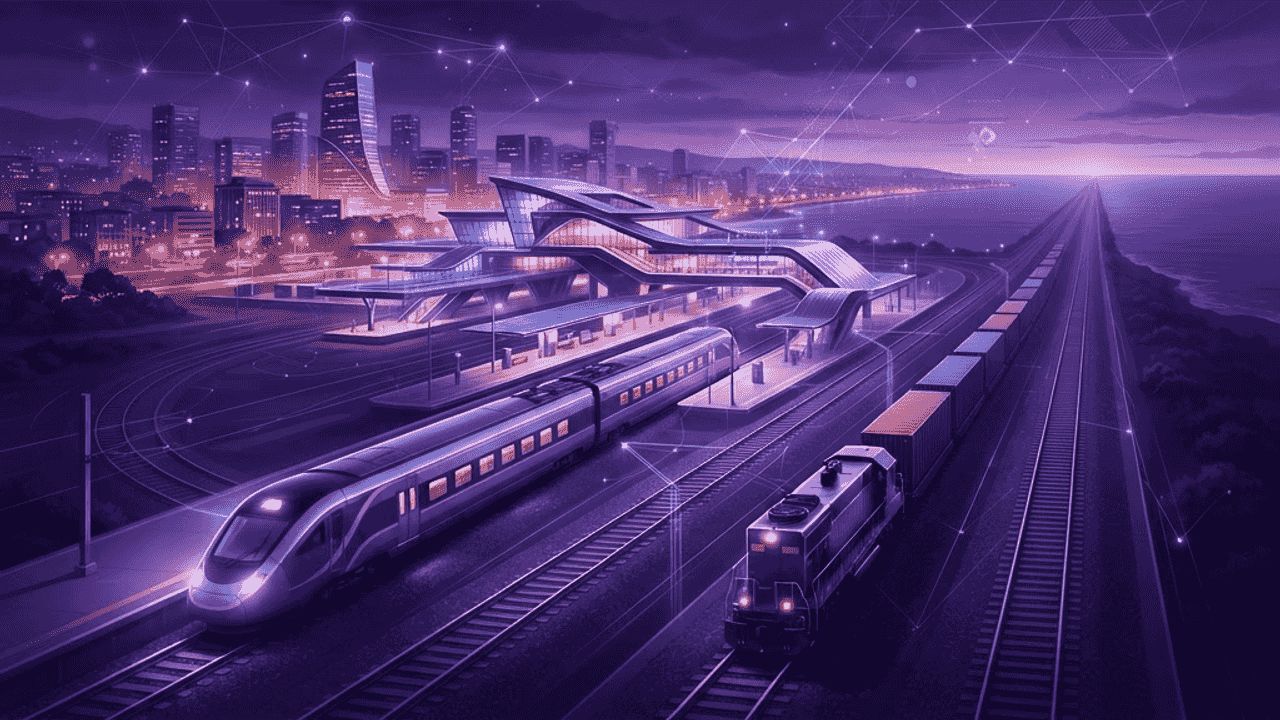
Rail in the Virginia Beach Region
Virginia Beach is a coastal city better known for its beaches than its railroads, yet rail infrastructure shapes the regional economy in ways most visitors never notice. Containers arriving at the Port of Virginia move inland by rail toward Ohio, Illinois and the wider Midwest, often within hours of being lifted off a vessel. Coal, grain, chemicals and manufactured goods flow through the same corridors. On the passenger side, regional rail service from nearby Norfolk provides a comfortable alternative to driving north toward Richmond and Washington.
Understanding the rail landscape here requires distinguishing between three categories. Class I freight railroads operate vast national networks and handle long-haul intermodal and bulk traffic. Passenger operators provide scheduled service for travelers. Short-line and switching railroads perform the essential local work of moving cars between terminals, industrial sites and the main lines. All three are represented in the Hampton Roads area.
Why Rail Matters for Shippers and Travelers
For shippers, rail becomes economically compelling on distances beyond roughly seven hundred miles, where the cost per container falls significantly below over-the-road trucking and fuel efficiency per ton-mile is several times better. That efficiency also translates into lower emissions per unit shipped, which increasingly matters for corporate sustainability reporting. The tradeoff is transit time and the need for drayage at each end of the journey.
For travelers, rail offers reserved seating, generous luggage allowance, power outlets, restrooms, café service and the ability to work en route, all without traffic or parking costs. The catch in Virginia Beach specifically is that there is no station in the city itself, so passengers connect from Norfolk or use connecting motorcoach service to reach the rail network.
The Ten Best Railway Operators Serving the Virginia Beach Region
1. Norfolk Southern Railway
Headquartered historically in this region and one of the two dominant eastern Class I railroads, Norfolk Southern provides extensive intermodal and bulk service from Hampton Roads to the Midwest and Southeast. Its Heartland Corridor investment created double-stack clearance toward Chicago, making it the primary inland route for containers moving off the port.
2. CSX Transportation
The other major eastern Class I carrier, CSX operates a dense network across the East Coast and offers intermodal, automotive, agricultural and bulk services from the Virginia gateway. Competition between the two Class I railroads gives regional shippers genuine routing and pricing options.
3. Amtrak
The national passenger operator provides service from Norfolk toward Richmond, Washington and the Northeast Corridor, with connecting motorcoach service linking the Virginia Beach and oceanfront area to the station. It is the most comfortable public transport option for travel north and is popular with business travelers and families alike.
4. Commonwealth Railway
A short-line operator serving the Hampton Roads port area, Commonwealth Railway handles the critical connection between marine terminal facilities and the Class I network. Its work is largely invisible to the public but essential to keeping container volumes flowing efficiently off the docks.
5. Norfolk and Portsmouth Belt Line Railroad
A switching and terminal railroad jointly serving the harbor area, the Belt Line moves railcars between industrial customers, marine terminals and connecting carriers. For local manufacturers and distributors with rail sidings, this operator is the practical gateway to the national network.
6. Virginia Passenger Rail Authority Services
The state authority responsible for expanding passenger rail capacity in Virginia has been acquiring right of way and funding infrastructure improvements to increase frequency between Hampton Roads, Richmond and Washington. Its work directly shapes future service levels for travelers in the region.
7. Chesapeake and Albemarle Railroad
This short line operates in the corridor between southeastern Virginia and northeastern North Carolina, serving agricultural and industrial customers. It provides rail access for shippers in areas that the Class I carriers do not reach directly.
8. Buckingham Branch Railroad
A Virginia-based short-line group operating multiple lines across the state, Buckingham Branch handles local freight, industrial switching and occasional excursion operations. It plays an important role in keeping smaller Virginia shippers connected to the main network.
9. Hampton Roads Transit Light Rail
The Tide light rail line in Norfolk is the region's only urban rail transit service, connecting downtown Norfolk with medical, business and residential districts. Virginia Beach residents and visitors reach it via regional bus connections, and it functions as the local rail complement to intercity services.
10. Virginia Railway Express
Although its commuter service operates in the northern part of the state toward Washington, Virginia Railway Express is relevant to Hampton Roads travelers making onward connections and illustrates the commuter rail model that regional planners study for future southeastern Virginia service.
Intermodal Strategy for Regional Shippers
Businesses in Virginia Beach can use rail effectively without owning a rail siding. Containers can be drayed a short distance to an intermodal terminal, loaded onto double-stack trains and moved inland at a lower cost than long-haul trucking. The keys to making that work are realistic transit expectations, careful attention to free time on containers and chassis to avoid demurrage, and coordination between the drayage carrier and the rail terminal to prevent idle days.
Emissions reporting is another reason to evaluate rail. Because rail moves substantially more freight per unit of fuel than road transport, shifting even part of a long-haul volume to intermodal produces measurable reductions that can be documented in sustainability disclosures.
Trends Shaping Rail in the Region
Investment is the dominant theme. Port expansion and channel deepening increase container volumes that must move inland, driving demand for rail capacity and terminal throughput. Passenger rail expansion programs aim to add frequency and reduce journey times between Hampton Roads and Washington. Operationally, railroads are deploying advanced signaling, predictive maintenance and precision scheduling to improve reliability, while gradually testing lower-emission locomotive technologies.
Final Thoughts
Rail in Virginia Beach works as part of a connected system rather than a standalone option. Freight shippers should evaluate intermodal for long-distance moves and work with local short lines and drayage partners for the first and last mile. Travelers should treat Norfolk as the regional rail gateway, book ahead for the best fares, and expect service frequency to improve as state investment programs advance.