
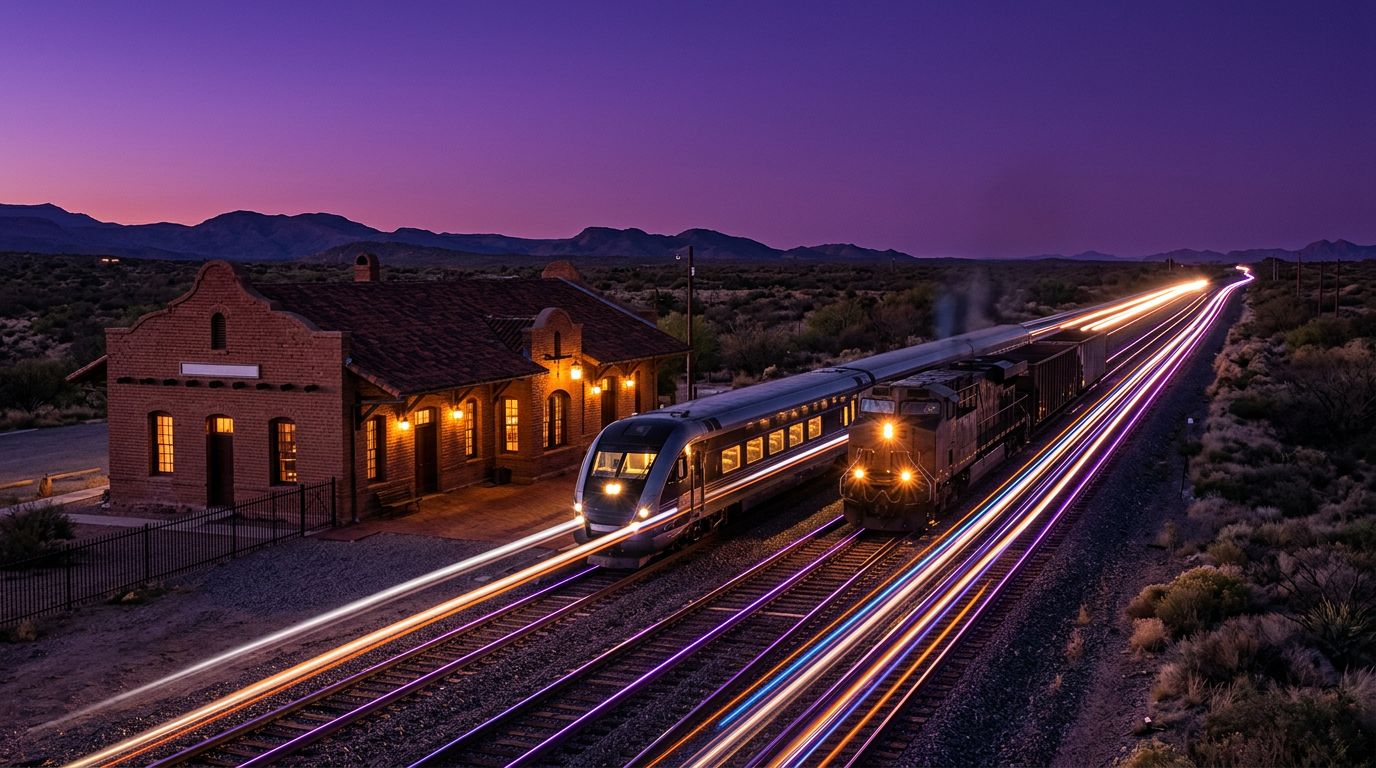
Temple: A City Built by the Railroad
Temple was established in 1881 by the Gulf, Colorado and Santa Fe Railway and was named after Bernard Moore Temple, the railroad's chief engineer. The city quickly grew into a major rail junction and medical center, as the Santa Fe Railway's hospital became a foundation of what is now Baylor Scott & White Medical Center. Today, the Temple Railroad and Heritage Museum, housed in the restored Santa Fe depot, celebrates this history while the depot continues to serve Amtrak passengers.
Rail remains vital to Temple's economy and identity. Freight trains move goods through the city around the clock, and passenger trains connect Temple to Chicago, San Antonio, and beyond.
Understanding Rail Operators
Railway operators fall into several categories: passenger railroads, Class I freight railroads, short line and regional railroads, and heritage excursion operators. Each plays a different role in moving people and goods through Central Texas.
1. Amtrak
Amtrak's Texas Eagle stops at Temple's historic depot, offering daily service north toward Fort Worth, Dallas, St. Louis, and Chicago, and south toward Austin and San Antonio, with connections to Los Angeles via the Sunset Limited. The route offers comfortable seating, sleeping cars, and scenic views, making it a relaxing alternative to driving or flying.
2. BNSF Railway
BNSF Railway is the successor to the Santa Fe Railway that founded Temple. It operates major freight facilities in the area and moves intermodal containers, agricultural products, and manufactured goods. BNSF's presence continues Temple's long tradition as a railroad town.
3. Union Pacific Railroad
Union Pacific operates one of the largest rail networks in the country, with extensive routes throughout Texas. Its lines connect Gulf Coast ports, Mexican border crossings, and major cities, supporting industries across Central Texas.
4. Georgetown Railroad
Georgetown Railroad is a regional short line in Central Texas known for serving the aggregates and construction materials industry. It plays an important role in transporting crushed stone used in road construction and development across the fast-growing region.
5. Austin Western Railroad
Austin Western Railroad operates a regional freight line in Central Texas, serving industrial customers and connecting with larger railroads. Its line also hosts heritage excursion trains through the Hill Country.
6. Austin Steam Train Association
The Austin Steam Train Association operates the Hill Country Flyer, a heritage excursion train running through scenic Central Texas countryside. Its vintage coaches and themed rides provide a nostalgic experience for families and rail enthusiasts.
7. Texas State Railroad
The Texas State Railroad operates historic steam and diesel excursions through the Piney Woods of East Texas. It is a popular weekend trip for Central Texas families who want to experience rail history firsthand.
8. Grapevine Vintage Railroad
Grapevine Vintage Railroad offers heritage train rides in the Dallas Fort Worth area. Its seasonal events and historic equipment make it a favorite outing for Temple families visiting North Texas.
9. Watco
Watco operates short line railroads, terminal services, and switching operations across North America, including in Texas. Short lines like those operated by Watco connect local industries to Class I networks, providing essential first-mile and last-mile rail service.
10. Genesee and Wyoming
Genesee and Wyoming owns and operates a large portfolio of short line and regional railroads, several of which serve Texas. Its railroads support agriculture, energy, and manufacturing businesses by linking them to national rail networks.
The Economic Impact of Rail in Temple
Rail provides cost-effective transportation for heavy and high-volume goods, reducing truck traffic and emissions. Temple's rail infrastructure attracts manufacturers and distribution centers that rely on rail service for raw materials and outbound products. The railroad also employs local workers in operations, maintenance, and engineering, continuing a legacy that dates back to the city's founding.
Rail Tourism and Heritage
The Temple Railroad and Heritage Museum attracts visitors with historic locomotives, railroad artifacts, model train displays, and exhibits about Temple's history. Rail enthusiasts often gather to watch freight trains pass through the city, and the museum hosts special events throughout the year. Combined with Amtrak service, rail tourism adds a unique dimension to Temple's appeal.
The Future of Rail in Central Texas
As Texas continues to grow, interest in expanded passenger rail has increased. Proposals for improved intercity service along the Interstate 35 corridor could benefit Temple by providing faster connections to Austin, Dallas, and San Antonio. Freight railroads are also investing in capacity, technology, and safety improvements to handle growing trade volumes, particularly from Mexico.
Tips for Rail Travelers
Book Amtrak tickets early for the best fares, and consider sleeping accommodations for overnight trips. Arrive at the Temple depot early to explore the museum, and pack snacks, entertainment, and a light jacket for air-conditioned cars. For heritage excursions, reserve seats in advance, especially for holiday-themed rides.
Final Thoughts
From Amtrak's Texas Eagle to the freight giants that carry the nation's goods, rail remains at the heart of Temple. The city's railway operators support its economy, preserve its history, and offer travelers a scenic and relaxing way to explore Texas and beyond.