
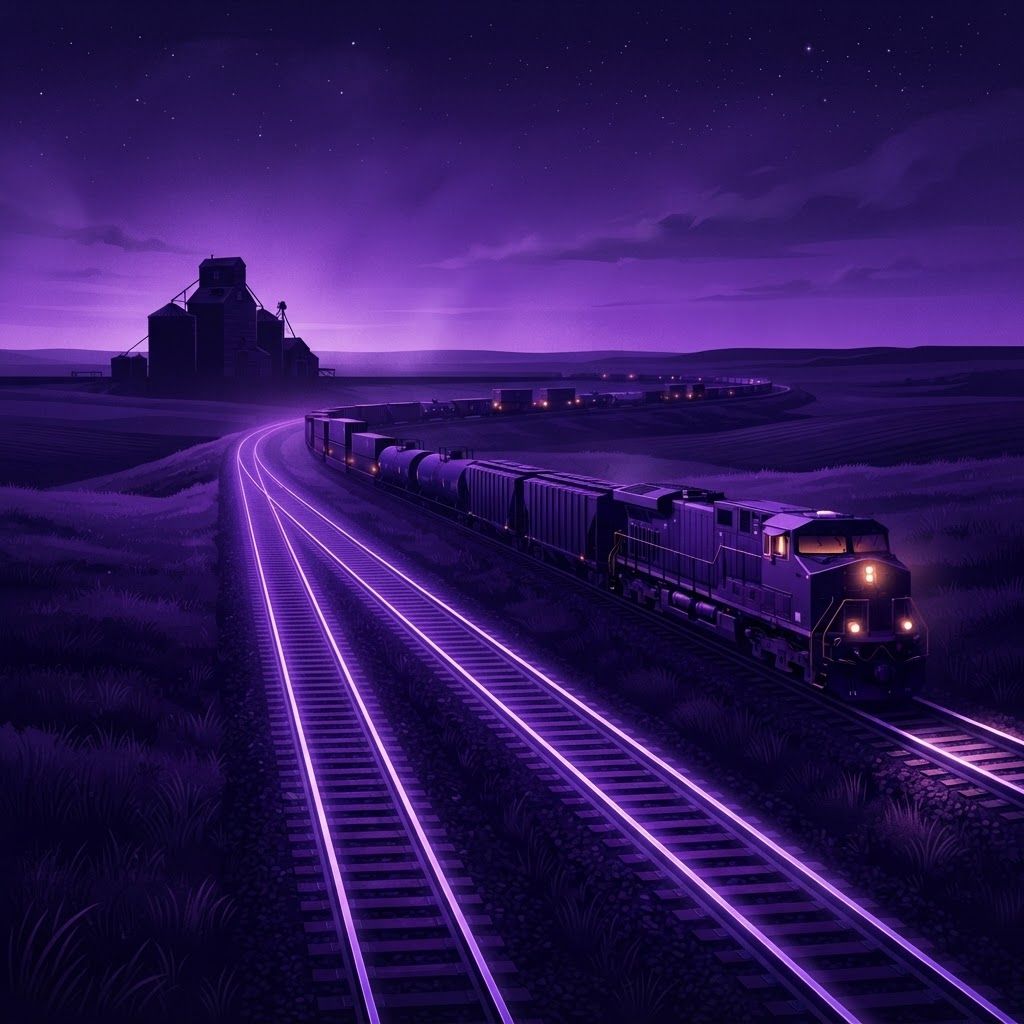
Rail in the Sioux Falls Economy
Rail rarely features in visitor impressions of Sioux Falls, yet it underpins a large share of the region's commodity economy. Grain leaving Northern Plains elevators, fertiliser and agricultural chemicals arriving inbound, ethanol and distillers grains moving from regional plants, aggregates and cement supporting construction, and lumber and steel feeding manufacturers all travel by rail for at least part of their journey. For heavy, dense, and non-urgent freight, rail economics are simply better than trucking over long distances, often by a wide margin per ton-mile.
The city has also invested in reshaping its rail footprint. The relocation of rail yard activity out of the downtown core opened significant land for redevelopment while consolidating switching operations into a more efficient industrial setting, a project frequently cited as a model for mid-sized cities balancing freight function against urban renewal.
1. BNSF Railway
BNSF is one of the two dominant Class I railroads in the western United States and a central player in moving South Dakota agricultural output to domestic markets and export terminals. Its strengths are network reach, unit train capability for grain and ethanol, and intermodal service connecting the region to Pacific and Gulf gateways. Shippers with volume sufficient to load unit trains gain the strongest rate advantages here.
2. Union Pacific Railroad
Union Pacific operates the other major western network and serves the broader region with access to Gulf Coast, West Coast, and Mexican gateways. Its chemical, agricultural, and industrial product franchises are directly relevant to regional shippers, and its intermodal services provide an alternative long-haul option for containerised freight moving out of the Upper Midwest.
3. Canadian Pacific Kansas City
The combined Canadian Pacific and Kansas City Southern network created the first single-line rail system spanning Canada, the United States, and Mexico. For Upper Midwest shippers, this matters because north-south continental movement no longer requires interchange between separate carriers, which reduces both transit variability and handling risk for agricultural and manufactured goods.
4. Rapid City, Pierre and Eastern Railroad
This regional railroad operates an extensive network across South Dakota and into surrounding states, serving agricultural, aggregate, and industrial customers across communities that Class I carriers do not reach directly. Regional railroads like this one are the connective tissue of the rail system, aggregating carloads from local shippers and interchanging them with national networks.
5. Ellis and Eastern Company
Short line operators such as Ellis and Eastern provide switching and local freight service in the immediate Sioux Falls area, moving carloads between industrial customers and interchange points with larger carriers. Short lines are valued for operational flexibility and customer responsiveness, since a small operator can adjust switching schedules around a customer's production reality in a way a Class I railroad generally cannot.
6. Short Line and Terminal Switching Operators
Beyond named carriers, the region relies on terminal and industrial switching services that spot and pull cars at elevators, plants, and transload sites. This unglamorous work determines whether a rail-served facility actually functions, because car spotting reliability drives loading efficiency and demurrage exposure more than line-haul performance does.
7. Transload and Rail-to-Truck Facility Operators
Most shippers in the Sioux Falls area are not rail-served directly, which makes transload facilities essential. These operators receive rail cars and transfer product to trucks, or the reverse, for commodities including plastics, lumber, steel, aggregates, fertiliser, and liquids. Transloading gives non-rail-served companies access to rail line-haul economics for the long portion of a journey while using trucks only for the short final leg.
8. Grain Elevator and Cooperative Rail Shipping Operations
Agricultural cooperatives and grain elevators across the region function as rail shippers in their own right, holding car allocations, loading unit trains, and managing rail freight contracts. Their scale gives producers indirect access to rail economics that individual farms could never reach, and elevator loading capability is one of the main factors determining which facilities attract grain in a competitive harvest.
9. Rail Car Leasing and Fleet Management Providers
Because railroads do not always supply specialised equipment, leasing companies provide covered hoppers, tank cars, centre beam flat cars, and boxcars along with maintenance and regulatory compliance management. For shippers with consistent volume, leasing a dedicated fleet improves car availability certainty during peak harvest windows when general equipment supply tightens sharply.
10. Rail Logistics Consultants and Industrial Development Advisers
Specialist advisers help companies evaluate rail-served site selection, negotiate transportation contracts, design track layouts, and model whether converting truck freight to rail actually pays. Given that a rail spur is a substantial capital project, independent analysis before committing is prudent, and this advisory segment exists precisely because the calculation is not intuitive.
Advantages and Trade-Offs of Rail Freight
Rail's advantages are cost efficiency on long hauls, very high capacity per movement, strong fuel efficiency per ton-mile, and reduced highway congestion and emissions. The trade-offs are equally clear. Transit times are longer and less precise than trucking, service is limited to the network's physical footprint, minimum volumes are substantial, and shippers must manage loading, unloading, and demurrage timelines carefully. Rail rewards planning and punishes improvisation.
What About Passenger Rail
Sioux Falls currently has no scheduled intercity passenger rail service, and travellers moving between the city and other regional centres rely on air service, intercity coaches, or driving. Passenger rail expansion in the Northern Plains is periodically discussed in regional planning conversations, but for now the region's rail infrastructure is overwhelmingly a freight asset.
Final Thoughts
For the right freight profile, rail service in the Sioux Falls region delivers cost advantages that no other mode can match, particularly for grain, ethanol, fertiliser, aggregates, and heavy building materials. The practical path for most companies runs through regional railroads, short lines, and transload facilities rather than direct Class I service, and understanding that layered structure is what unlocks rail economics for a mid-sized shipper.