
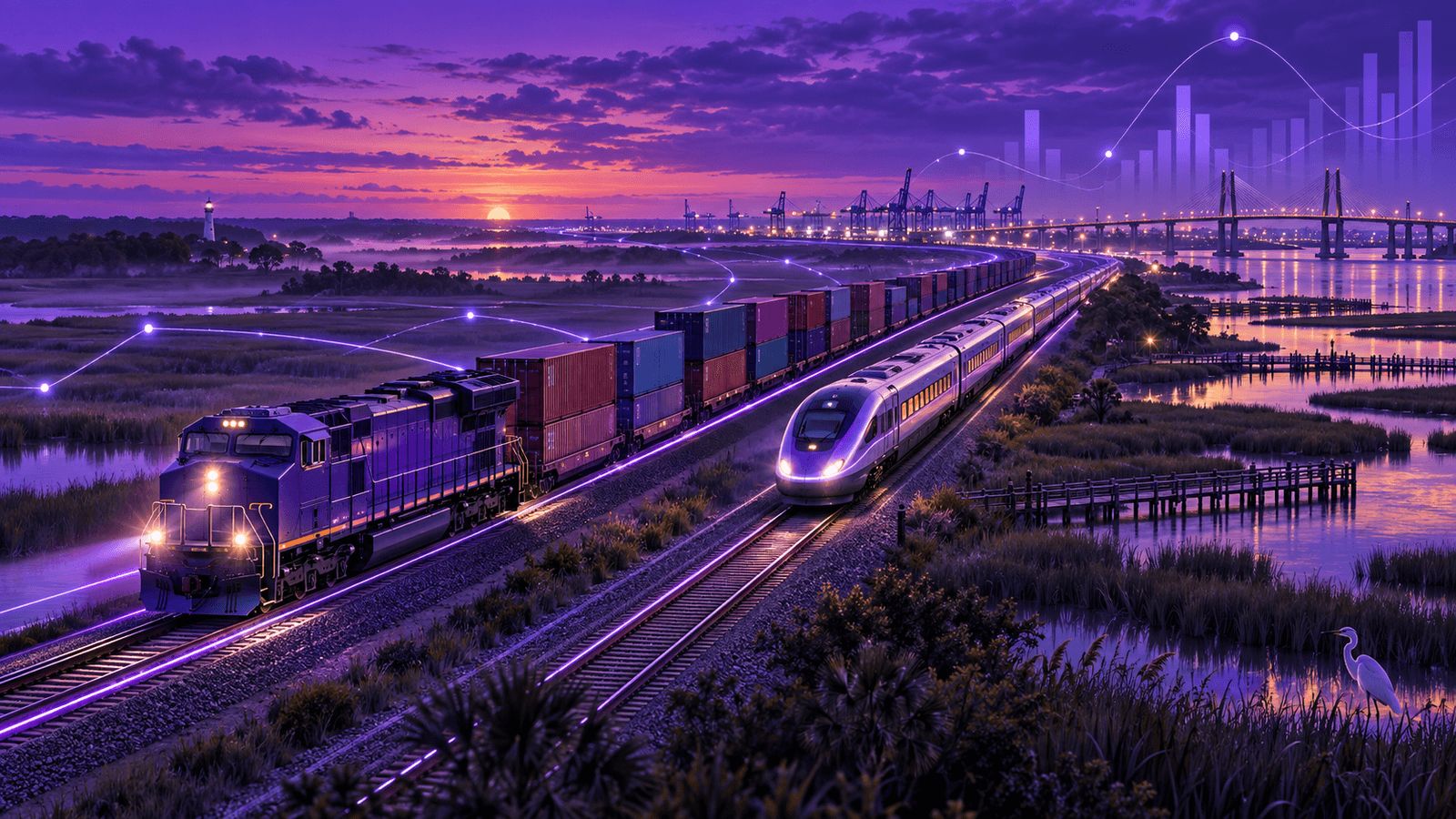
Savannah's Rich Railroad Heritage
Savannah's connection to railroads dates back to the Central of Georgia Railway, which in the nineteenth century linked the port to the interior of the state and helped build the city's prosperity. The preserved roundhouse complex downtown still tells that story. Today, rail remains essential to Savannah's economy, moving millions of tons of cargo between the port and inland markets while also carrying passengers along the East Coast.
Understanding the key rail operators helps shippers plan intermodal strategies and gives travelers more options for reaching the city. Here are the ten most significant railway operators connected to Savannah.
1. CSX Transportation
CSX is one of the two Class I railroads serving the Port of Savannah. Its extensive network across the eastern United States connects Savannah to major markets such as Atlanta, Charlotte, Nashville, and the Midwest. CSX's intermodal service is a cornerstone of the port's inland reach, and its ongoing investments in capacity support growing container volumes.
2. Norfolk Southern
Norfolk Southern is the other Class I railroad serving Savannah. It offers efficient routes to the Southeast, Ohio Valley, and Northeast. Shippers value the competitive balance created by two major railroads serving the same port, which encourages better service and pricing.
3. Amtrak
Amtrak provides passenger rail service to Savannah via long-distance routes along the East Coast, including trains connecting New York, Washington, the Carolinas, and Florida. For travelers who prefer scenic, relaxed journeys, Amtrak offers spacious seating, sleeper options, and the chance to watch coastal landscapes roll by.
4. Georgia Ports Authority Mason Mega Rail Terminal
While not a railroad company in the traditional sense, the Mason Mega Rail Terminal at Garden City Terminal is a major rail operation that dramatically increased the port's ability to build and dispatch long unit trains. It allows faster, more efficient transfers between ships and rail, strengthening Savannah's reach to inland markets like Atlanta and Memphis.
5. Savannah Port Terminal Railroad
This short line railroad, part of the Genesee and Wyoming family, provides switching services within the port and nearby industrial areas. Short lines like this are essential for connecting individual customers to the larger Class I networks.
6. Georgia Central Railway
Georgia Central Railway operates a regional line connecting the Savannah area with communities to the west. It supports agricultural, forest product, and industrial shippers who rely on rail for cost-effective bulk transportation.
7. Riceboro Southern Railway
Serving coastal Georgia south of Savannah, Riceboro Southern connects local industries with the national rail network. It is an example of how short line railroads keep smaller communities competitive in national and global trade.
8. Genesee and Wyoming
Genesee and Wyoming is the parent company of many short line railroads throughout Georgia and the Southeast. Its operational expertise, safety programs, and customer focus help ensure reliable first-mile and last-mile rail service for Savannah-area businesses.
9. Georgia State Railroad Museum
Operated by the Coastal Heritage Society at the historic Central of Georgia roundhouse, this museum offers short excursion rides, working locomotives, and exhibits about railroad history. It is a wonderful destination for families and history lovers who want to experience Savannah's railroad legacy firsthand.
10. Rail-Served Industrial Park Operators
Several industrial developments around Savannah offer on-site rail access managed by specialized switching operators. These rail-served sites attract manufacturers and distributors who ship heavy or high-volume goods and want direct access to CSX and Norfolk Southern.
Why Rail Matters for Savannah Businesses
Rail is generally more fuel-efficient than trucking for long distances, making it an attractive option for companies seeking lower costs and reduced emissions. Intermodal service combines the long-haul efficiency of rail with the flexibility of trucks for the final delivery, giving shippers a balanced solution. For heavy commodities such as forest products, chemicals, and aggregates, rail is often the most economical choice.
Choosing a Rail Partner
Shippers should evaluate which Class I railroad serves their destination markets most efficiently, whether their facility has direct rail access, and whether a short line can provide switching service. Working with an experienced intermodal marketing company or logistics provider can simplify these decisions and secure competitive rates.
Trends in Savannah Rail
The expansion of rail capacity at the port, along with inland terminals in northern Georgia, is shifting more containers from highways to rails. Railroads are investing in precision scheduling, longer sidings, and digital tracking tools that give customers better visibility. Passenger rail advocates in Georgia are also pushing for more frequent regional service, which could expand travel options for Savannah residents in the coming years.
Tips for Travelers
Passengers taking Amtrak should book early for the best fares and consider sleeper accommodations for overnight journeys. The Savannah station sits west of downtown, so plan a taxi or rideshare for the final leg into the historic district.
Conclusion
From the historic roundhouse to the modern mega rail terminal, rail continues to define Savannah's role as a gateway to the world. These ten operators keep freight flowing and passengers moving, ensuring that the city's railroad legacy remains as vital today as it was nearly two centuries ago.