
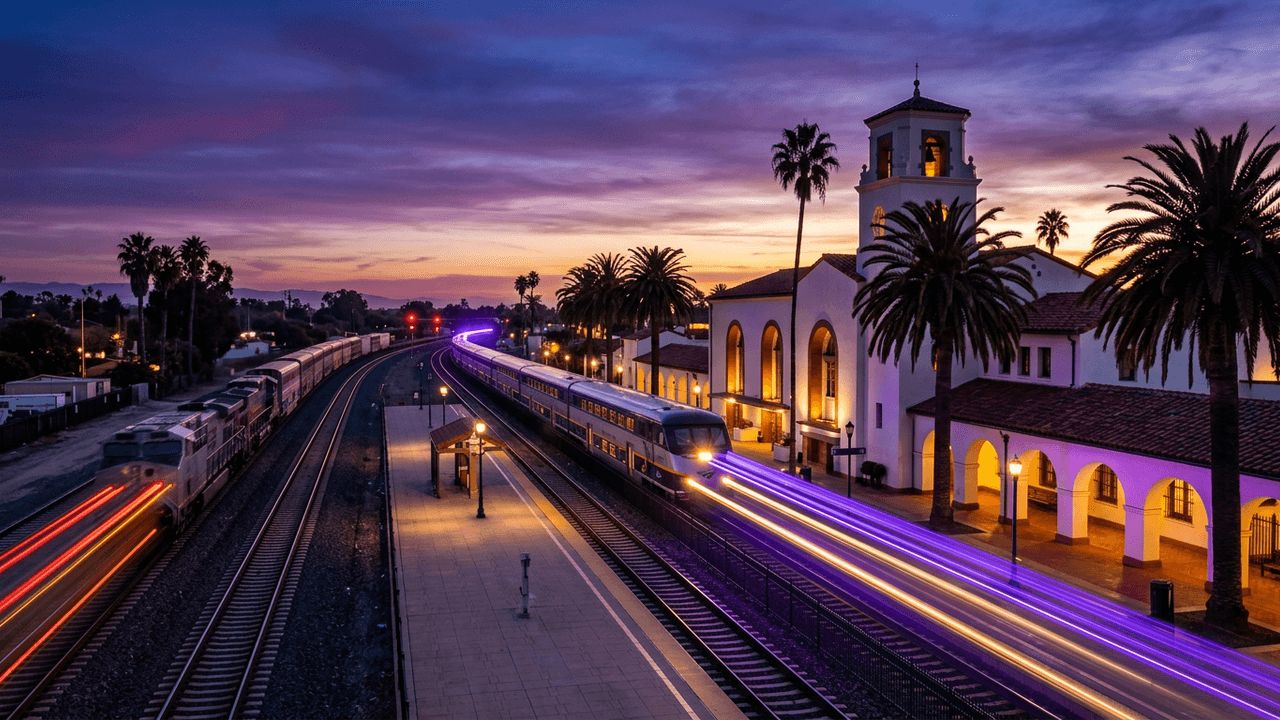
Pomona's Railroad Heritage
Pomona's growth has been shaped by the railroad since the late 1800s, when rail lines connected the young city's citrus groves to national markets. That legacy lives on today. Pomona is served by multiple Metrolink lines, Amtrak long-distance trains, and major freight railroads, and the region's expanding light rail network is bringing new connections along the foothills. The historic downtown Pomona station, with its Spanish Mission Revival architecture, remains a beautiful reminder of the city's rail roots.
For commuters, travelers, and businesses alike, rail offers efficient, sustainable transportation. Here are the ten railway operators that matter most to Pomona.
Why Rail Matters for Pomona
Rail reduces freeway congestion, cuts emissions, and connects residents to jobs across Southern California. For businesses, freight rail provides a cost-effective way to move goods between the ports and inland distribution centers. Rail investment also supports transit-oriented development, bringing housing and retail near stations.
1. Metrolink
Metrolink is Southern California's regional commuter rail system and the most important passenger rail service for Pomona. The San Bernardino Line stops at Pomona North, while the Riverside Line serves the downtown Pomona station. Commuters can reach Los Angeles Union Station comfortably, avoiding freeway traffic while working or relaxing onboard.
2. Amtrak Long-Distance Service
Amtrak's Sunset Limited and Texas Eagle long-distance trains stop at the downtown Pomona station, linking the city with Arizona, Texas, New Orleans, and Chicago. These scenic routes offer sleeper cars and dining service, providing a relaxing alternative to flying for travelers with time to enjoy the journey.
3. Amtrak Pacific Surfliner
The Pacific Surfliner is one of Amtrak's busiest corridors, running between San Diego, Los Angeles, and San Luis Obispo. Pomona residents can connect at Union Station for coastal trips to destinations like Santa Barbara and San Diego, with ocean views along much of the route.
4. Los Angeles Metro Rail
LA Metro operates the region's light rail and subway network. The A Line, formerly known as the Gold Line, has been extending eastward along the foothills toward Pomona and Claremont, creating new rail connections to Pasadena, downtown Los Angeles, and Long Beach. This extension represents a major milestone for regional mobility.
5. Union Pacific Railroad
Union Pacific is one of the largest freight railroads in North America and operates major lines through Pomona. Its trains carry containers, automobiles, building materials, and consumer goods between Southern California ports and markets across the western United States. Union Pacific's network is essential to the region's logistics economy.
6. BNSF Railway
BNSF Railway is another major freight railroad serving Southern California, with a transcontinental network connecting the ports to the Midwest and beyond. BNSF's intermodal facilities in the Inland Empire handle huge volumes of container traffic, supporting businesses throughout the Pomona region.
7. Brightline West
Brightline West is developing a high-speed passenger rail line between Southern California and Las Vegas, with a planned station in Rancho Cucamonga, a short drive from Pomona. Once operational, the service is expected to offer a fast, comfortable alternative to driving Interstate 15.
8. Arrow Service
The Arrow is a modern passenger rail service connecting San Bernardino and Redlands, operated in partnership with Metrolink. Travelers from Pomona can connect via Metrolink for trips deeper into the Inland Empire, including the University of Redlands area.
9. Pacific Harbor Line
Pacific Harbor Line provides rail switching and dispatching services within the ports of Los Angeles and Long Beach. Although it operates at the ports rather than in Pomona, its work is a vital first link in the rail chain that moves imported goods toward Inland Empire distribution centers near Pomona.
10. California High-Speed Rail Authority
The California High-Speed Rail Authority is building the state's high-speed rail system, beginning in the Central Valley, with long-term plans to connect Los Angeles and the Inland Empire. While full service to Southern California is years away, the project represents the future of intercity rail travel in the state.
Rail Trends in the Pomona Region
Southern California is investing heavily in rail modernization, including zero-emission locomotives, improved schedules, and new stations. Transit-oriented development near the Pomona stations is bringing new apartments, offices, and retail. Freight railroads are expanding intermodal capacity to handle growing container volumes while reducing truck traffic on freeways. Contactless payment and mobile ticketing are making passenger rail easier to use.
Tips for Rail Travelers
Download the Metrolink and Amtrak apps for real-time schedules and mobile tickets. Look for discounted fares for students, seniors, and weekend travel. Plan your first and last mile with Foothill Transit connections, rideshare, or bicycles, which are allowed on many trains. For long-distance Amtrak trips, book sleeper accommodations early.
Conclusion
Rail has shaped Pomona's past and continues to define its future. From Metrolink commuter service and Amtrak long-distance trains to the freight railroads that power the regional economy, these operators keep Pomona connected. As new rail projects advance, residents and businesses can look forward to even faster, cleaner, and more convenient connections.