
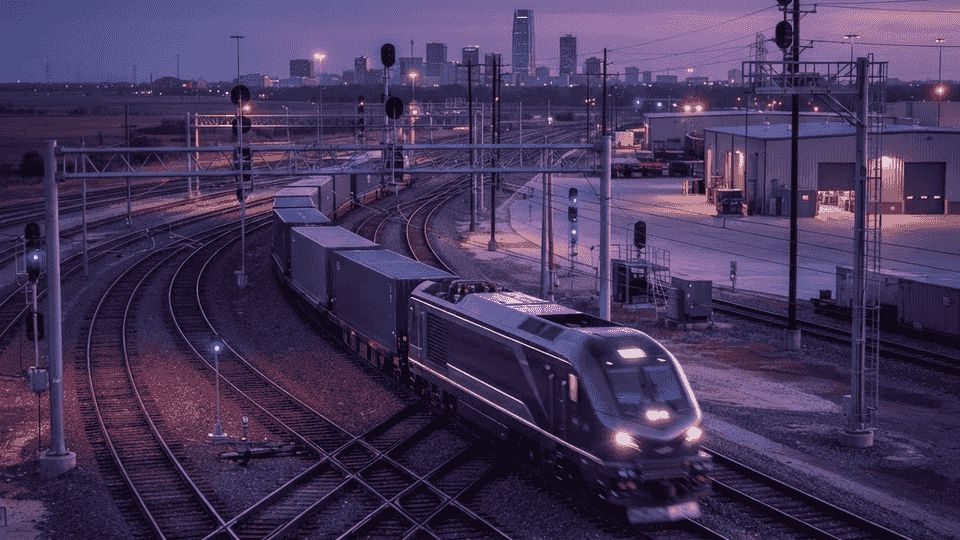
Rail Transportation in Oklahoma City
Oklahoma City developed as a rail-connected commercial center, and trains still influence its economy today. Freight rail moves agricultural products, energy materials, vehicles, construction inputs, chemicals, and consumer goods with strong efficiency at scale. Passenger rail links downtown Oklahoma City with communities to the south, while heritage and industrial rail organizations contribute specialized value. Because not every operator sells directly to every customer, this list includes major carriers and relevant rail service organizations with a meaningful role in the wider Oklahoma City market.
1. BNSF Railway
BNSF is one of the largest freight railroads in North America and a major force in Oklahoma transportation. Its network connects the state with Texas, the Midwest, western ports, and national intermodal corridors. Oklahoma City-area shippers may use BNSF for bulk commodities, industrial products, agricultural freight, automotive traffic, and intermodal containers. Scale, network reach, and access to transload relationships are major strengths.
2. Union Pacific Railroad
Union Pacific operates an extensive western U.S. freight network and serves important Oklahoma markets. The railroad handles commodities ranging from grain and chemicals to finished vehicles and building materials. For Oklahoma City companies, Union Pacific can provide access to Gulf Coast gateways, Mexico connections, western destinations, and interchange opportunities. Rail access depends on facility location, so many businesses work through nearby transload terminals when they lack a private siding.
3. Stillwater Central Railroad
Stillwater Central Railroad, associated with Watco, is a short-line carrier serving central Oklahoma. Short lines are vital because they connect local industries to the large Class I railroads and offer service tailored to regional customers. Stillwater Central handles diverse freight and provides an important bridge between producers, processors, industrial sites, and the wider national rail system.
4. Amtrak
Amtrak operates the Heartland Flyer, Oklahoma City’s principal intercity passenger rail service. The train links downtown’s Santa Fe Depot with Norman, Purcell, Pauls Valley, Ardmore, Gainesville, Fort Worth, and intermediate communities. Passengers value spacious seating, the ability to work or relax during travel, and a downtown-to-downtown journey without driving. Connections at Fort Worth expand access to other Amtrak routes.
5. Heartland Flyer
The Heartland Flyer merits separate attention as the specific passenger service serving Oklahoma City. Supported through state partnerships and operated by Amtrak, it provides an alternative to driving Interstate 35. The service is especially relevant for leisure trips, university travel, and connections to the Dallas–Fort Worth region. Discussions about extending passenger rail northward have also kept the route prominent in regional transportation planning.
6. Farmrail System
Farmrail operates short-line railroads in western Oklahoma and supports agricultural and industrial customers across the state. While its core tracks are outside central Oklahoma City, its freight connections contribute to the metro’s broader supply chain. Grain, gypsum, and other bulk commodities moving through Oklahoma’s rail network often depend on short-line coordination before reaching processors, distributors, or Class I carriers.
7. Grainbelt Corporation
Grainbelt Corporation is part of the Farmrail System and serves western Oklahoma freight customers. Its relevance to Oklahoma City comes from the interconnected nature of regional commodity flows. Short-line operators like Grainbelt preserve rail access for rural producers and industrial facilities, consolidate volumes, and connect freight to larger networks that serve metropolitan markets.
8. Arkansas-Oklahoma Railroad
Arkansas-Oklahoma Railroad operates in eastern Oklahoma and provides regional freight service with Class I connections. Although not centered in Oklahoma City, it is a notable option within the state’s rail ecosystem for shippers whose supply chains extend eastward. The carrier handles commodities such as lumber, minerals, steel, and agricultural products while supporting local economic development along its routes.
9. South Kansas and Oklahoma Railroad
South Kansas and Oklahoma Railroad, another Watco short line, serves Kansas and portions of northern Oklahoma. Its network helps connect regional manufacturers and commodity shippers to national carriers. Oklahoma City businesses sourcing products from northern Oklahoma or southern Kansas may encounter the railroad as part of an end-to-end route, even if another carrier performs the final rail movement.
10. Oklahoma Railway Museum
The Oklahoma Railway Museum is not a commercial freight carrier, but it is one of the city’s most visible rail organizations. It preserves locomotives, passenger cars, and railroad history while offering educational experiences and excursion rides on selected dates. The museum helps residents understand how railroads shaped Oklahoma City’s development and encourages interest in transportation careers and preservation.
Choosing Rail Service for Freight or Passenger Travel
Freight customers should first determine whether a facility has direct rail access. If it does not, a transload provider can shift goods between railcars and trucks. Compare minimum volumes, equipment availability, loading requirements, demurrage rules, transit variability, and first- and last-mile costs. Rail is often most economical for heavy, bulky, or repetitive long-distance shipments, but it requires more planning than ordinary truck service.
Passenger travelers should review schedules, baggage policies, station parking, accessibility, and onward transportation before departure. Oklahoma City’s Santa Fe Depot offers a convenient downtown starting point near streetcar and bus connections. Whether the goal is moving a railcar of industrial material or taking a comfortable trip south, Oklahoma City’s rail options reflect the city’s longstanding role as a transportation crossroads.