
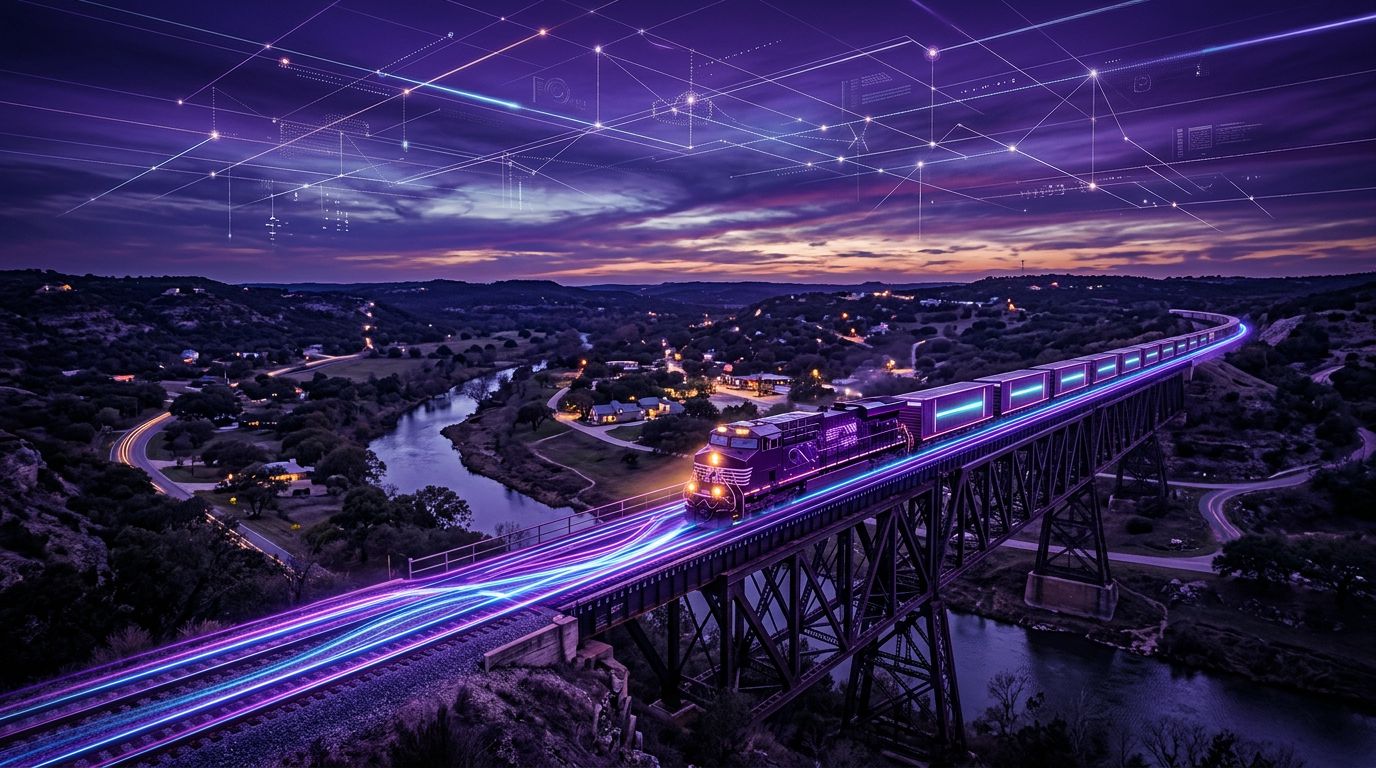
A City Built Alongside the Rails
Railroads have been woven into the identity of New Braunfels for well over a century. The arrival of rail service in the late 1800s connected the German settlers of Comal County to markets across Texas, and the tracks that still cut through the heart of downtown are a daily reminder of that heritage. Trains rumbling past the historic depot, the crossing near the Comal River, and the steady flow of freight along the Interstate 35 corridor all point to one fact: rail remains essential to the local economy.
Today, New Braunfels sits on a busy main line between San Antonio and Austin, and freight volumes have grown alongside the region's population and industrial development. For businesses, rail offers a cost-effective way to move bulk materials such as aggregates, cement, grain, and lumber. For travelers and enthusiasts, nearby passenger service and heritage organizations keep the romance of rail alive.
Why Rail Still Matters
A single freight train can carry the load of hundreds of trucks, reducing highway congestion and fuel consumption. That matters in a region where Interstate 35 traffic is notoriously heavy. Rail also plays a vital role for the quarries and cement plants in Comal County, which ship enormous quantities of material to construction projects across Texas.
1. Union Pacific Railroad
Union Pacific is the dominant freight railroad in New Braunfels, operating the main line that runs through the city. Its trains carry everything from automobiles and chemicals to aggregates and intermodal containers. Union Pacific's extensive network connects Central Texas to Mexico gateways at Laredo and Eagle Pass, as well as to markets throughout the western United States, making it a critical partner for regional shippers.
2. BNSF Railway
BNSF Railway is one of the largest freight networks in North America and operates in Central Texas through a combination of owned lines and trackage rights. BNSF is a major player in intermodal shipping and agricultural freight. Businesses in the New Braunfels area benefit from competitive options when both Union Pacific and BNSF can serve a lane.
3. Amtrak
Amtrak provides the closest intercity passenger rail service to New Braunfels. The Texas Eagle route travels through the corridor between San Antonio and Austin, with stations in nearby San Marcos and San Antonio. The Sunset Limited also serves San Antonio. For residents who prefer a relaxed journey with scenic views, Amtrak offers a comfortable alternative to driving or flying.
4. CPKC (Canadian Pacific Kansas City)
CPKC formed from the combination of Canadian Pacific and Kansas City Southern, creating the first single-line rail network connecting Canada, the United States, and Mexico. Although its primary Texas routes run through other corridors, its cross-border reach influences freight flows across the entire state, including the movement of goods that eventually reach Central Texas distribution centers.
5. Alamo Gulf Coast Railroad
The Alamo Gulf Coast Railroad is a short-line operator serving the greater San Antonio region, with connections that support quarry and industrial customers. Short lines like this play an important role by providing the first and last miles of rail service, linking local facilities to the large Class I networks.
6. Austin Western Railroad
The Austin Western Railroad operates freight service on lines owned by Capital Metro in the Austin area, serving aggregate producers, building material suppliers, and other industrial customers. For companies with supply chains stretching north toward Austin, it is an important part of the regional rail ecosystem.
7. Georgetown Railroad
The Georgetown Railroad is a short line known for moving crushed stone and aggregates from Central Texas quarries. As construction booms across the corridor, including in New Braunfels, the stone and aggregate traffic handled by operators like this one supports the roads, foundations, and buildings that define the region's growth.
8. Texas Pacifico Transportation
Texas Pacifico operates the South Orient line in West Texas, connecting to the Mexican border at Presidio. While not located in Comal County, it represents the growing importance of cross-border rail capacity that ultimately benefits shippers throughout Texas by expanding routing options.
9. Capital Metro Rail
Capital Metro operates the Red Line commuter rail service in the Austin area. For New Braunfels residents who commute or travel to northern Austin suburbs, combining a drive with a commuter rail trip can be a practical way to avoid downtown traffic and parking challenges.
10. New Braunfels Railroad Museum
While not a commercial operator, the New Braunfels Railroad Museum deserves a place on this list for preserving the city's rail heritage. Housed in the historic depot, the museum features artifacts, a restored caboose, and model railroad displays. It is a favorite stop for families and train enthusiasts, and its location beside active tracks means visitors can often watch modern freight trains roll by.
Trends in Texas Rail
Rail in Texas is evolving rapidly. Nearshoring has boosted cross-border freight volumes, and railroads are investing in longer sidings, upgraded signaling, and expanded intermodal terminals. Discussions about improved passenger service between San Antonio and Austin continue to surface as the corridor's population grows. Railroads are also exploring cleaner locomotive technologies and fuel-efficiency improvements to meet sustainability goals.
Safety Around the Tracks
With multiple at-grade crossings in New Braunfels, safety is a community priority. Drivers should never attempt to beat a train, pedestrians should use designated crossings, and visitors should avoid walking on tracks for photographs. Freight trains can take more than a mile to stop, so caution is essential.
Final Thoughts
From the powerful freight networks of Union Pacific and BNSF to the passenger convenience of Amtrak and the historic charm of the local railroad museum, rail remains a vibrant part of life in New Braunfels. Whether you are a shipper seeking efficient bulk transport, a traveler looking for a scenic journey, or a history lover exploring the city's past, these railway operators and organizations offer something valuable.