
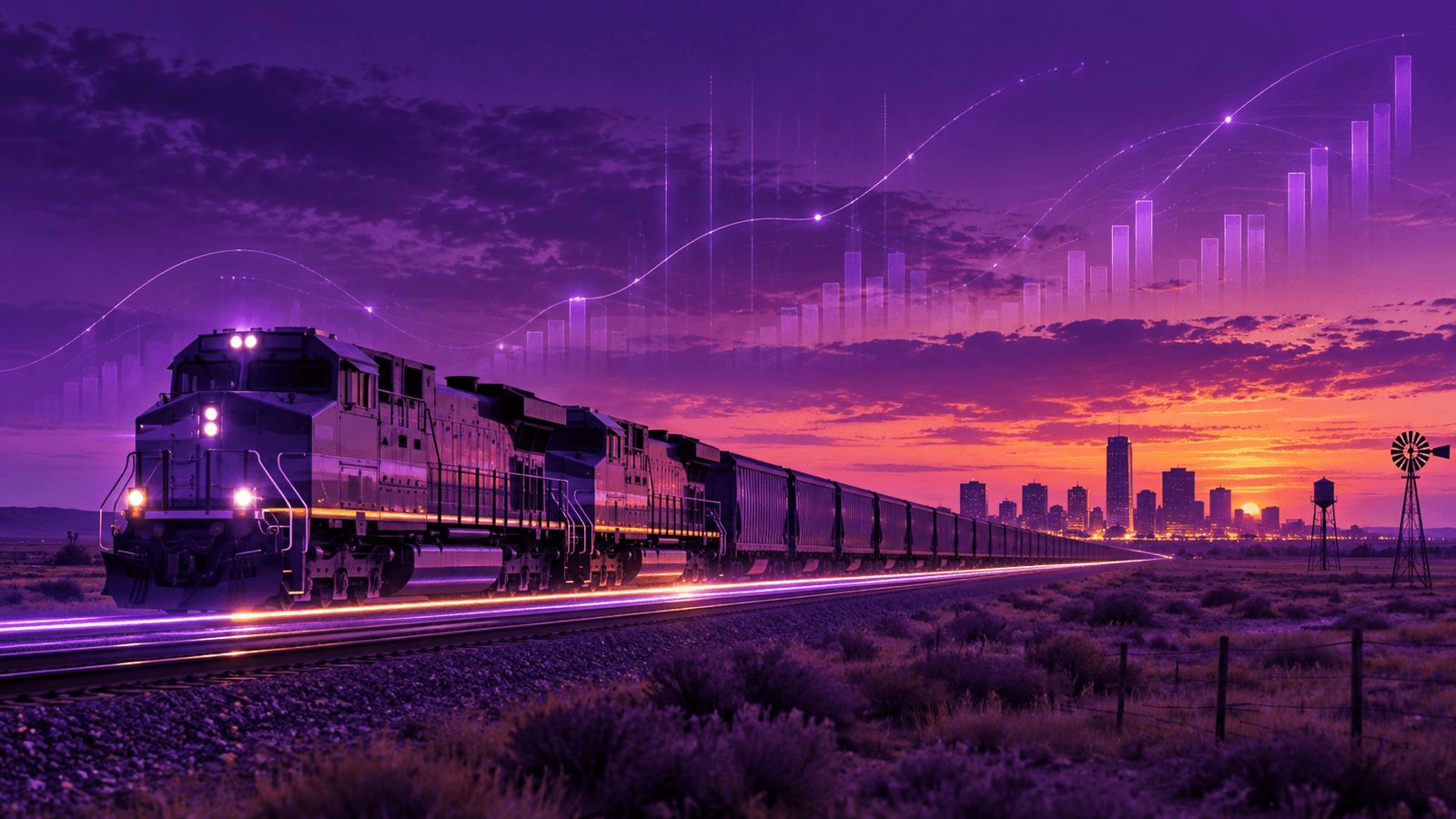
Rail and the Midland Economy
Midland was founded as a railroad town. In the 1880s, the Texas and Pacific Railway selected the site as the midway point between Fort Worth and El Paso, and that heritage is literally written into the city's name. More than a century later, rail remains a vital part of the local economy. The main line that runs through Midland carries enormous volumes of freight, while rail-served industrial parks and transload facilities help energy companies move bulk materials efficiently.
Rail is especially important for commodities that are heavy, bulky, or shipped in large quantities, such as frac sand, pipe, crude oil, liquefied petroleum gases, and chemicals. Compared with trucking, rail can offer significant cost savings and lower emissions per ton-mile. Here are the ten railway operators and rail service providers most relevant to Midland.
The Top 10 Railway Operators and Rail Service Providers
1. Union Pacific Railroad
Union Pacific operates the historic main line through Midland and is the dominant Class I railroad in West Texas. Its network connects the Permian Basin with Gulf Coast refineries, West Coast ports, and markets across the Midwest. Union Pacific's manifest, unit train, and intermodal services make it the backbone of rail logistics in the region.
2. BNSF Railway
BNSF operates an extensive network across Texas and provides access to Permian Basin customers through interchange partners and transload facilities. Shippers value its reach into the Pacific Northwest, the Midwest, and major intermodal hubs.
3. Texas Pacifico Transportation
Texas Pacifico operates the South Orient line, linking parts of West Texas to the Mexican border. For shippers moving goods between the Permian Basin and Mexico, it offers an important cross-border rail option.
4. Watco Companies
Watco operates short line railroads, terminals, and transload facilities across North America. In West Texas, Watco supports energy shippers with switching services, storage, and material handling that bridge the gap between Class I railroads and end customers.
5. Genesee and Wyoming
As one of the largest short line holding companies, Genesee and Wyoming operates several Texas railroads that feed traffic to the Class I network. Its focus on customer service and local operations makes it a trusted partner for industrial shippers.
6. Amtrak
While Amtrak does not stop directly in Midland, its Sunset Limited and Texas Eagle routes serve West Texas stations within driving distance. For travelers who prefer rail, Amtrak offers a scenic and relaxing alternative to flying or driving long distances.
7. Savage Services Rail Logistics
Savage provides rail terminal management and transload services, helping energy customers move sand, crude, and chemicals between railcars and trucks. Its safety culture and operational expertise are widely recognized.
8. Transload Services Providers of the Permian Basin
Numerous transload facilities operate near Midland and Odessa, allowing shippers to combine the long-haul efficiency of rail with the flexibility of trucking for the final miles. These facilities are critical for frac sand distribution and pipe storage.
9. Pioneer Railcorp Affiliates
Short line operators affiliated with regional holding companies offer switching and car storage services that help Midland shippers manage railcar fleets during demand fluctuations.
10. Railcar Leasing and Maintenance Firms
Companies such as Trinity Industries and GATX supply and maintain the tank cars, hoppers, and flatcars that energy shippers depend on. Although they do not operate trains, they are essential players in the regional rail ecosystem.
Trends in Permian Basin Rail
Rail demand in the Permian Basin has shifted over time. During earlier boom periods, crude-by-rail surged when pipeline capacity lagged. As pipelines expanded, rail volumes shifted toward frac sand, chemicals, and manufactured goods. Today, rail operators are investing in precision scheduling, improved track infrastructure, and digital tools that give shippers real-time car tracking. Sustainability is also a growing selling point, as rail typically produces far fewer emissions per ton than trucking.
Benefits of Rail for Midland Shippers
Rail excels for heavy, high-volume freight moving over long distances. It reduces truck traffic on busy highways, lowers per-unit transportation costs, and offers dependable capacity for bulk commodities. Combining rail with transload facilities gives shippers the best of both worlds, pairing long-haul efficiency with door-to-door flexibility.
How to Choose a Rail Partner
Evaluate the rail network's reach to your key markets, the availability of transload or rail-served facilities near your operations, and the operator's reliability metrics. Ask about car supply, demurrage policies, and customer support. Working with an experienced rail logistics consultant can also help you design an efficient multimodal strategy.
Frequently Asked Questions About Rail in Midland
Is there passenger rail service in Midland?
Midland does not currently have a passenger rail station. The nearest Amtrak service runs along other corridors in Texas, so most travelers reach it by car or bus. The rail line through Midland is used primarily for freight.
How do businesses without a rail spur use rail?
Transload facilities bridge the gap. Freight arrives by rail at a terminal, where it is transferred to trucks for the final miles to a well site, yard, or warehouse. This model gives shippers the cost advantages of rail without building their own track.
Is rail better for the environment than trucking?
For long distances and heavy loads, rail typically uses significantly less fuel per ton-mile than trucks, which lowers emissions and reduces wear on highways. Many energy companies now highlight rail usage as part of their sustainability reporting.
Conclusion
From its origins as a Texas and Pacific Railway stop to its role in today's energy economy, Midland's story is closely tied to the rails. The operators and service providers above keep that legacy alive, delivering efficient, sustainable freight solutions that support the Permian Basin's continued growth.