
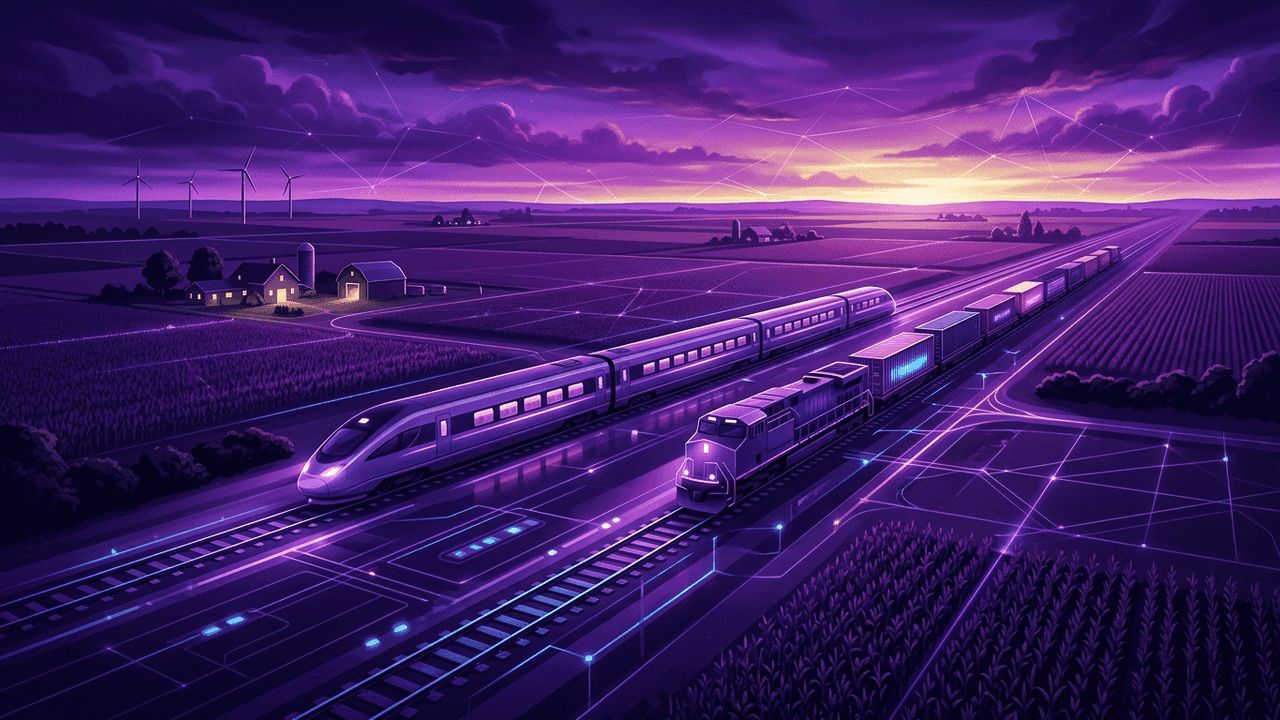
Lansing's Railroad Heritage
Railroads helped transform Lansing from a small frontier town into Michigan's capital and an industrial powerhouse. Rail lines carried lumber, agricultural products, and eventually automobiles from Lansing factories to markets across the country. Today, rail remains important for both passenger travel and freight, connecting the region to Chicago, Port Huron, Detroit, and national rail networks.
While Lansing does not have extensive commuter rail, travelers and businesses still benefit from a mix of passenger and freight operators serving the area, along with nearby stations that expand travel options.
How Rail Serves the Capital Region
Passenger rail in the Lansing area centers on the East Lansing station, served by Amtrak. Freight railroads move automotive parts, finished vehicles, grain, chemicals, and building materials. Short-line and regional railroads connect smaller communities and industries to the larger Class I carriers that span the continent.
1. Amtrak Blue Water
The Blue Water route connects Chicago and Port Huron with a stop in East Lansing. It is extremely popular with Michigan State University students, faculty, and visitors who want a relaxing alternative to driving. The train offers comfortable seating, Wi-Fi, and a café car, making it ideal for productive or restful travel.
2. Amtrak Wolverine
Although it does not stop in Lansing, the Wolverine route serves nearby stations such as Jackson, Battle Creek, and Ann Arbor. It provides multiple daily trips between Chicago and the Detroit area, giving Lansing residents additional rail options with a short drive.
3. Amtrak Pere Marquette
The Pere Marquette connects Grand Rapids and Chicago. Lansing travelers heading to western Michigan or Chicago sometimes use this route by driving to Grand Rapids.
4. CSX Transportation
CSX is one of the largest freight railroads in the eastern United States. Its lines serve mid-Michigan, carrying automotive and industrial freight that supports the regional economy.
5. Canadian National Railway
Canadian National operates a major line through the Lansing area, historically part of the Grand Trunk Western Railroad. This corridor links Chicago with Port Huron and Canada, handling significant international freight traffic.
6. Norfolk Southern
Norfolk Southern serves many Michigan industrial markets and interchanges traffic with other railroads. Its network supports automotive production and distribution across the Midwest.
7. Jackson and Lansing Railroad
This short-line railroad serves industries between Jackson and Lansing, providing local freight connections that help businesses access larger national networks.
8. Great Lakes Central Railroad
Great Lakes Central operates freight service across portions of Michigan's Lower Peninsula and occasionally offers excursion trains. It plays an important role in supporting rural industries and agriculture.
9. Huron and Eastern Railway
Huron and Eastern serves Michigan's Thumb region and parts of mid-Michigan, moving agricultural products and industrial materials. Its connections support the state's farming economy.
10. Michigan Department of Transportation Rail Programs
MDOT is not a railroad operator in the traditional sense, but it plays a crucial role by supporting passenger rail service, owning key rail corridors, and investing in infrastructure improvements. Its partnership with Amtrak helps keep Michigan's passenger routes running.
Passenger Rail Trends in Michigan
Passenger rail ridership in Michigan has shown renewed interest as travelers seek alternatives to driving and flying. Investments in track upgrades have enabled higher speeds on portions of the Wolverine corridor, reducing travel times between Detroit and Chicago. Discussions about expanding service and improving connections continue, and many advocates see opportunities to strengthen rail links between Lansing, Detroit, and Grand Rapids.
Students are a significant source of ridership. The Blue Water's East Lansing stop provides an affordable way for Michigan State students to travel home or to Chicago for internships and weekend trips. Booking early during holidays and semester breaks is essential as trains often sell out.
Freight Rail and the Regional Economy
Freight rail remains vital to Lansing's manufacturing base. Automotive plants rely on rail to receive parts and ship finished vehicles efficiently. Rail is generally more fuel-efficient than trucking for long-distance shipments, which appeals to companies pursuing sustainability goals. Intermodal services, combining rail with trucks for the final miles, offer cost-effective solutions for many shippers.
Tips for Rail Travelers
Book Amtrak tickets in advance for the best fares, especially during busy travel periods. Arrive at the East Lansing station early, and check for schedule updates, as freight traffic and weather can occasionally cause delays. Take advantage of the train's spacious seating to work, read, or simply enjoy views of the Michigan countryside.
For travelers connecting to other trains in Chicago, allow sufficient time between connections. Chicago Union Station is a major hub with routes to destinations across the country.
Frequently Asked Questions
Where is the Amtrak station for Lansing? Passenger trains serve the East Lansing station, which is convenient to Michigan State University and reachable by CATA buses, taxis, and rideshares from downtown Lansing.
How long is the train ride to Chicago? The Blue Water trip from East Lansing to Chicago typically takes a few hours, depending on schedules and freight traffic, and lets travelers skip city traffic and expensive downtown parking.
Final Thoughts
Rail remains an important part of Lansing's transportation landscape. From Amtrak's Blue Water carrying students and travelers to Chicago, to freight railroads supporting the region's factories and farms, the operators above keep Michigan's capital connected to the wider world.