
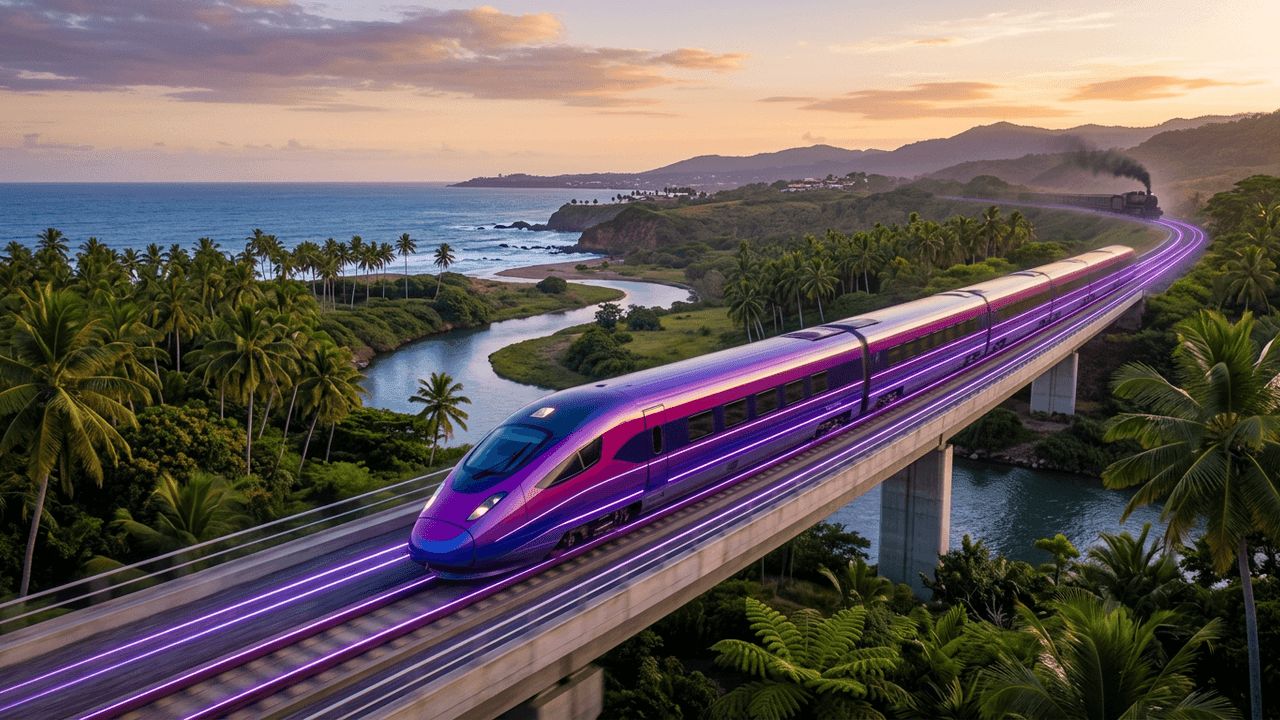
Few people realise that Georgetown holds a special place in railway history. In 1848, the Demerara Railway Company opened a line along the East Coast of Demerara, making it the first railway in South America. For more than a century, trains carried passengers and sugar along the coast, connecting Georgetown with towns and villages as far as Rosignol in Berbice.
Passenger rail services in Guyana ended in the early 1970s, and the country does not currently operate a public passenger railway. However, the story of rail in Guyana is far from over. Heritage organisations preserve its legacy, industrial operators have historically used rail for mining, and regional discussions continue about future rail links. This guide looks at ten organisations, operators, and alternatives connected to rail transport in and around Georgetown.
A Brief History of Rail in Georgetown
The original Demerara Railway was built to serve the sugar industry, but it quickly became an essential passenger link. Steam locomotives later gave way to diesel engines, and branch lines extended service along the West Coast of Demerara. Over time, road transport grew more competitive, maintenance costs rose, and the railways were eventually closed. Today, remnants of old stations, bridges, and embankments can still be found along the coast, and the former railway corridor now carries roads that thousands of commuters use daily.
The Top 10 Railway Operators, Heritage Groups, and Rail Alternatives
1. Demerara Railway Company (Historic)
The pioneering company that opened South America's first railway remains the most important name in Guyana's rail history. Its legacy is commemorated in historical records, photographs, and surviving infrastructure along the East Coast.
2. Transport and Harbours Department
Historically responsible for the national railway, the Transport and Harbours Department today operates ferry services and stellings, continuing its role in moving passengers and goods across the country's rivers and coast.
3. Guyana National Trust
The National Trust works to preserve and promote the country's historic sites, including heritage related to the colonial railway era, helping keep the story of rail alive for future generations.
4. Bauxite Mining Railway Operations in Linden
Industrial railways were historically used to transport bauxite in the Linden mining area. These operations demonstrate the role rail has played in Guyana's industrial development beyond passenger service.
5. National Museum of Guyana
The museum in Georgetown preserves artefacts and exhibits that reflect the nation's history, including aspects of transport heritage that help visitors understand how the coast was once connected by rail.
6. Guyana Railway Heritage Enthusiasts
Communities of historians, photographers, and enthusiasts document old stations, routes, and rolling stock, sharing knowledge through publications, talks, and heritage walks along former railway corridors.
7. Ministry of Public Works
As the authority responsible for national transport infrastructure, the ministry oversees roads, bridges, and long-term planning, including studies and discussions on future transport options for the coastal corridor.
8. Regional Rail Link Initiatives
Proposals for rail connections between Guyana and northern Brazil have been discussed as part of wider regional integration efforts, potentially linking Georgetown's port with Brazilian markets in the future.
9. Intraserv and Long-Distance Coach Operators
In the absence of passenger trains, long-distance coaches have become the main overland alternative, carrying travellers from Georgetown to Linden, Lethem, and beyond along routes that once might have been served by rail.
10. Coastal Minibus Route Operators
Minibus routes along the East Coast and West Coast of Demerara now serve the same communities once connected by the railway, providing frequent, affordable transport for commuters.
Exploring Railway Heritage in Georgetown
Visitors interested in rail history can trace the route of the old East Coast line, much of which now lies beneath or beside the Railway Embankment Road. Historic photographs and records offer glimpses of steam locomotives, wooden stations, and busy platforms. Combining a heritage tour with visits to the National Museum and other colonial-era landmarks provides a fascinating look at how transport shaped the growth of Georgetown and its surrounding villages.
Could Rail Return to Guyana?
As Guyana's economy grows and traffic congestion increases along the coastal corridor, interest in mass transit options has grown. Urban planners and commentators have discussed the potential benefits of modern light rail or rapid transit for the East Coast and East Bank, where daily commutes into Georgetown can be long. A regional rail link to Brazil could also transform trade by connecting northern Brazilian producers with Atlantic shipping routes through Guyana.
Such projects would require significant investment, detailed feasibility studies, and long-term planning. While no passenger railway is currently in operation, the conversation reflects a broader ambition to build modern, efficient infrastructure for the country's future.
Getting Around Without Trains
Today, travellers in Georgetown rely on minibuses, taxis, rental cars, long-distance coaches, ferries, and domestic flights. The coastal road network is extensive, and new highways and bridges continue to improve travel times. For trips into the interior, small aircraft and river boats remain essential. While these options lack the nostalgia of rail travel, they provide flexible and affordable ways to explore the country.
Final Thoughts
Georgetown's railway story is one of pioneering ambition and lasting legacy. Although passenger trains no longer run, the history of South America's first railway remains a source of national pride, and the possibility of rail's return continues to inspire discussion about the future of transport in Guyana.