
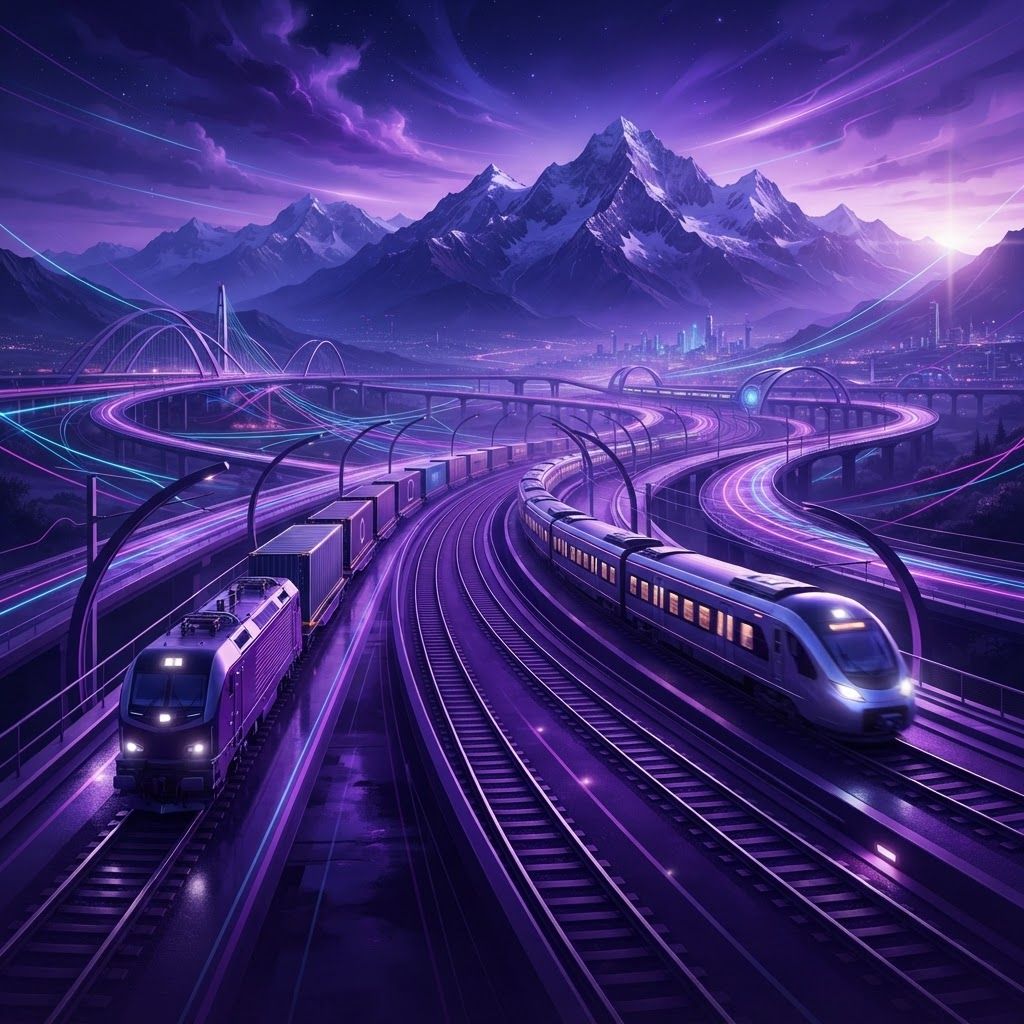
Rail's Role in Fontana
Rail built the industrial Inland Empire and continues to sustain it. Transcontinental main lines run through the corridor connecting the Southern California ports with the interior of the United States, and the enormous intermodal facilities in and around the region exist specifically to transfer containers between ships, trains and trucks. For a city defined by distribution, rail is not a secondary consideration but a core piece of infrastructure.
Rail serves Fontana in two distinct ways. Freight rail moves containers, bulk commodities, automobiles, steel and manufactured goods at costs and emissions levels that trucking cannot match over long distances. Passenger rail, principally Metrolink with Amtrak connections, gives residents a car-free route toward Los Angeles and the wider Southern California network.
Ten Rail Operators and Service Providers
BNSF Railway operates one of the two largest freight rail networks in the Western United States, with main lines through Southern California and major intermodal facilities serving the port complex and the Inland Empire. Its transcontinental service is central to moving import containers from the ports toward Chicago and the Midwest, and its intermodal capacity is a defining feature of the regional supply chain.
Union Pacific Railroad is the other Western giant, with the largest rail network in the country by route miles and extensive Southern California operations including intermodal terminals and manifest freight service. Shippers of bulk commodities, automobiles and industrial materials work extensively with it.
Metrolink operates Southern California's regional commuter rail system, and its San Bernardino Line serves Fontana directly, connecting east toward San Bernardino and west toward Los Angeles Union Station. It is the primary passenger rail option for city residents, with weekday commuter frequency plus weekend service, and monthly passes that undercut driving and parking costs into downtown Los Angeles substantially.
Amtrak provides intercity and long-distance passenger rail across the country, and while its trains do not stop in Fontana, connections through Los Angeles Union Station and nearby stations open routes along the Pacific Surfliner corridor and on long-distance services toward Chicago and the Southwest. Metrolink connections make these accessible without driving to the coast.
J.B. Hunt Transport Services is not a railroad but the largest intermodal marketing company in North America, operating containers on railroad line-haul with its own drayage on each end. For most shippers, intermodal access comes through providers of this kind rather than directly from a railroad.
Hub Group operates similarly as a major intermodal provider, combining rail line-haul with truck brokerage, dedicated fleets and logistics management. Its role is arranging and managing door-to-door movements that use rail for the long portion.
Schneider National maintains a substantial intermodal division alongside its truckload operations, giving shippers the option to shift between modes as cost and service requirements change across the year.
Pacific Harbor Line provides switching, rail transportation and maintenance services within the Ports of Los Angeles and Long Beach, performing the critical first step of assembling port container trains that then move inland through the Inland Empire corridor.
Short line and switching railroads across Southern California handle local movements, industrial spur service and first and last mile rail connections for shippers whose facilities are rail-served. For manufacturers and bulk shippers in the region, these operators provide the link to the national network.
Rail logistics and transload service providers complete the list. Companies operating transload facilities in the Fontana area transfer freight between rail cars and trucks, allowing shippers without rail sidings to access rail economics for the long haul while using trucks for local distribution.
How Intermodal Shipping Works
An intermodal movement typically begins with a truck collecting a container at origin and delivering it to a rail ramp. The container is lifted onto a railcar and moves by train to a destination ramp, where another truck completes delivery. The shipper interacts with one provider who coordinates all three segments.
The economics favor intermodal on longer distances, generally beyond seven hundred miles, where rail line-haul efficiency outweighs the cost of two drayage moves and two lifts. Transit time is usually a day or more longer than over-the-road truckload, so intermodal fits shipments with flexible delivery windows rather than time-critical freight.
Equipment matters. Domestic containers, typically fifty-three feet, hold more than international marine containers and are used for domestic freight, while marine containers arriving from overseas move inland on their own equipment. Shippers should confirm which applies, since capacity and weight limits differ.
Commuter Rail for Fontana Residents
The Metrolink San Bernardino Line is the practical backbone of car-free travel from Fontana toward Los Angeles. Weekday service is oriented toward commuting patterns with weekend service available, and the journey avoids the I-10 congestion that makes driving times unpredictable.
Cost comparison favors rail clearly for regular commuters once parking in downtown Los Angeles is included, and monthly passes reduce per-trip cost further. Connections at Union Station reach the Metro rail network, Amtrak services and other Metrolink lines, which makes destinations across the region accessible.
Practical considerations include station parking availability, first and last mile connections at the destination end, and schedule limitations outside commuting hours. For workers on logistics shift patterns, service frequency may not align, which is where bus connections and rideshare fill the gap.
Rail Versus Truck on Cost and Emissions
Rail moves freight far more fuel-efficiently than trucking on a ton-mile basis, which translates into both lower cost on long hauls and substantially lower emissions. For companies with sustainability reporting obligations, shifting eligible freight from truck to intermodal is among the most measurable available reductions.
The trade-offs are transit time, schedule rigidity and reduced flexibility for time-sensitive or small shipments. Most sophisticated shippers use both modes deliberately, routing predictable long-haul volume by rail and reserving truckload for expedited and shorter movements.
Outlook for Rail in the Inland Empire
Several forces will shape the coming years. Port volumes and trade patterns drive intermodal demand directly, so shifts in sourcing geography affect regional rail activity. Investment in terminal capacity and technology continues, aimed at faster container throughput and better appointment reliability.
Emissions regulation in California is pushing toward cleaner switching and drayage equipment, which raises near-term costs while improving air quality in communities along the freight corridors, an issue of active concern in the Inland Empire. And continued growth in domestic intermodal, driven partly by truck driver availability and partly by sustainability commitments, suggests rail's role in Fontana's economy will remain central rather than diminishing.