
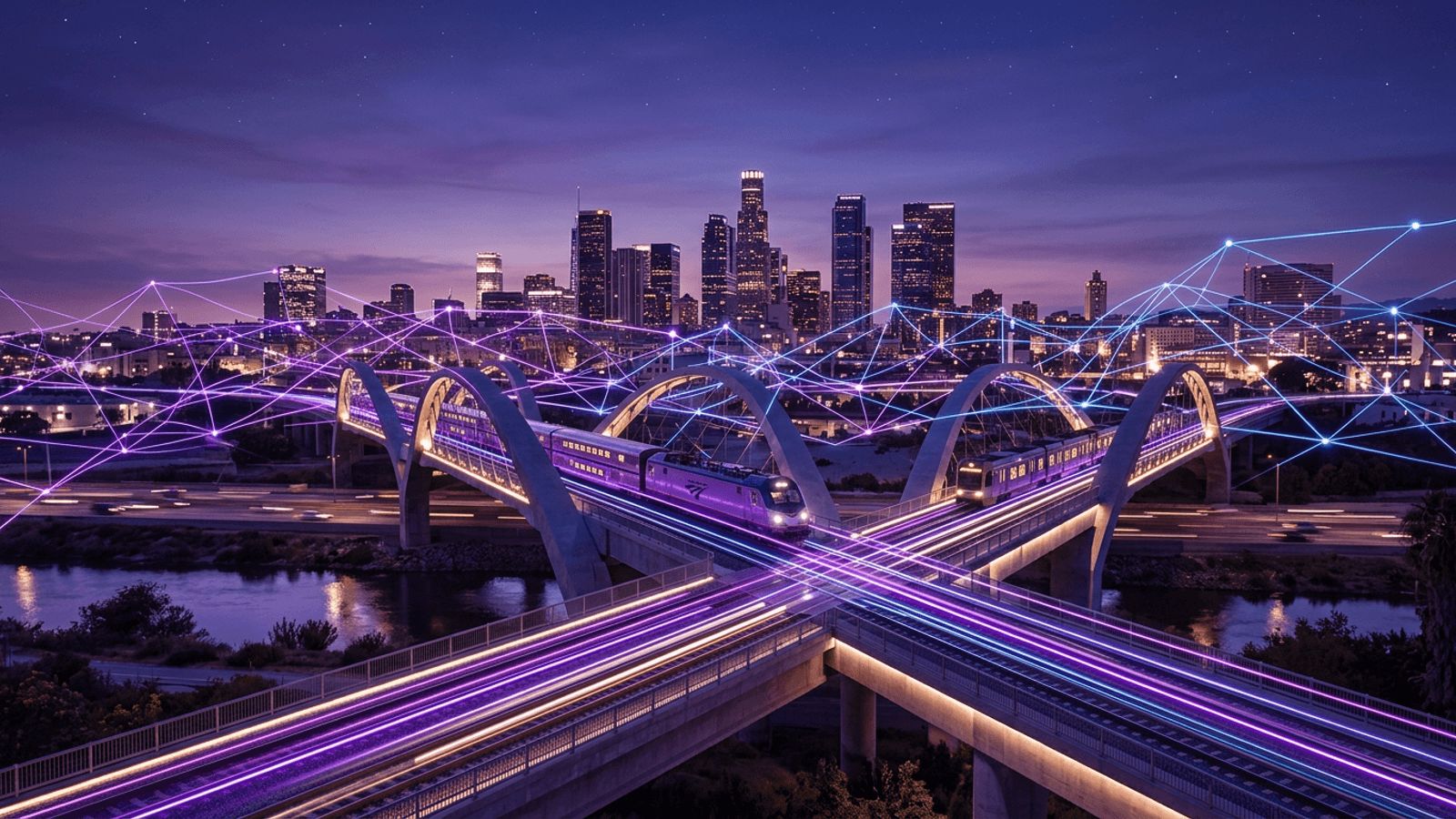
Rail Travel and Rail Freight Around East Los Angeles
Rail has shaped the history of Los Angeles, from the early streetcars of the Pacific Electric Railway to today's modern Metro network and busy freight lines. East Los Angeles sits close to major rail hubs, including Union Station in downtown Los Angeles and the large freight yards in Commerce and Vernon. Rail operators offer residents affordable commuting, regional travel, and long-distance journeys, while freight railroads support the industrial economy.
Here are ten railway operators that matter most to East Los Angeles.
1. Los Angeles Metro Rail
Los Angeles Metro operates the region's light rail and subway system. The Metro E Line runs directly through East Los Angeles and connects the community to Boyle Heights, Little Tokyo, downtown, and all the way to Santa Monica. The Regional Connector has improved one-seat rides across the system, making rail more convenient than ever for Eastside residents.
2. Metrolink
Metrolink is Southern California's regional commuter rail system. It connects Los Angeles County with Orange, Riverside, San Bernardino, Ventura, and northern San Diego counties. Its trains run from Union Station, and its Montebello/Commerce station on the Riverside Line is convenient for Eastside riders.
3. Amtrak
Amtrak offers intercity and long-distance rail service from Union Station. The Pacific Surfliner connects Los Angeles with San Diego and San Luis Obispo, and long-distance trains such as the Coast Starlight, Southwest Chief, and Sunset Limited reach destinations across the country.
4. Amtrak Pacific Surfliner
The Pacific Surfliner deserves its own mention as one of the busiest intercity rail routes in the United States. Its scenic coastal journey, comfortable seating, and frequent service make it a favorite for trips to San Diego, Santa Barbara, and beach towns along the way.
5. Union Pacific Railroad
Union Pacific is one of the largest freight railroads in North America. It operates important facilities near East Los Angeles, and its trains carry containers, automobiles, and bulk goods between Southern California and the rest of the country.
6. BNSF Railway
BNSF operates Hobart Yard in Commerce, one of the busiest intermodal facilities in the nation. Its transcontinental route connects Los Angeles with Chicago and other major markets, which makes it essential to the region's freight economy.
7. Los Angeles Junction Railway
The Los Angeles Junction Railway is a switching railroad serving industrial customers in Vernon, Commerce, and nearby areas. It connects local businesses with larger rail networks and plays a quiet but important role in the industrial district next to East Los Angeles.
8. Pacific Harbor Line
Pacific Harbor Line provides rail switching and dispatching services at the ports of Los Angeles and Long Beach. It operates clean-emission locomotives and helps move containers from ships to the national rail network.
9. Brightline West
Brightline West is developing a high-speed rail line connecting Southern California to Las Vegas, with a planned station in Rancho Cucamonga linked to Metrolink. Once complete, it is expected to offer a fast, convenient alternative to driving the crowded Interstate 15 corridor.
10. California High-Speed Rail Authority
The California High-Speed Rail Authority is building a statewide high-speed rail system meant to eventually connect Los Angeles with the Bay Area. Construction is focused on the Central Valley for now, but the project represents a long-term vision for faster rail travel across California.
The Metro E Line and East Los Angeles
For East Los Angeles residents, the Metro E Line is one of the most important transportation assets. Stations along Third Street, including Indiana, Maravilla, East LA Civic Center, and Atlantic, give residents direct access to jobs, schools, and entertainment throughout the region. Planned extensions further east would extend rail access into the San Gabriel Valley and southeast cities, improving connectivity for the entire area.
Rail Trends in 2026
Rail investment in Southern California is accelerating. Los Angeles Metro is expanding its network ahead of the 2028 Olympic and Paralympic Games, with new lines, station upgrades, and better connections. Metrolink is working to increase service frequency and electrify parts of its system. Freight railroads are investing in cleaner locomotives and more efficient intermodal terminals to meet environmental goals and growing demand.
Technology is also improving the rider experience, with contactless fare payment through TAP, real-time arrival information, and better mobile apps.
Tips for Rail Riders
Use a TAP card or the TAP mobile app for seamless fare payment on Metro and many connecting services. Check schedules ahead of time, especially for Metrolink and Amtrak, which run less frequently than Metro. Allow time for transfers at Union Station, and consider reserved seating on Amtrak for busy weekends and holidays.
Conclusion
East Los Angeles is well served by a diverse group of railway operators. Metro rail connects residents to the wider city, Metrolink and Amtrak support regional and long-distance travel, and freight railroads like Union Pacific and BNSF power the industrial economy. As rail investment grows, the Eastside's connection to the rest of California will only get stronger.