
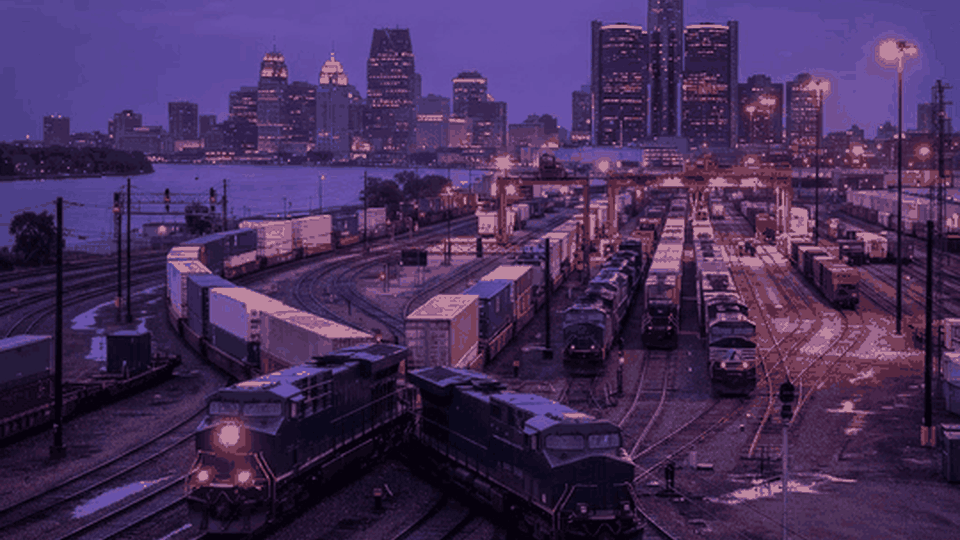
Rail's Enduring Importance in Detroit
Long before the automobile defined Detroit, railroads shaped the city's growth and connected it to the rest of the continent. Today, rail remains a cornerstone of the region's transportation system, moving vast quantities of freight and offering passenger connections to distant cities. The efficiency of rail for hauling heavy, bulk, and long-distance cargo makes it indispensable to Detroit's manufacturing base, while passenger rail provides an increasingly attractive alternative for intercity travel.
Major Freight Railway Operators
Detroit is served by several of North America's largest freight railroads. Canadian National Railway and Canadian Pacific Kansas City operate significant networks through the region, leveraging Detroit's border location to link U.S. and Canadian markets. CSX Transportation and Norfolk Southern also maintain important routes, carrying automotive products, chemicals, agricultural goods, and intermodal containers. These carriers connect Detroit's industries to ports, distribution centers, and markets across the country.
Passenger Rail Connections
On the passenger side, Amtrak provides service through Detroit, connecting the city to Chicago and points across Michigan via the Wolverine and Blue Water routes. These services offer travelers a comfortable, scenic alternative to driving or flying for regional trips. Ongoing investments in rail infrastructure aim to improve reliability and reduce travel times, reflecting a broader interest in expanding passenger rail options throughout the Midwest corridor.
Intermodal and Specialized Rail Services
A key strength of Detroit's rail network is its intermodal capability, which allows containers and trailers to move seamlessly between trains and trucks. Intermodal terminals in the region enable efficient long-haul transport combined with flexible local delivery, reducing costs and emissions compared to trucking alone. Specialized rail services also cater to the automotive industry, transporting finished vehicles and heavy components in purpose-built railcars designed for safe, efficient handling.
Rail and Sustainability
Rail transport offers notable environmental advantages, moving large volumes of freight with significantly lower fuel consumption and emissions per ton-mile than road transport. As businesses and communities prioritize sustainability, rail is increasingly recognized as a greener option for long-distance shipping. Railway operators continue to invest in fuel-efficient locomotives, improved infrastructure, and operational technologies that further enhance their environmental performance and capacity.
The Future of Detroit Rail
The outlook for rail in Detroit is shaped by both freight demand and passenger ambitions. Cross-border trade, intermodal growth, and the region's manufacturing strength continue to drive freight volumes. Meanwhile, advocates and planners envision expanded and modernized passenger service to better connect Detroit with regional destinations. Investments in infrastructure, safety, and technology will determine how effectively rail meets these evolving needs in the years ahead.
Conclusion
Railway operators remain vital to Detroit's transportation ecosystem, moving the freight that fuels industry and offering passengers efficient regional connections. With their unmatched capacity for heavy and long-distance transport and their strong environmental credentials, railroads continue to play an essential role. As the region grows and evolves, rail stands ready to support Detroit's economic and mobility needs for generations to come.