
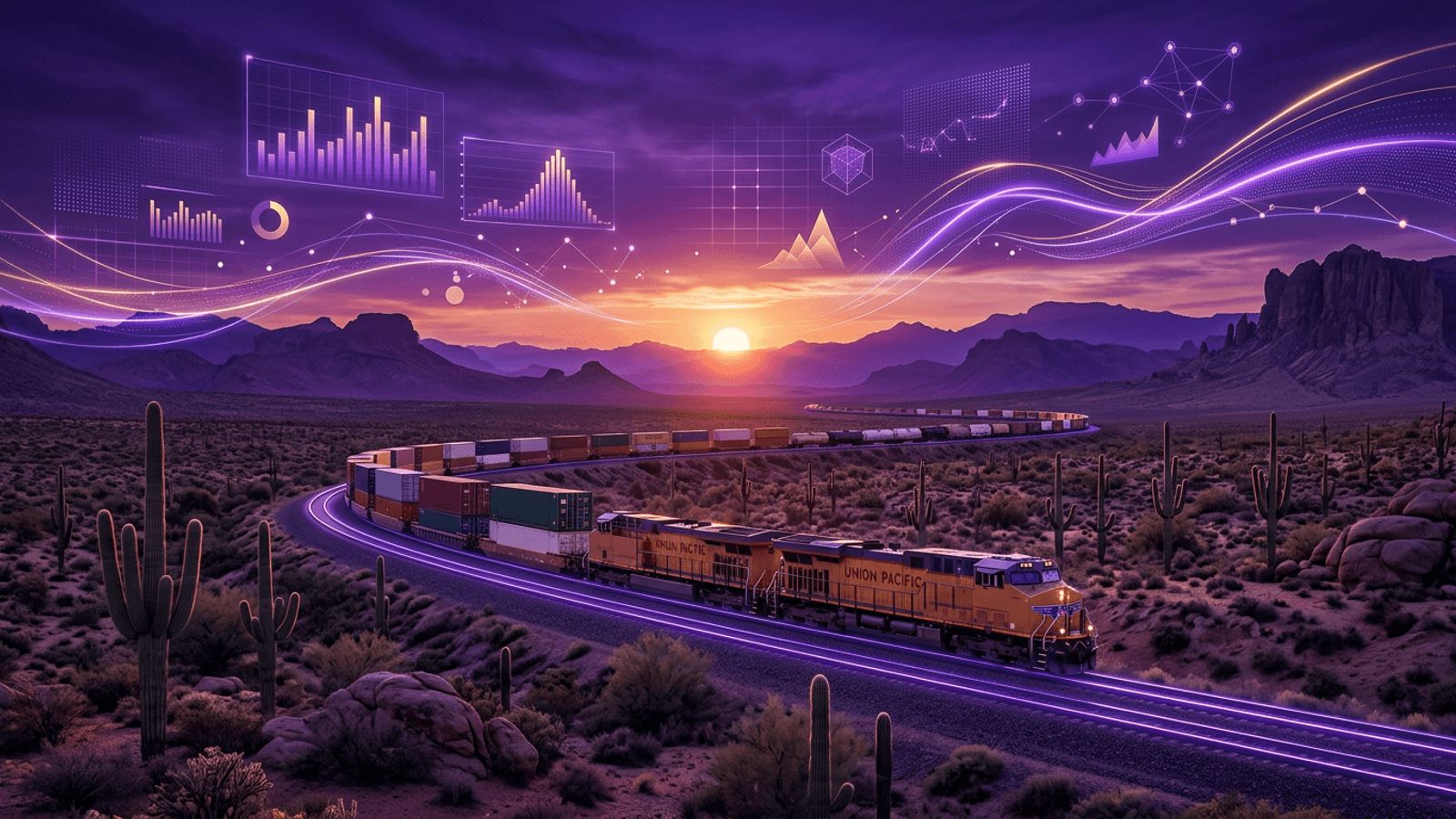
Rail and the Story of Buckeye
Like many towns in the American West, Buckeye's early development was closely tied to agriculture and transportation. Railroads helped move crops, cattle, and supplies across the Salt River Valley, and rail lines continue to shape industrial development throughout the West Valley today. As Buckeye grows into a major logistics and manufacturing hub, rail access is becoming an increasingly important factor for employers.
For residents, rail offers a different kind of value: scenic excursions, long-distance passenger travel, and urban light rail in Phoenix. This guide covers both freight and passenger operators, evaluated on relevance to the region, reliability, service quality, and overall reputation.
1. Union Pacific Railroad
Union Pacific is one of the largest freight railroads in North America and operates key routes across southern Arizona. Its network connects West Coast ports with markets throughout the Midwest and South. Industrial developers in the Buckeye area frequently consider proximity to Union Pacific lines when planning rail-served facilities.
2. BNSF Railway
BNSF Railway operates an extensive network across the western United States, including service into the Phoenix metropolitan area. It is a major carrier for intermodal containers, building materials, and agricultural products. Businesses throughout the Valley rely on BNSF connections to reach national supply chains.
3. Amtrak
Amtrak provides long-distance passenger service through southern Arizona on its Sunset Limited and Texas Eagle routes, with a station in Maricopa serving the Phoenix region. While it requires a drive from Buckeye, it offers a relaxing way to travel to Los Angeles, New Orleans, and points in between, with sleeper accommodations and scenic views.
4. Valley Metro Rail
Valley Metro Rail operates light rail service connecting Phoenix, Tempe, and Mesa. Buckeye residents traveling to downtown Phoenix for concerts, sporting events, or Sky Harbor can drive to a park-and-ride and use light rail to avoid parking challenges. The system continues to expand with new extensions.
5. Grand Canyon Railway
Grand Canyon Railway runs scenic passenger trains from Williams to the South Rim of the Grand Canyon. Entertainers, vintage rail cars, and a relaxed pace make it a memorable family experience. Buckeye residents often pair the trip with a weekend getaway to the high country to escape summer heat.
6. Verde Canyon Railroad
Verde Canyon Railroad offers excursions from Clarkdale through a dramatic red rock canyon accessible only by rail. Open-air viewing cars, wildlife sightings, and seasonal events make it one of Arizona's most beloved attractions. It is an easy road trip from the West Valley.
7. Arizona and California Railroad
The Arizona and California Railroad is a short-line freight operator serving western Arizona and southeastern California. Short lines like this connect local industries with Class I carriers, supporting agriculture, construction materials, and manufacturing across the region.
8. Copper Basin Railway
Copper Basin Railway is an Arizona short-line railroad historically associated with the state's copper mining industry. It illustrates the important role rail continues to play in moving minerals and industrial goods, a sector that remains central to Arizona's economy.
9. Arizona Eastern Railway
Arizona Eastern Railway serves mining and industrial customers in eastern Arizona. Along with other short lines, it forms part of the rail ecosystem that supports Arizona's resource industries and connects them to national networks.
10. Phoenix Sky Train
The PHX Sky Train is an automated people mover connecting Phoenix Sky Harbor terminals with light rail and the rental car center. While not a traditional railroad, it is a rail system that Buckeye travelers use frequently when flying, making airport connections faster and more convenient.
Why Rail Matters for Buckeye's Economy
Rail-served industrial land is valuable because it allows manufacturers and distributors to move heavy or bulk goods at a lower cost per ton than trucking. As Buckeye attracts large-scale manufacturing and distribution projects, access to freight rail can influence site selection. Rail is also more fuel efficient than highway freight, supporting corporate sustainability goals.
Tips for Rail Travelers
Book scenic excursions early, especially during spring break and holiday seasons. For Amtrak travel, review schedules carefully because long-distance trains may arrive at late hours. When using light rail, plan parking at a park-and-ride lot and check service alerts before departing.
Rail Trends in Arizona
Discussions about passenger rail between Phoenix and Tucson continue, and light rail expansion is improving connectivity within the urban core. Freight railroads are investing in technology to improve efficiency and safety. For Buckeye, the most significant trend is industrial growth along transportation corridors, which may increase rail activity in the years ahead.
Frequently Asked Questions
Can I take a passenger train directly from Buckeye? There is currently no passenger rail station in Buckeye. Residents usually drive to Maricopa for Amtrak or to a Valley Metro park-and-ride for light rail. Scenic excursion trains in northern Arizona make easy weekend road trips from the West Valley.
Final Thoughts
Rail may not be the first thing people associate with Buckeye, but it remains deeply connected to the region's past and future. From freight carriers powering the economy to scenic trains offering unforgettable getaways, these operators give residents and businesses valuable options.