
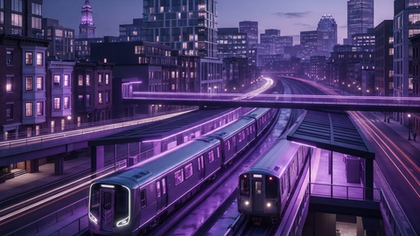
The Rich Rail Heritage of Boston
Boston holds a special place in American rail history. It was home to some of the earliest railroads in the nation, and that legacy continues today in an extensive network of commuter and rapid transit lines. Rail remains a backbone of mobility across Greater Boston, connecting dense urban neighborhoods with suburban communities and linking the city to the broader Northeast corridor.
Today's railway operators build on this foundation while modernizing to meet contemporary demand. They balance the preservation of historic infrastructure with the need for faster, more reliable, and more sustainable service. The result is a rail ecosystem that is both deeply rooted in tradition and increasingly focused on innovation.
What Makes a Great Railway Operator
The best railway operators in Boston are defined by reliability, safety, and passenger experience. On-time performance is a fundamental measure of quality, as commuters depend on predictable schedules to reach work, school, and appointments. Leading operators invest heavily in maintenance, signaling upgrades, and rolling stock to keep trains running smoothly.
Safety is paramount in rail operations. Top operators implement rigorous inspection protocols, invest in modern signaling and collision-avoidance systems, and train their staff extensively. Beyond safety, passenger comfort and accessibility increasingly define excellence, with attention to clean stations, real-time arrival information, and services that accommodate riders of all abilities.
Commuter Rail and Regional Connectivity
Commuter rail is one of the most important functions of Boston's railway network. These lines extend far beyond the urban core, reaching communities across eastern Massachusetts and helping to reduce highway congestion. By offering an alternative to driving, commuter rail plays a vital role in the region's economy and environmental strategy.
Regional connectivity also links Boston to the larger Northeast, enabling intercity travel that supports business, tourism, and cultural exchange. The most effective operators coordinate schedules, integrate ticketing, and work with regional partners to create seamless journeys for passengers traveling across multiple systems.
Technology and Modernization
Modern railway operators are embracing technology to improve every aspect of their service. Digital ticketing and mobile apps have simplified fare payment and trip planning. Real-time tracking gives passengers accurate arrival predictions, while data analytics help operators optimize schedules and anticipate maintenance needs before failures occur.
Electrification and cleaner propulsion are also gaining momentum. As sustainability becomes a regional priority, operators are exploring greener technologies to reduce emissions and energy consumption. These investments position rail as a cornerstone of Boston's low-carbon transportation future.
Ten Railway Operators and Services to Know
Massachusetts Bay Transportation Authority owns Boston's core subway and commuter-rail assets and sets the regional service framework. Keolis Commuter Services operates the MBTA Commuter Rail network, connecting North Station and South Station with communities across eastern Massachusetts. Amtrak provides intercity service from Boston, including the premium Acela and the heavily used Northeast Regional.
CSX Transportation is a major freight operator whose network supports the movement of goods into and across New England. Pan Am Southern represents an important regional freight corridor, with operations involving established freight-rail partners. Providence and Worcester Railroad, part of Genesee and Wyoming, handles regional freight and connects customers with the wider national rail system.
Fore River Transportation Corporation serves industrial freight needs south of Boston, illustrating the value of short-line rail. East Brookfield and Spencer Railroad supports automotive logistics at an important Massachusetts vehicle-distribution facility. Massachusetts Coastal Railroad carries freight elsewhere in the Commonwealth and contributes to the broader regional network. Cape Cod Central Railroad is best known for scenic passenger experiences, showing that rail also supports Massachusetts tourism.
Not every operator serves central Boston directly, and passenger, commuter, freight, and excursion services fulfill very different roles. Riders should compare stations and schedules, while freight customers should evaluate interchange access, commodity expertise, and first-mile connections.
Planning a Better Rail Journey
Passengers can improve a Boston rail trip by checking departure station, service alerts, accessibility details, and the final connection before leaving. North Station and South Station are separate terminals, so itineraries that cross downtown require added transfer time. Fare rules also differ among subway, commuter, and intercity services. Freight customers face another checklist: siding access, loading capacity, interchange timing, commodity restrictions, and drayage arrangements all affect feasibility. Whether moving people or products, the most useful operator is the one whose actual network, schedule, and service standard match the journey rather than the one with the broadest name recognition.
The Future of Rail in Boston
Looking ahead, Boston's railway operators face both challenges and opportunities. Growing ridership, aging infrastructure, and rising expectations require sustained investment and thoughtful planning. Expansion projects, station improvements, and service enhancements are all part of the long-term vision for a more connected region.
The operators that lead the way will be those that combine operational excellence with a passenger-first mindset. By modernizing infrastructure, adopting new technology, and prioritizing reliability and sustainability, Boston's best railway operators will continue to serve as essential engines of mobility for millions of residents and visitors for generations to come.