
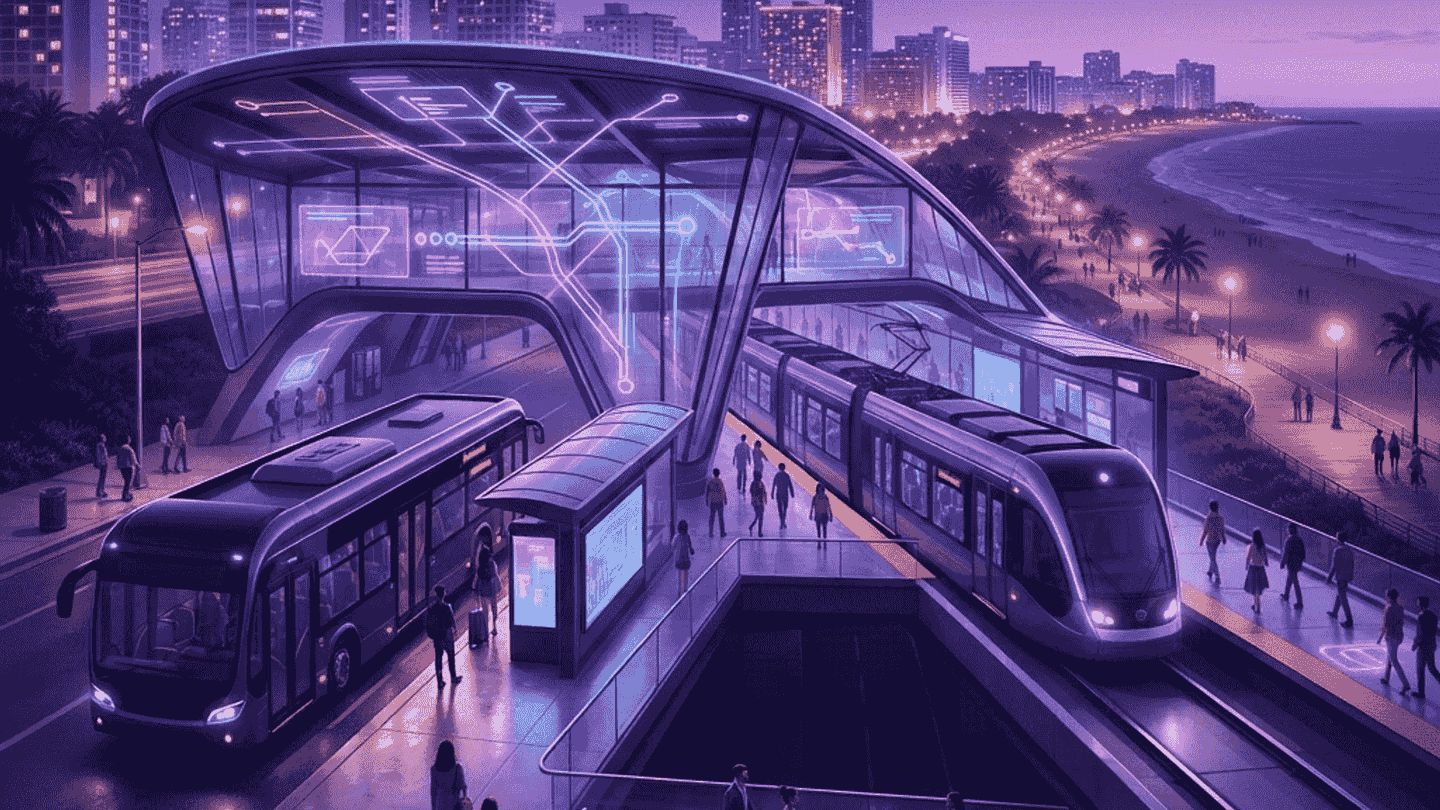
Understanding Transit in a Spread-Out Coastal City
Virginia Beach covers a large area, and its development pattern grew around automobiles. That reality shapes transit here: rather than a single dense network, the city is served by a layered set of options that work best in combination. A visitor staying at the oceanfront can move comfortably without a car during the summer season. A commuter traveling from an inland neighborhood to Norfolk has different tools available. Knowing which layer serves your trip is the key to using the system well.
The regional transportation authority coordinates bus, light rail, ferry, and paratransit service across Hampton Roads, which means a single trip can combine modes with connecting fares. For residents, that regional integration matters more than any individual route, because most useful journeys cross city lines.
1. Regional Bus Service
Fixed-route buses form the backbone of public transportation in Virginia Beach. Routes connect major corridors, shopping centers, medical facilities, employment areas, and transfer points linking to neighboring cities. Buses are equipped with wheelchair ramps or lifts and bicycle racks, and most run on weekday schedules with reduced weekend frequency. For daily commuting and errands, bus service is the most economical option available.
The practical advice for bus riders is to plan around headways rather than exact times. Consult schedules or a live tracking app before leaving, and identify a backup route where possible, since a single missed connection on a low-frequency line can add significant delay.
2. Light Rail Connections
Light rail service operating in Norfolk connects downtown, the medical district, and a park-and-ride terminus near the Virginia Beach border. Many Virginia Beach residents drive or take a bus to that terminus and ride the train into the city center, avoiding downtown parking costs entirely. Trains run frequently, board at level platforms, and offer a fast, predictable ride compared with driving in peak traffic.
3. Seasonal Oceanfront Trolley Service
During the warm season, trolley service runs along the resort area, linking hotels, restaurants, the boardwalk, and attractions. Fares are inexpensive, service runs late into the evening, and vehicles arrive frequently enough that waiting is rarely an issue. For visitors, this single service eliminates most reasons to move a car once they have arrived and parked, which is a substantial convenience given oceanfront parking demand.
4. Express Commuter Routes
Express bus service links Virginia Beach with employment centers in neighboring cities using limited-stop routing and highway segments. These routes target weekday commuters and deliver noticeably faster travel than local buses. Riders gain the ability to work or rest during the trip and avoid daily parking expenses, which for a full-time commuter can add up to a meaningful annual saving.
5. Park-and-Ride Facilities
Park-and-ride lots throughout the region let drivers leave a vehicle and complete their journey by bus or rail. This hybrid approach fits the city's geography well, since many residential areas are too dispersed for efficient fixed-route coverage but sit within a short drive of a transit hub. Using park-and-ride converts a long congested commute into a short drive plus a predictable transit leg.
6. Paratransit and Accessible Services
Origin-to-destination paratransit serves riders whose disabilities prevent them from using fixed-route buses. Trips are reserved in advance and operate within defined service areas and hours. Beyond paratransit, the fixed-route fleet itself is accessible, with ramps, securement areas, and audio and visual stop announcements. Riders should confirm eligibility procedures and booking windows, as advance reservation is typically required.
7. Passenger Ferry Service
Ferry service across the Elizabeth River connects downtown Norfolk with Portsmouth, offering a short, scenic crossing that also functions as genuine transportation. For Virginia Beach residents heading to waterfront destinations, combining rail or bus with the ferry produces a pleasant car-free itinerary. Visitors often ride simply for the harbor views, which is a legitimate reason in its own right.
8. Intercity Bus and Rail Links
Longer-distance travel connects through intercity bus carriers and passenger rail service in the wider region, linking Hampton Roads to Richmond, Washington, and points along the Northeast Corridor. Residents traveling for business or leisure can reach major cities without flying or driving. Coordinating a local transit leg to the intercity terminal makes the entire trip possible without a car.
9. Bike Share and Micromobility
Bicycles and scooters fill the gap transit cannot, covering the first and last mile between a stop and a final destination. The oceanfront's flat terrain and dedicated bike paths make cycling genuinely practical, and bike racks on buses allow combined trips. For short distances in the resort area and along the boardwalk, micromobility is frequently faster than driving and parking.
10. Ride-Hailing and Taxi Services
Ride-hailing platforms and traditional taxis operate throughout Virginia Beach and serve trips that fixed-route transit handles poorly: late-night travel, journeys to dispersed suburban addresses, and airport connections with luggage. They cost more per mile than transit but far less than car ownership for occasional use. Many residents who rely primarily on transit budget for a few ride-hailing trips each month as the flexible component of a car-free lifestyle.
Fares, Passes, and Payment
Regional transit uses a fare structure with single-ride payment and multi-day or monthly pass options, plus reduced fares for seniors, riders with disabilities, and students. Passes almost always beat single-ride payment for anyone traveling more than a few times a week. Mobile ticketing simplifies boarding and eliminates the need for exact change, and it usually provides the clearest record of transfers between modes.
Planning Your Trip
Use a trip planning application that includes real-time vehicle positions rather than relying only on printed schedules. Build in buffer time for transfers, particularly on routes with longer headways. Check seasonal service changes, since trolley and some resort-area service operates only during the warm months, and holiday schedules differ from weekday service. Riders new to the system benefit from doing a practice trip during off-peak hours before depending on it for work.
Trends Shaping Local Mobility
Regional planning continues to focus on connecting Virginia Beach more effectively to the broader Hampton Roads transit network, with attention to high-capacity corridors and improved bus frequency. Fleet electrification is progressing, reducing emissions and noise along residential routes. Digital fare payment and better real-time data are steadily lowering the learning curve that has historically discouraged new riders. Together these changes are making a car-light lifestyle in Virginia Beach more realistic each year, particularly for residents living near major corridors and for visitors staying in the resort district.