
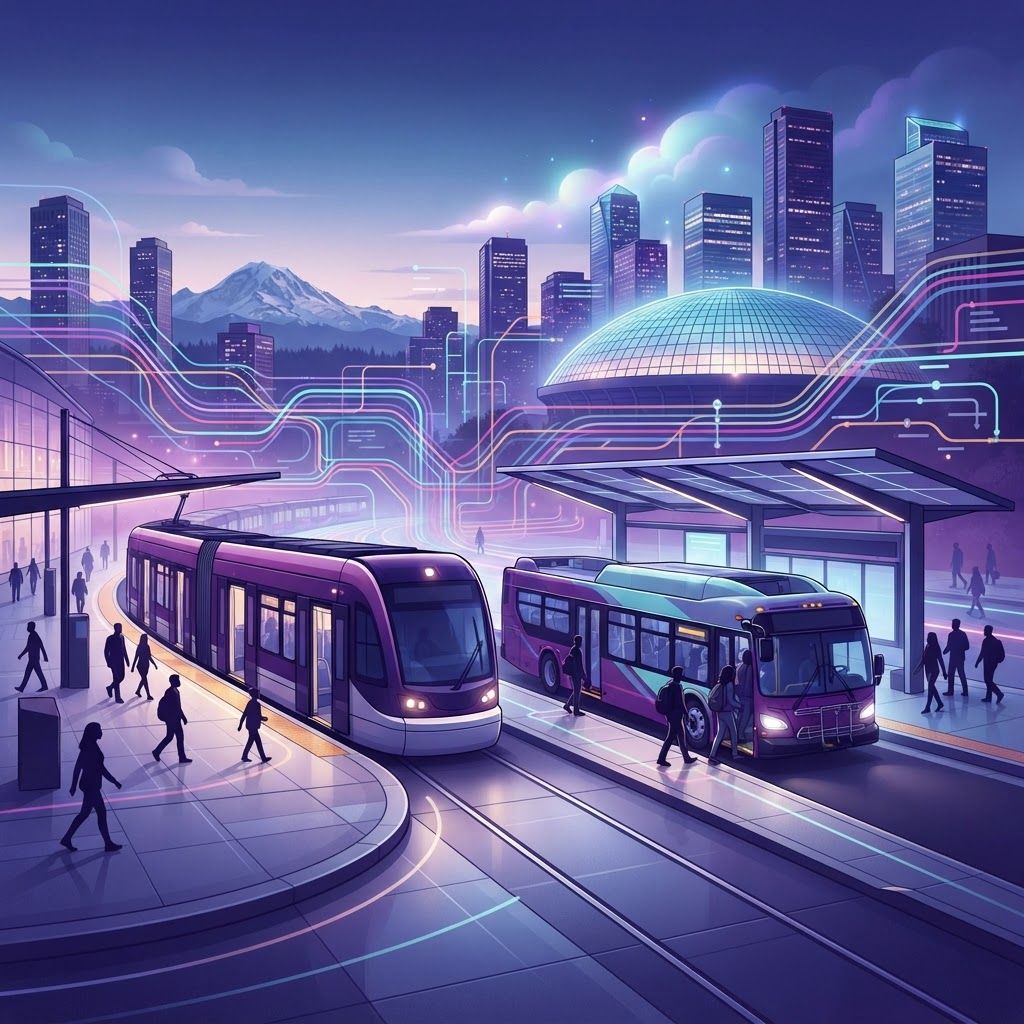
Public transit in Tacoma is better than its reputation suggests, but it rewards people who understand how the pieces fit together. The city is served by local bus routes, a downtown light rail line, regional express buses, commuter rail toward Seattle, ferry connections across Puget Sound and demand-responsive services for riders who cannot use fixed routes. Each is operated with a different purpose, and journeys often combine two or three.
This guide profiles ten public transit services available to Tacoma residents and visitors, then explains fares, accessibility and practical planning so the network becomes genuinely usable rather than theoretically available.
Why Transit Matters in Tacoma
Roughly a tenth of Tacoma households do not have access to a car, and many more have one vehicle shared among several working adults. For those residents transit is not an environmental preference, it is the difference between reaching a job or not. Meanwhile Interstate 5 congestion between Tacoma and Seattle makes transit competitive on journey time for commuters heading north during peak hours, particularly on rail.
Investment has followed. Light rail extensions, expanded commuter rail service and improved bus corridors have steadily increased what the network can do, and Tacoma's compact downtown makes short transit trips genuinely convenient.
The 10 Best Public Transit Services in Tacoma
1. Pierce Transit Local Bus Network
Pierce Transit operates the backbone of local service across Tacoma and surrounding communities, with frequent trunk routes on major corridors and coverage routes reaching residential neighbourhoods. It is the service most residents use daily.
2. Tacoma Link Light Rail
Tacoma Link connects the downtown core, the Theatre District, the Museum District, the Dome District and the Hilltop neighbourhood. Frequent service and short journeys make it the easiest option for moving around central Tacoma.
3. Sounder Commuter Rail
Sounder commuter rail links Tacoma with Seattle and points between, offering the most predictable journey time in the corridor during peak periods. Comfortable seating and working space make it popular with commuters.
4. Sound Transit Express Buses
Sound Transit express routes provide regional connections beyond commuter rail hours, linking Tacoma with neighbouring counties and major transit centres with limited-stop service.
5. Pierce Transit SHUTTLE Paratransit
SHUTTLE provides door-to-door service for riders whose disabilities prevent use of fixed-route buses. Advance booking, trained operators and lift-equipped vehicles make independent travel possible for thousands of residents.
6. Washington State Ferries Point Defiance Route
The Point Defiance to Tahlequah ferry connects Tacoma with Vashon Island, carrying walk-on passengers, cyclists and vehicles. It functions as both a commuter link and a scenic crossing.
7. Tacoma Dome Station Transit Centre
Tacoma Dome Station is less a service than the hinge of the network, bringing together buses, light rail, commuter rail and park-and-ride capacity in one interchange with sheltered waiting areas.
8. Pierce Transit Runner Microtransit
Runner offers on-demand shared rides within defined zones, solving the first and last mile problem in areas where fixed routes are impractical. Riders book through an app or by phone for a curb-to-curb trip.
9. Downtown Tacoma Free Fare Zone Services
Free or low-cost circulation within the downtown core encourages short trips between civic, retail and cultural destinations without the friction of paying for a two-stop journey.
10. Intercity Bus Connections at Tacoma
Scheduled intercity coach services calling at Tacoma extend the network to Portland, Spokane and beyond, giving transit riders an affordable option for longer regional travel.
Fares, Passes and Accessibility
Regional fare cards work across most operators, deducting the correct fare and applying transfer credit automatically, which is far simpler than paying cash on each leg. Monthly passes make sense for regular commuters, and reduced-fare programmes exist for seniors, riders with disabilities, youth and low-income households. Registering for those programmes takes a little paperwork but can halve travel costs.
Accessibility has improved substantially. Buses are low-floor or lift-equipped, rail platforms are level-boarding, and stop announcements are automated. Riders who need paratransit should apply for eligibility well before they need it, since assessment takes time.
Planning Journeys Well
Use a trip planner that covers all operators rather than a single agency app, and check whether your route depends on a transfer with limited frequency. Where possible build journeys around the frequent trunk corridors and rail, using microtransit or a short walk for the ends. For peak commutes to Seattle, commuter rail is usually faster and calmer than any road option.
Trends in Transit
Fleet electrification is progressing, with battery buses entering service on urban routes. Real-time arrival information is now near-universal, which materially improves the waiting experience. Fare policy is moving toward simplification and income-based discounts. And microtransit is expanding as agencies use flexible zones instead of low-ridership fixed routes.
Final Thoughts
Tacoma's transit network is a genuine asset, especially for downtown living and Seattle commuting. Get a regional fare card, learn the two or three frequent corridors that serve your regular destinations, check eligibility for reduced fares, and use microtransit for the gaps. Used deliberately, the system covers far more of daily life than most residents assume.