
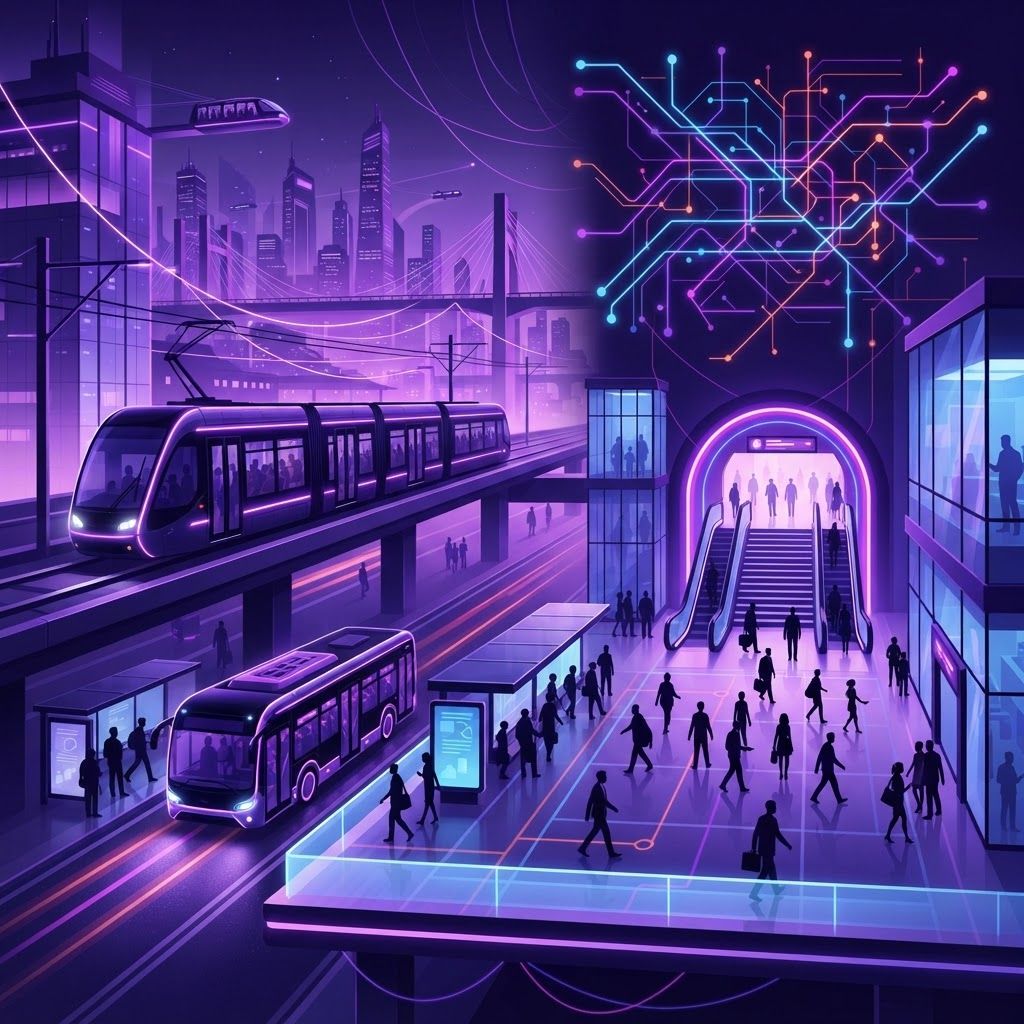
Why the Network Matters More Than Any Single Route
Public transit is judged by whether it can replace a car for a given journey, and that depends far more on the network than on any individual service. Frequency, connection quality, span of operating hours, and fare integration determine whether transit is a genuine option or a fallback. Spring Valley has invested substantially in all four over the past decade, and the result is a system that works well for radial journeys into the centre and increasingly well for cross-town travel.
The services below are the components that make the network function, ranging from high-capacity light rail through local bus routes to the accessible and demand-responsive services that extend coverage to areas fixed routes cannot serve economically.
The Ten Best Public Transit Services
Valley Light Rail is the backbone of the network, running high-frequency services on segregated alignment through the central corridor. Because it is unaffected by road congestion, its journey times are predictable enough to plan around, which is its real advantage over buses.
Meridian City Buses operates the core urban bus network with frequent services on the main arterials, contactless fare capping, and real-time arrival information at most stops.
Northgate Park and Ride combines peripheral parking with dedicated express bus links into the centre, which is the most practical option for commuters travelling from areas without direct transit coverage.
Crestline Rapid Transit runs limited-stop bus rapid transit on priority lanes, offering near-rail journey times on corridors where rail construction was not viable.
Spring Valley Community Transit provides demand-responsive minibus services in lower-density suburbs, where passengers book a journey and the vehicle routes dynamically. It fills the gap that fixed routes leave.
Access Valley Paratransit delivers door-to-door accessible transport for passengers unable to use fixed-route services, with trained assistants and wheelchair-accessible vehicles.
Riverstone Suburban Rail serves the outer suburbs and satellite towns with commuter rail integrated into the city fare system, offering the fastest option from longer distances.
Highline Night Network operates late-night bus routes covering the entertainment districts, hospitals, and industrial areas where shift work continues after the main network closes.
Summit School Transit runs dedicated school services with supervised boarding, which reduces peak crowding on the general network as well as serving students directly.
GreenLoop Electric Shuttle circulates through the central business district on a short loop using electric vehicles, free at point of use and effective at connecting transit hubs to workplaces and retail areas.
Fares, Passes, and Getting Value
Contactless fare capping has replaced most of the complexity that used to surround transit ticketing. Tap in and out with the same card or device and the system charges the lowest applicable fare for your travel that day or week, which means daily and weekly passes are largely unnecessary for most travellers.
Monthly and annual passes still make sense for consistent five-day commuters, and concession fares for students, seniors, and disabled passengers offer substantial reductions. Where journeys combine rail and bus, check whether integrated ticketing applies, since the saving compared with separate fares can be significant.
Park-and-ride pricing usually bundles parking with the transit fare, which typically undercuts city-centre parking by a wide margin before fuel is even considered.
Accessibility and Inclusion
Network accessibility has improved measurably. Low-floor vehicles with ramps are now standard on light rail and most bus routes, audible and visual next-stop announcements are widespread, and priority seating is enforced through clearer signage and driver awareness training.
Station step-free access remains uneven on older suburban rail stops, so checking access before travelling is still necessary on those routes. Paratransit provides a genuine alternative where fixed-route travel is not feasible, and journey-planning tools now allow filtering for step-free routes, which makes independent travel considerably more practical.
Trends Shaping Transit
Fleet electrification is well advanced on buses, delivering quieter vehicles and better air quality along busy corridors. Signal priority for transit vehicles at junctions has become common, improving reliability without new infrastructure.
Demand-responsive transit has moved from pilot to permanent service in several suburbs, using booking apps and dynamic routing to serve areas where fixed routes carried too few passengers to justify frequency. Integration with cycling and shared micromobility has strengthened, with secure cycle parking at interchanges and bike-carriage provision on off-peak rail services.
The most consequential shift is in travel patterns. Hybrid working has flattened the traditional peak and increased midday and weekend demand, and operators have begun rebalancing timetables toward all-day frequency rather than concentrated peak capacity.
Using the Network Well
Plan with a real-time journey planner rather than a printed timetable, and prefer routes with fewer interchanges where reliability matters. Learn the two or three highest-frequency corridors near you, because a slightly longer walk to a service every eight minutes usually beats a shorter walk to one every half hour.
Tap in and out consistently to benefit from capping and avoid maximum-fare charges. For occasional car-replacement journeys, combine transit with a taxi or bike-share for the final segment rather than dismissing transit entirely because it does not reach your door.
Final Thoughts
Spring Valley's transit network is genuinely usable, with strong light rail and rapid transit spines, comprehensive bus coverage, and meaningful accessible and demand-responsive provision. Use contactless capping, favour high-frequency corridors, and treat park-and-ride as a serious option from outlying areas. Used deliberately, the network replaces a car for a large share of journeys in this city.