
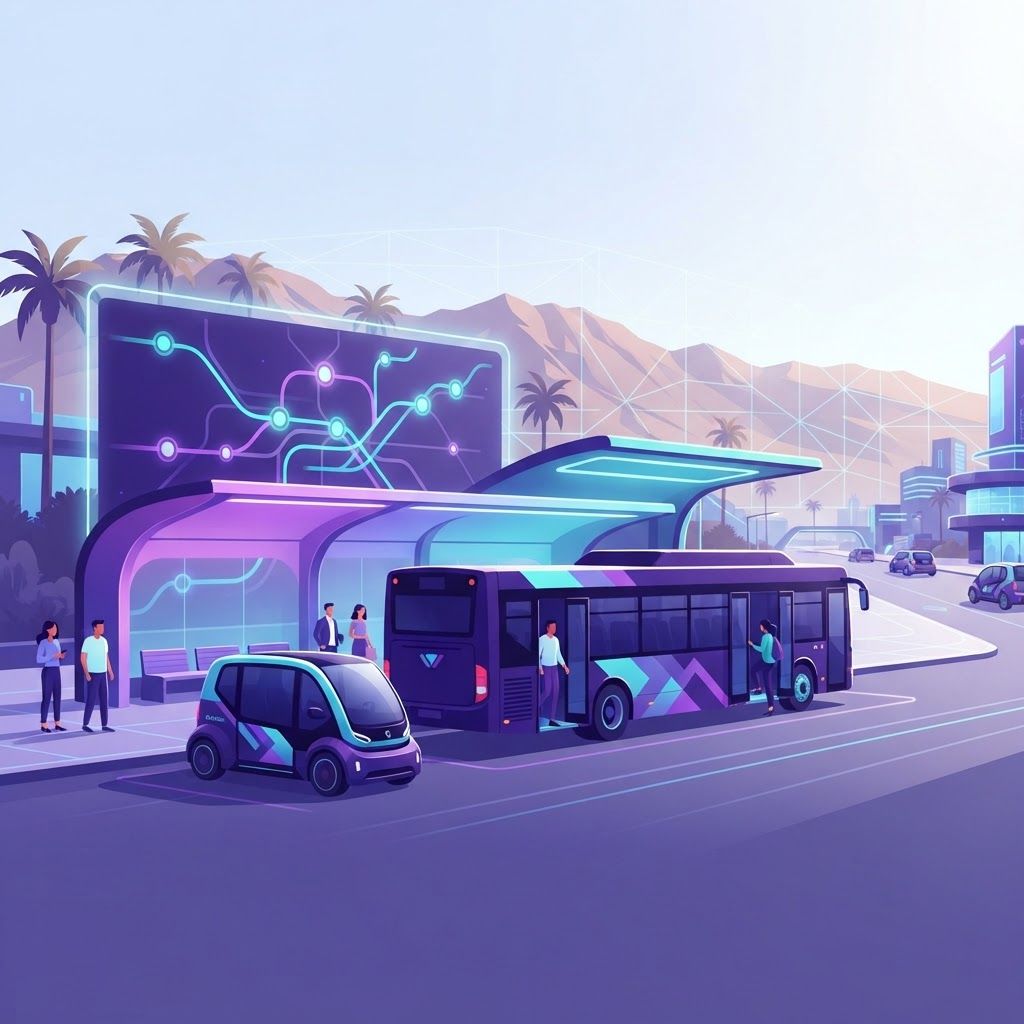
The Honest Picture of Transit in Scottsdale
Scottsdale's public transportation deserves a realistic assessment. The city has no light rail or commuter rail within its boundaries, and its low-density, thirty-mile-long form makes comprehensive bus coverage expensive to deliver. Yet the services that do exist are often better than newcomers assume, particularly along the Scottsdale Road spine and within the Old Town core, where a fare-free trolley system provides genuinely convenient mobility.
The practical approach is to think of Scottsdale transit in layers. A city-operated trolley handles short trips within key districts. Regional bus routes handle longer trips and connections to the wider metropolitan area. Light rail, though outside city limits, becomes accessible through connecting bus service. Specialized programs serve seniors, riders with disabilities, and employers. Used together, these layers cover far more ground than any one of them alone.
Scottsdale Trolley
The Scottsdale Trolley is the city's flagship transit service and it costs nothing to ride. Multiple routes connect Old Town, the Scottsdale Fashion Square area, the Museum of the West and arts district, Scottsdale Community College, and residential neighborhoods further north. Vehicles are styled to match the city's character, and the absence of fares removes the friction that discourages casual transit use. For visitors staying in the downtown hotel corridor, the trolley genuinely replaces short car trips.
Valley Metro Local Bus Routes
Valley Metro operates the local bus network serving Scottsdale, with key routes running along Scottsdale Road, Hayden Road, Thomas Road, Indian School Road, and McDowell Road. These routes form the backbone of everyday transit use for residents commuting to work, students, and households without a car. Service frequency is strongest on weekday peaks, and the unified regional fare allows transfers across city boundaries without additional payment.
Valley Metro Express and Rapid Routes
Express and rapid routes provide limited-stop service designed for longer commutes, typically connecting suburban park-and-ride locations with downtown Phoenix and Tempe employment centers. For Scottsdale residents working in central Phoenix, these routes offer a considerably faster ride than local service and often include more comfortable coach-style vehicles. Schedules concentrate on peak commute periods.
Valley Metro Rail Connections
The Valley Metro light rail system does not enter Scottsdale, but it is accessible via connecting bus routes into Tempe and Phoenix. Once aboard, riders reach Arizona State University, downtown Phoenix arenas and theaters, the state capitol area, and the airport connection. Many Scottsdale residents use a park-and-ride and light rail combination for events specifically to avoid downtown parking costs.
Valley Metro Dial-a-Ride and Paratransit
Dial-a-Ride and complementary paratransit services provide origin-to-destination transportation for riders whose disabilities prevent them from using fixed-route buses. Trips are reserved in advance, vehicles are lift-equipped, and fares are subsidized. This program is a legal requirement under federal accessibility law, but the quality of implementation varies by region, and the Valley's coordinated system is considered reasonably strong.
Cab Connection and Subsidized Taxi Programs
Scottsdale and neighboring jurisdictions have operated subsidized taxi and ride programs that give qualifying seniors and residents with disabilities discounted fares for trips transit cannot reasonably serve. These programs fill the gap between fixed-route buses and full paratransit, offering more spontaneity than advance-reservation services while keeping costs manageable for riders on fixed incomes.
Scottsdale Airport Area Shuttle Services
Shuttle services connecting the Scottsdale Airpark employment district with transit stops and nearby residential areas address one of the city's genuine mobility challenges. The Airpark is one of the largest employment concentrations in Arizona, yet its low-density layout makes conventional bus service inefficient. Circulator and employer-sponsored shuttles improve access for workers who do not drive.
Employer and Resort Shuttle Programs
Large Scottsdale employers and resorts operate shuttle programs that function as an informal extension of public transit. Resort shuttles carry guests between properties, Old Town, and golf courses, while corporate shuttles move employees from park-and-ride lots to campuses. Though privately funded, these services measurably reduce single-occupancy vehicle trips in the corridors they serve.
Regional Vanpool Programs
Valley Metro's vanpool program supports groups of commuters sharing a leased van for regular trips, with subsidies reducing per-rider cost substantially. Vanpools work especially well for Scottsdale residents commuting long distances to employment centers in the west Valley or for groups working non-standard shifts that fixed-route transit does not accommodate. Participants typically report significant savings over solo driving.
Bike Share and Micromobility as Transit Extensions
Shared bicycles and electric scooters function as the first and last mile of many transit trips in Scottsdale, particularly within Old Town and along the Indian Bend Wash greenbelt path. The greenbelt is a genuine asset: a continuous multi-use path running much of the city's length, separated from traffic and shaded in stretches. Pairing a bus trip with a greenbelt ride covers destinations no bus route reaches directly.
Practical Tips for Riders
Plan around heat. Between May and September, waiting at an unshaded stop for fifteen minutes is genuinely taxing, so prioritize shaded stops, carry water, and check schedules rather than arriving on speculation. Use the regional trip planning tools and real-time arrival information, which have improved substantially, and load fare products onto a mobile device to avoid needing exact change.
What Improvement Would Look Like
Transit advocates in Scottsdale generally focus on three priorities: higher frequency on the Scottsdale Road corridor, better connectivity to the Airpark employment district, and improved stop infrastructure with shade and seating. Bus rapid transit concepts for the main north-south spine have been discussed for years and would represent the most significant possible upgrade short of rail. In the meantime, the combination of a fare-free trolley, regional bus service, and an excellent separated path network makes car-free trips in Scottsdale more feasible than the city's reputation suggests.