
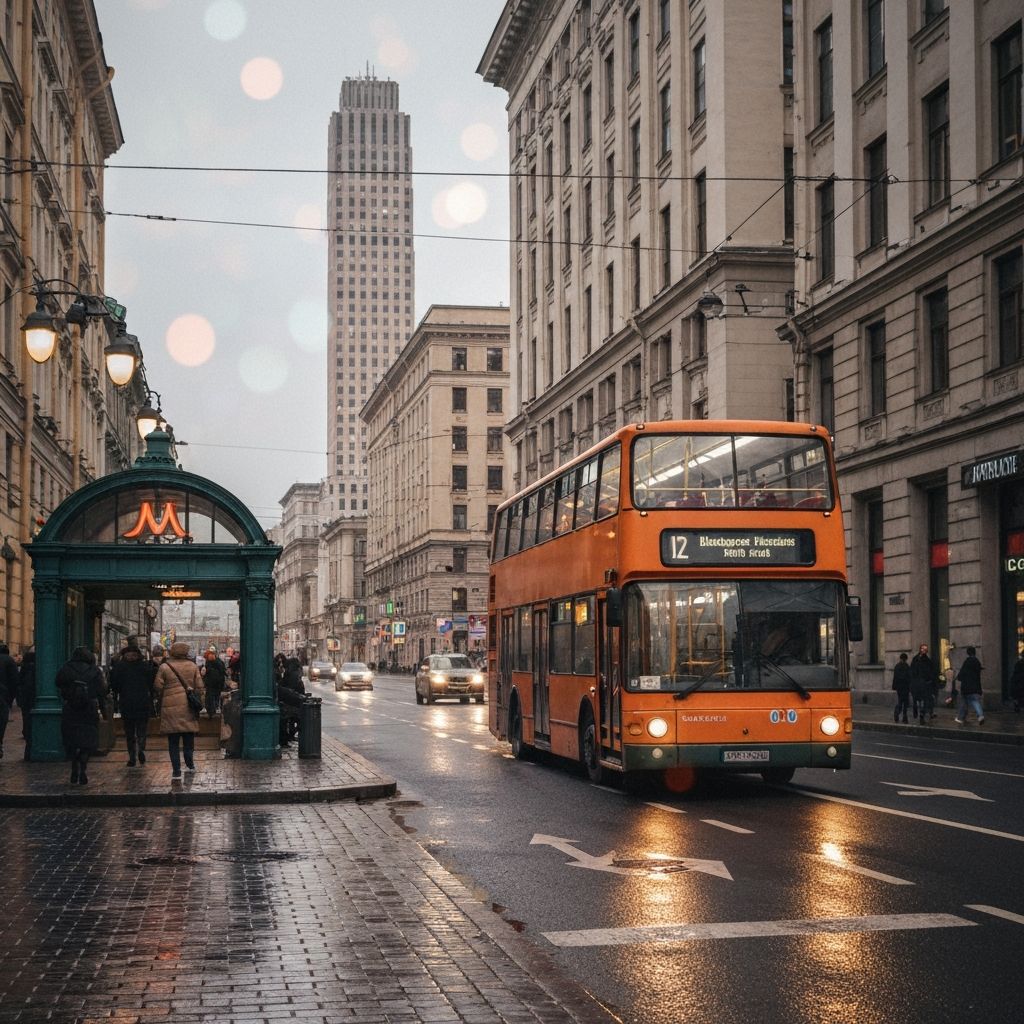
Public Transit in Russia: An Overview
Public transportation is the backbone of urban life in Russia. With over 145 million residents and densely populated megacities, efficient transit systems are essential. Russian public transit ranges from world-famous metro systems to suburban electric trains (elektrichkas), trolleybuses, trams, buses, and high-speed intercity rail.
The country's transit operators have invested heavily in contactless payments, mobile apps, real-time arrival data, and accessibility upgrades. Whether you live in a metropolis or visit as a tourist, understanding the best transit providers helps you move quickly and affordably.
The Top 10 Public Transit Services
1. Moscow Metro is one of the busiest and most beautiful subway systems in the world, with ornate stations, frequent service, and over 250 stations across multiple lines.
2. Saint Petersburg Metro serves the cultural capital with deep, efficient stations and seamless connections to commuter rail and trams.
3. Russian Railways (RZD) operates the longest rail network in Europe, including the legendary Trans-Siberian line and Sapsan high-speed trains.
4. Mosgortrans manages Moscow's surface transit—buses, trolleybuses, and trams—integrated under the Troika smart card system.
5. Saint Petersburg Passenger Transport (SPb GUP Passazhiravtotrans) coordinates the city's bus and minibus network with new low-floor electric vehicles.
6. Aeroexpress connects Moscow's three major airports to the city center via dedicated express trains, a favorite for travelers avoiding traffic.
7. Central PPK runs suburban elektrichka services around Moscow, providing affordable daily commuting options for millions.
8. Novosibirsk Metro is the largest subway in Siberia, featuring engineering achievements like the world's longest covered metro bridge.
9. Kazan Metro is modern, clean, and bilingual (Russian and Tatar), connecting historic and business districts of Tatarstan's capital.
10. Yekaterinburg Metro serves the Urals' major industrial hub with reliable single-line service and efficient bus integration.
Smart Cards and Digital Payment
Russia's transit revolution has been driven by smart payment systems. The Troika card in Moscow and Podorozhnik in Saint Petersburg allow seamless travel across metros, buses, trams, and suburban rail with steep discounts compared to single tickets. Most cities now accept contactless bank cards and mobile NFC payments directly at turnstiles.
Mobile apps such as Yandex Maps and 2GIS deliver real-time schedules, route planning, and disruption alerts. Tourists can purchase multi-day unlimited passes that simplify travel and reduce per-trip costs.
Trends and Innovations
Russian cities are aggressively electrifying their fleets. Moscow operates one of Europe's largest electric bus fleets, with hundreds of zero-emission vehicles replacing diesel buses each year. Tram networks are being modernized with new low-floor rolling stock and dedicated lanes. High-speed rail expansion between Moscow, Saint Petersburg, and Kazan promises to reshape intercity travel.
Tips for Travelers
Buy a smart card on arrival to access discounts. Rush hour in Moscow and Saint Petersburg is intense—avoid 8–10 AM and 5–7 PM if possible. Many metro stations feature stunning Soviet-era architecture, and exploring them is a sightseeing experience in itself. Carry small change for surface transit in smaller cities, and learn the Cyrillic alphabet basics to read station names.
Conclusion
Russia's public transit operators blend Soviet engineering heritage with cutting-edge digital innovation. From the marble halls of the Moscow Metro to the snowbound elektrichkas of Siberia, these services move millions every day with efficiency and reliability. Embracing them is the most authentic—and economical—way to experience Russia.