
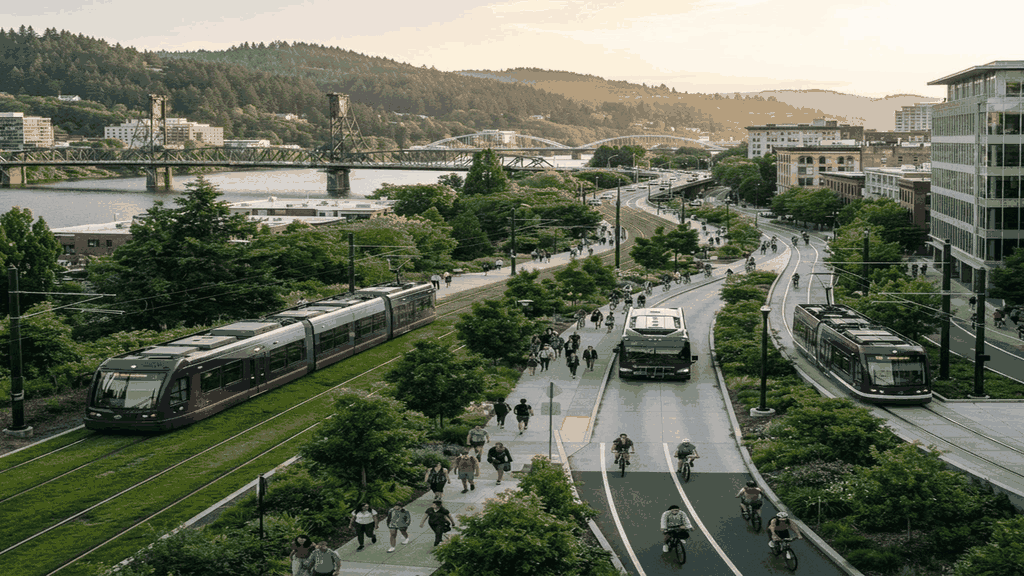
A City Built for Public Transit
Portland has long been a national model for public transportation. The city's compact, walkable core combines with an extensive transit network to give residents genuine alternatives to driving. From light rail lines connecting the airport to downtown, to a vintage-inspired streetcar looping through central neighborhoods, Portland's system is designed for accessibility and convenience. This emphasis on transit reflects the region's broader commitment to sustainability, reduced congestion, and livable urban design.
For newcomers and longtime residents alike, understanding the transit landscape is essential. The system's interconnected services make it possible to travel across the metro area efficiently, whether commuting to work, reaching the airport, or exploring the region's parks and cultural venues.
The Backbone: TriMet
TriMet is the primary transit agency serving the greater Portland area, operating an integrated network of buses, light rail, and commuter rail. The MAX Light Rail system is the centerpiece, with multiple color-coded lines linking downtown, the airport, the suburbs, and major destinations across the metro. TriMet's bus network extends coverage into neighborhoods that rail lines do not reach, creating a comprehensive web of connections.
The agency's WES Commuter Rail serves the southwestern suburbs, offering a convenient option for commuters traveling between Beaverton and Wilsonville. TriMet's unified fare system, including the reloadable Hop Fastpass, makes transfers seamless across all these services.
The Portland Streetcar
The Portland Streetcar complements TriMet by serving the dense inner-city neighborhoods. Its loops connect the Pearl District, downtown, the South Waterfront, and the Central Eastside, making it ideal for short trips and neighborhood hopping. The streetcar has played a notable role in shaping urban development, encouraging walkable, mixed-use communities along its routes.
With frequent stops and an easy-to-follow path, the streetcar is popular with residents, students, and visitors who want a relaxed way to move through the city center.
Regional and Specialized Services
Beyond TriMet and the streetcar, several other services expand mobility options. The Portland Aerial Tram provides a scenic connection between the South Waterfront and the hilltop campus of a major health and science university, serving thousands of commuters and patients daily. C-TRAN offers cross-river service connecting Portland with Vancouver, Washington, while regional providers like SMART serve the Wilsonville area.
For those needing accessible transportation, TriMet's LIFT paratransit service supports riders who are unable to use standard fixed-route options. Bike-share and micromobility programs also integrate with transit, helping riders cover the crucial first and last mile of their journeys.
Benefits of Choosing Transit in Portland
Public transit offers substantial advantages in Portland. Riders save money on fuel, parking, and vehicle maintenance while avoiding the stress of downtown traffic. Transit also reduces environmental impact, aligning with the city's climate goals. The extensive coverage means many residents can live comfortably without owning a car, relying instead on a mix of rail, bus, and active transportation.
Frequent service on major lines, real-time arrival information, and well-connected transfer points make the system practical for daily use. This reliability is a key reason transit remains woven into the fabric of Portland life.
Questions to Ask Before Making Your Choice
Before making a final decision, create a short list of priorities and compare each option against the same standards. Ask how long the organization has served the Portland area, what training or qualifications its team holds, and how it measures quality. Clear answers reveal both operational maturity and a genuine commitment to customers. It is also worth asking how the provider handles unexpected changes, complaints, accessibility needs, and peak demand. A thoughtful response is often a better indicator of future service than a polished sales message.
Pay attention to transparency throughout the evaluation process. Policies, fees, schedules, and limitations should be easy to understand before you commit. Look for recent feedback that describes specific experiences rather than relying on a single rating, and consider whether the organization communicates promptly and professionally. Portland residents often value organizations that support local communities, adopt sustainable practices, and make their services inclusive; these qualities can be useful differentiators when several choices appear equally strong.
Finally, remember that the highest-profile option is not automatically the best match. A smaller local organization may offer more personal attention, while a larger provider may deliver broader resources and greater scheduling flexibility. If possible, begin with a consultation, campus visit, introductory session, or limited engagement. Firsthand experience allows you to assess the people, process, and overall fit before making a larger commitment. Comparing value rather than price alone will usually lead to a more satisfying and dependable outcome.
Final Thoughts
Portland's public transit services stand among the best in the nation, blending light rail, buses, streetcars, and specialized options into a cohesive network. Whether you are commuting, running errands, or discovering the city, the system offers efficient, affordable, and sustainable ways to travel. Embracing transit is not just convenient in Portland; it is part of the city's identity and its vision for a greener future.