
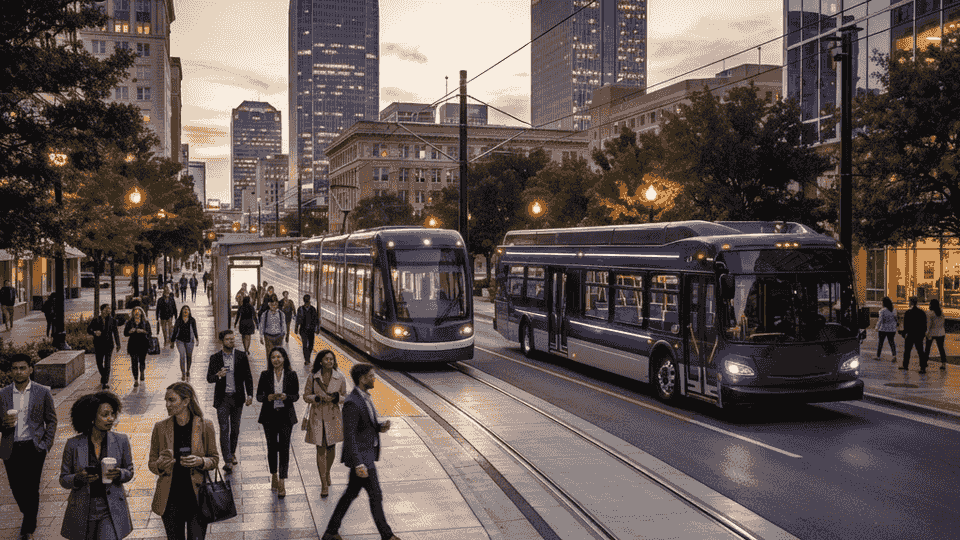
Getting Around Oklahoma City by Public Transportation
Oklahoma City covers a large geographic area, so transit planning is especially important. The strongest car-free trips often combine local bus or streetcar service with walking, cycling, rideshare, or a regional connection. Downtown has the densest network, while suburban and cross-city journeys may require transfers and additional travel time. Riders should confirm current schedules, fares, service alerts, and accessibility details before departure.
1. EMBARK Bus
EMBARK operates Oklahoma City’s core fixed-route bus network. Routes connect downtown with employment centers, shopping districts, neighborhoods, medical facilities, and community destinations. Features on many services include accessible vehicles and bicycle-carrying capacity. EMBARK is the starting point for most residents seeking regular public transportation within city limits.
2. Oklahoma City Streetcar
The Oklahoma City Streetcar circulates through downtown, Bricktown, Automobile Alley, Midtown, and nearby districts. It is useful for visitors moving between attractions, hotels, restaurants, events, and offices without repeatedly parking. Modern low-floor vehicles support accessible boarding, and streetcar connections complement downtown bus routes.
3. RAPID Northwest
RAPID Northwest brings bus rapid transit features to a major corridor linking downtown with northwest Oklahoma City. Enhanced stations, more frequent service, and transit-priority elements are designed to make trips faster and easier to understand. The route serves residential areas, retail destinations, and important transfer points, representing a significant step in the city’s transit development.
4. EMBARK Plus
EMBARK Plus provides complementary paratransit for eligible riders whose disabilities prevent them from using fixed-route service in qualifying circumstances. Trips generally require advance scheduling and operate within defined areas and times. Eligibility is based on functional ability rather than diagnosis alone, making the application process an important first step.
5. Norman Transit
Norman Transit operates local bus service in Norman, including routes that serve the University of Oklahoma and surrounding community. Although it is a separate municipal system, it is part of the broader Oklahoma City metropolitan mobility picture. Residents traveling within Norman can use it for campus, shopping, medical, and neighborhood connections.
6. Citylink Edmond
Citylink Edmond provides fare-free local bus service within Edmond on established routes. It connects residents to civic, educational, medical, and commercial destinations. For northern metro travelers, Citylink can reduce local driving and provide mobility for students, older adults, workers, and residents without reliable vehicles.
7. Oklahoma State University–Oklahoma City Transit Connections
The OSU–Oklahoma City area is served by transit connections that help students and employees reach the campus. College trips often occur outside traditional commuter patterns, so riders should review route frequency and evening service carefully. Combining transit with cycling can improve first- and last-mile access for students living away from a direct route.
8. Amtrak Heartland Flyer
The Heartland Flyer is intercity passenger rail rather than local transit, but it extends Oklahoma City’s car-free reach south to Norman, Purcell, Pauls Valley, Ardmore, Gainesville, and Fort Worth. Departures use Santa Fe Depot downtown, near local streetcar and bus services. The train is a comfortable option for regional travel when its daily schedule fits the trip.
9. Greyhound
Greyhound provides intercity bus connections from Oklahoma City to destinations beyond the local transit network. It can serve travelers who do not drive or prefer not to fly. Because schedules, station arrangements, and transfer requirements can change, passengers should verify trip details and allow adequate connection time.
10. Jefferson Lines
Jefferson Lines offers intercity bus service across parts of the central United States and can complement local Oklahoma City transportation. It is useful for reaching communities not served by rail or air. Intercity passengers should consider baggage policies, station access, overnight timing, and how they will complete the last mile at their destination.
Tips for Riding Transit in Oklahoma City
Use official trip-planning information and check alerts shortly before leaving. Arrive early, especially when making a low-frequency transfer. Keep fare media ready, signal the driver when required, and request a stop with enough notice. Streetcar riders should use designated platforms and remain aware of tracks when walking or cycling downtown.
Heat and severe weather deserve extra planning. Carry water during summer, use shade where available, and know where to shelter when thunderstorms threaten. Riders with mobility devices should verify accessibility and reserve paratransit trips as directed. Cyclists can extend the reach of transit, but should confirm bicycle capacity and secure bikes correctly.
The Future of Metro Mobility
Oklahoma City continues investing in higher-quality corridors, regional planning, pedestrian access, and connections between communities. Bus rapid transit demonstrates how frequency, visible stations, and reliable travel times can attract more riders. A stronger network can improve access to jobs and education while reducing parking pressure. For now, the best transit experience comes from understanding each service’s role and combining options thoughtfully for the complete journey.
Making Transit Part of a Routine
New riders can begin with one predictable trip, such as a commute or downtown event, before attempting a complex transfer. Save alternate routes, carry a charged phone, and allow extra time during the first week. Employers and venues can support riders by sharing nearby stops and providing safe walking directions. Familiarity turns the network from an occasional backup into a practical mobility option.