
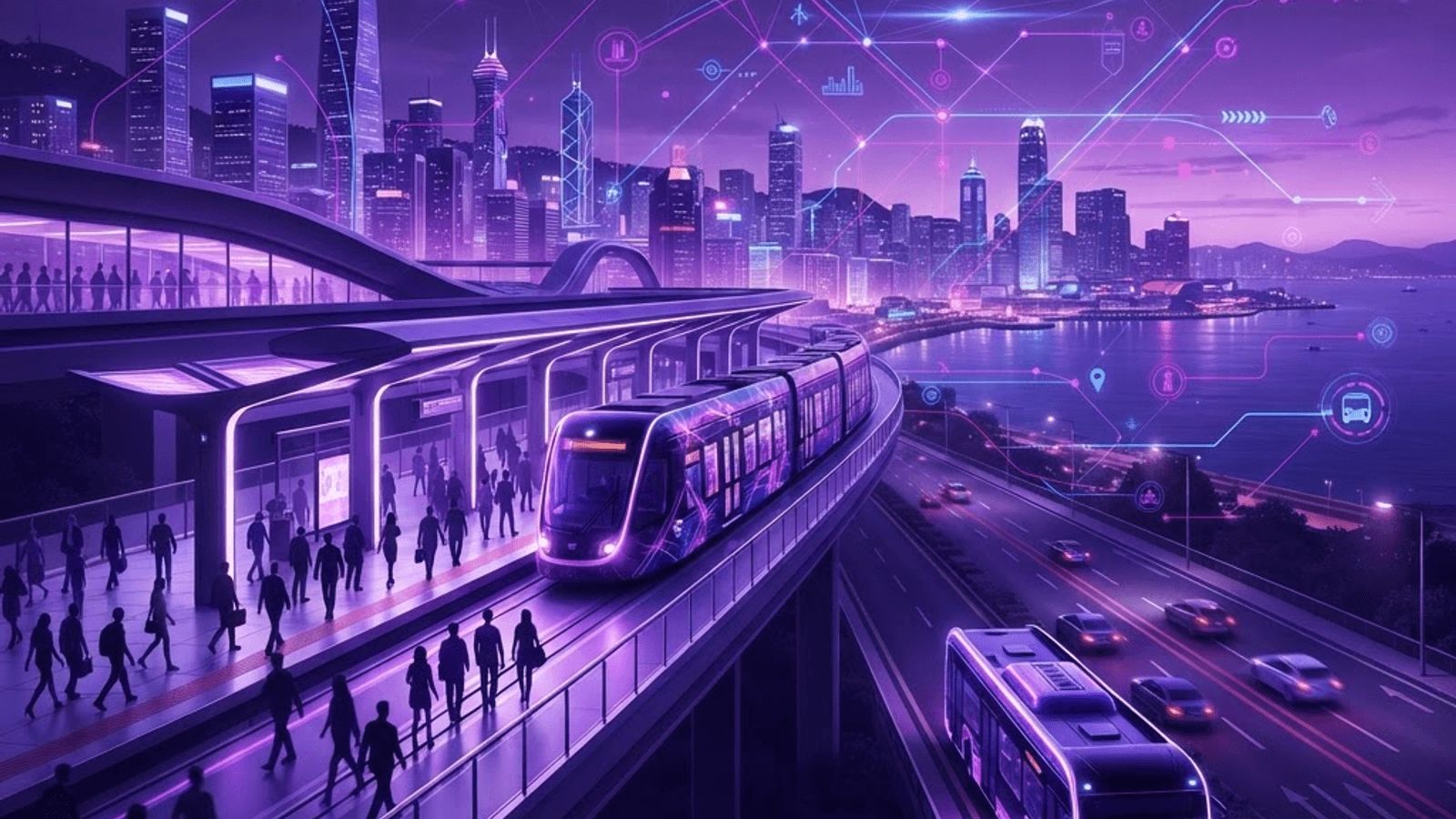
Public Transit in a Coastal City
Public transit in Oceanside benefits from a favorable geography. The city's development pattern follows a coastal spine with inland corridors branching off, which is exactly the shape that transit serves efficiently. Dense linear corridors support frequent service far better than dispersed suburban grids.
The result is a network where a substantial share of residents live within reasonable walking distance of a transit stop, and where the main employment, education, retail, and recreation destinations are directly served. For commuters, students, and anyone wanting to reduce car dependence, the network is worth understanding properly.
The Top 10 Public Transit Services
COASTER Commuter Rail provides the fastest connection along the coastal corridor, bypassing highway congestion entirely. Peak-period frequency serves standard commuting patterns well, and the ride quality makes it a genuinely pleasant way to start and end a workday.
SPRINTER Light Rail runs the inland corridor, connecting Oceanside to neighboring communities with frequent all-day service. It links residential areas to educational institutions and employment centers, and its frequency makes it usable without consulting a timetable.
BREEZE Bus System forms the local backbone, operating fixed routes throughout the city and connecting to rail stations. Route coverage reaches most neighborhoods, and fare integration allows seamless transfers between bus and rail.
Metrolink extends commuter rail service northward into the broader regional network, serving longer-distance commuters who work outside the immediate area. Weekday service is structured around work schedules.
Amtrak Pacific Surfliner functions as both intercity service and premium commuter option, with comfortable seating and reserved capacity for travelers willing to pay more than commuter rail fares for additional comfort and flexibility.
FLEX Demand-Response Service covers lower-density areas where fixed routes are impractical, allowing riders to request pickup within defined zones. It solves the coverage gap that fixed-route systems inherently leave.
LIFT Paratransit provides door-to-door service for riders whose disabilities prevent use of fixed-route transit. Eligibility is certified, and advance reservation is required, but it is essential mobility infrastructure for those who depend on it.
Oceanside Shuttle Services operate seasonal and event-focused circulators, particularly around the harbor and beach districts during peak visitor periods, reducing parking pressure in congested areas.
Regional Vanpool Programs organize shared commuting for groups traveling similar routes, often with employer subsidies. For commuters whose origin and destination are not well served by fixed routes, vanpool frequently offers the best combination of cost and convenience.
Bike Share and Micromobility Integration completes the network by solving first-mile and last-mile access, extending the effective catchment area of every rail station from a short walk to a multi-mile radius.
Fares and Passes
Transit economics in Oceanside favor regular riders substantially. Single-ride fares are reasonable but monthly passes deliver much better value for anyone commuting more than a few days per week. Regional passes that cover multiple operators eliminate the need to calculate transfer costs.
Discounted fares are available for seniors, riders with disabilities, students, and youth. Employer-sponsored transit benefits allow commuters to pay for passes with pre-tax income, which reduces the effective cost meaningfully for anyone with access to such a program.
Mobile ticketing has largely replaced paper passes, allowing riders to purchase and validate fares from a phone. This has removed one of the persistent friction points that discouraged occasional riders.
Planning a Transit Commute
The most common reason people abandon transit is a poorly planned first attempt. A commute that requires three transfers with tight connections will fail regularly, while one built around a single high-frequency service will succeed.
Practical planning starts with identifying the highest-frequency service closest to both origin and destination, then solving the access problem at each end with walking, cycling, or a short connecting bus ride. Trips built on frequent service tolerate delays; trips built on infrequent service do not.
Real-time arrival information, available through transit apps and station displays, has substantially improved the experience by removing uncertainty about whether a vehicle is coming.
Accessibility Across the Network
Accessibility has improved significantly across all modes. Buses are equipped with ramps and securement areas, rail platforms provide level or ramped boarding, and audio and visual stop announcements assist riders with sensory impairments.
Paratransit fills remaining gaps for riders unable to use fixed routes. The certification process requires documentation but, once completed, provides reliable door-to-door mobility that is otherwise unavailable without private transport.
Environmental and Economic Benefits
The case for transit extends well beyond individual convenience. A full transit vehicle removes dozens of cars from the road, reducing congestion, emissions, and parking demand simultaneously. For individuals, the financial case is often decisive: total annual cost of car ownership, including depreciation, insurance, fuel, maintenance, and parking, dwarfs the cost of even a premium transit pass.
Households that reduce from two cars to one while using transit for commuting typically see substantial annual savings, which is often the practical argument that convinces people to try the network.
Where the Network Is Improving
Ongoing investment focuses on frequency improvements, fleet electrification, station accessibility upgrades, and better integration between operators. Double-tracking projects along the rail corridor increase capacity and reliability, while bus fleet renewal is steadily reducing emissions and noise.
Integration with micromobility and demand-response services continues to expand the network's practical reach without requiring new fixed infrastructure, which is the most cost-effective way to grow ridership.
Getting Started
For residents who have never used the network, the lowest-risk way to start is a single weekend trip on a frequent service. It builds familiarity without the pressure of a work deadline. From there, a trial commute on a low-stakes day establishes whether the timing works.
Oceanside's transit network genuinely supports car-light and car-free living for a substantial portion of the population. The ten services above, used together, cover most travel needs within and beyond the city.