
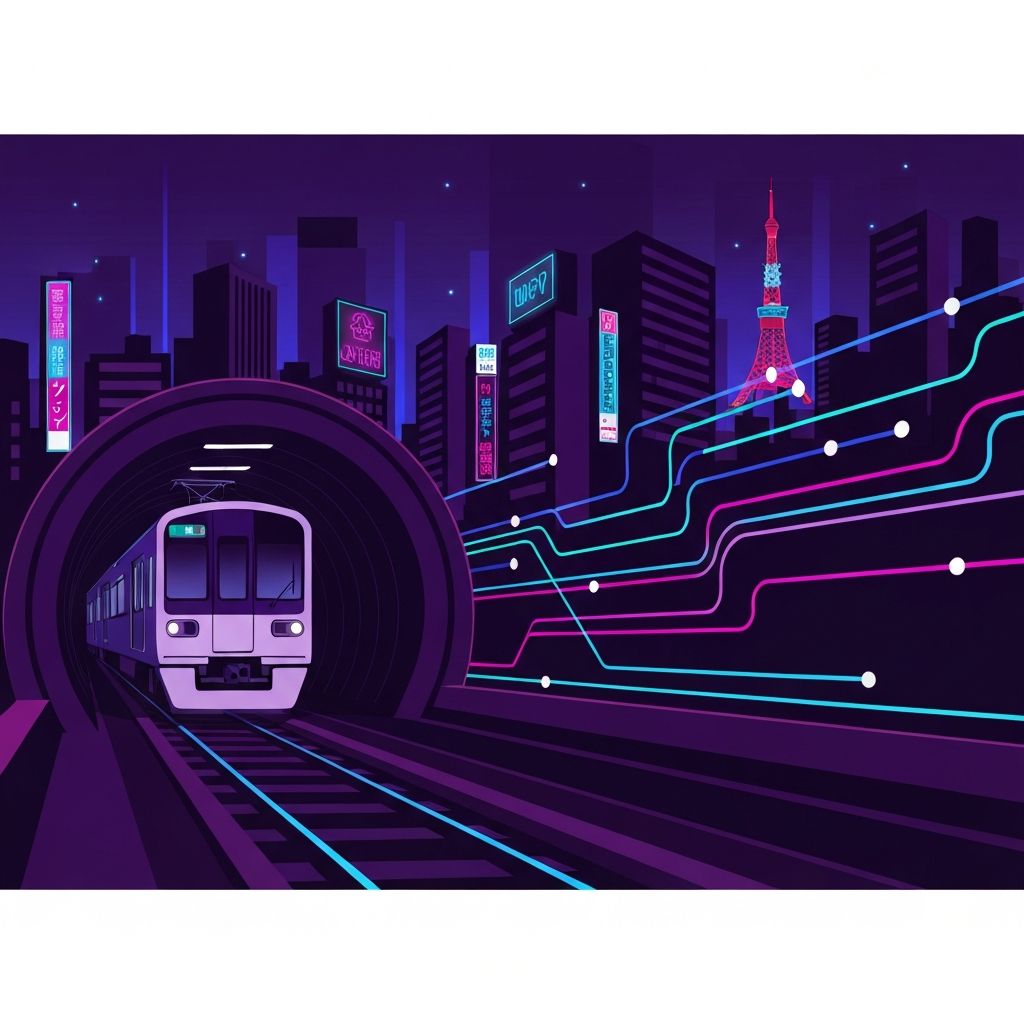
Japan's World-Class Public Transit
Japan's public transit system is a model of efficiency and innovation. With clean stations, punctual schedules, and intuitive design, it serves millions of residents and tourists every day. The combination of subways, commuter trains, buses, and trams creates a seamless multimodal experience that supports both daily life and tourism.
1. Tokyo Metro
Tokyo Metro operates one of the world's busiest subway networks. With nine lines, multilingual signage, and frequent trains, it makes navigating Tokyo effortless. The system is praised for its punctuality and cleanliness.
2. Toei Subway
Run by the Tokyo Metropolitan Government, Toei Subway complements Tokyo Metro with four additional lines. Together, they cover virtually every part of the city, ensuring excellent connectivity.
3. Osaka Metro
Osaka Metro provides extensive subway coverage in the Kansai region. Its modern stations, integrated ticketing, and connections to suburban rail make it essential for both commuters and travelers.
4. Yokohama Municipal Subway
This subway system serves the city of Yokohama with two main lines connecting business districts, residential areas, and tourist hotspots. It is known for its efficient operations and modern facilities.
5. Sapporo Municipal Subway
Sapporo's subway system is unique for its rubber-tired trains, offering a smooth and quiet ride. It connects key parts of the city and is essential during snowy winters.
6. Nagoya Municipal Subway
Nagoya's subway is a key part of the city's public transport network, with multiple lines connecting commercial centers, attractions, and suburbs. It is praised for its cleanliness and reliability.
7. Fukuoka City Subway
Fukuoka City Subway is compact yet highly efficient, linking the city's main districts with the airport. It is a vital service for both locals and tourists exploring Kyushu.
8. Kobe Municipal Subway
Kobe's subway provides essential connections within the city and to neighboring regions. The system is integrated with private rail networks, offering smooth multimodal travel.
9. Hiroshima Electric Railway (Hiroden)
Hiroden operates one of Japan's largest tram networks, serving Hiroshima city and its surroundings. Beyond transit, it is a beloved cultural symbol of the region.
10. Toden Arakawa Line (Tokyo Sakura Tram)
The Toden Arakawa Line is one of Tokyo's last remaining streetcar lines, offering a nostalgic ride through historic neighborhoods. It is both a functional transit option and a tourist attraction.
The Road Ahead for Japanese Transit
Japan continues to innovate in public transit through smart ticketing, AI-driven crowd management, and accessibility improvements. With sustainability and convenience at the forefront, these top services remain a global benchmark for urban mobility.