
Rethinking Transit in a Master-Planned City
Irvine was designed around the automobile, with wide arterials, generous parking and separated land uses. That history explains why many residents assume transit is not viable here. In practice, the city has assembled a layered network that works well for specific trip types: commuting to Los Angeles, reaching a university campus, connecting between business districts, and getting to the airport without paying for a week of parking.
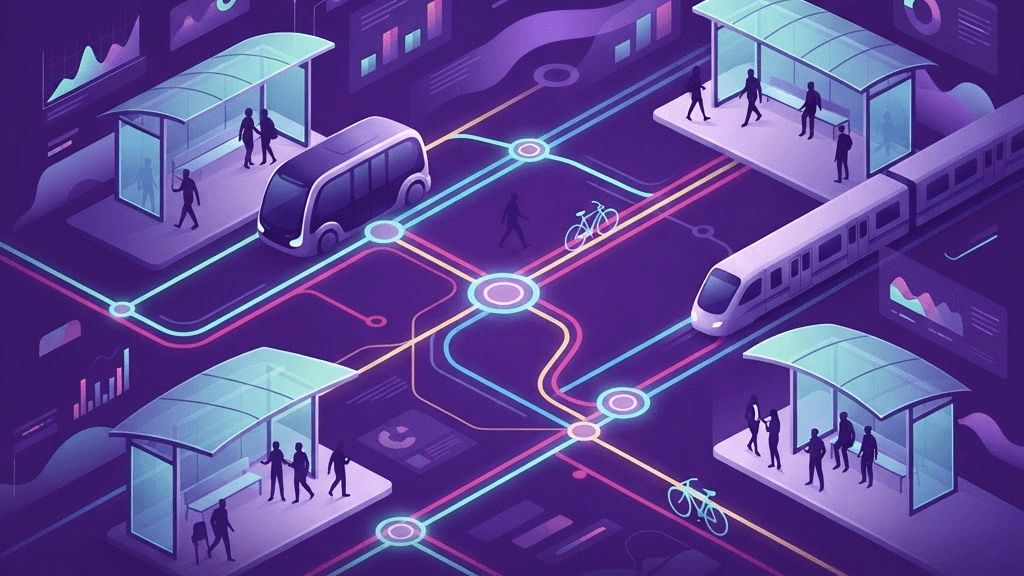
The key to using Irvine transit successfully is understanding that no single service covers everything. The system works as a set of interlocking layers, with regional rail handling long trips, county buses covering arterials, community shuttles solving the last mile, and active transportation filling the gaps. Riders who learn two or three relevant layers rather than expecting one universal option consistently report the best experience.
Ten Public Transit Services Serving Irvine
1. Metrolink Orange County Line. The backbone for long-distance commuting, this regional rail service links the Irvine Transportation Center with Anaheim, Fullerton, Los Angeles Union Station and Oceanside. Reserved schedules, quiet cars on some trains and monthly pass pricing make it the most cost-effective option for daily commuters heading north or south.
2. Metrolink Inland Empire–Orange County Line. Connecting Orange County directly with Riverside and San Bernardino counties, this line serves the substantial share of Irvine's workforce living inland. It avoids the worst of the freeway commute in both directions, which is often the deciding factor for riders who try it once.
3. Amtrak Pacific Surfliner. The intercity option through Irvine offers comfortable seating, luggage space, food service and strong weekend frequency toward San Diego and Los Angeles. For occasional trips rather than daily commuting, it is usually the more pleasant choice.
4. OC Bus fixed-route network. The county's bus system operates numerous routes along Irvine's major arterials, connecting residential villages with shopping centers, medical facilities, employment districts and neighboring cities. Frequent trunk routes and day pass pricing make it practical for errands and non-peak travel.
5. Irvine iShuttle. The city's own shuttle service links the Irvine Transportation Center and the Tustin Metrolink Station with business districts, filling the gap between rail arrival and the office door. Several routes operate on weekday commute schedules and are free or low-cost, which materially improves the economics of a rail commute.
6. Anteater Express. Serving the University of California, Irvine campus and surrounding student housing, this university-operated shuttle system offers frequent daytime service and evening routes. It is free for students and integrates with regional connections, making a car genuinely optional for many undergraduates.
7. OC ACCESS paratransit. The county's shared-ride service for riders unable to use fixed-route buses provides origin-to-destination transportation with lift-equipped vehicles and advance reservation scheduling. Certification is required, and once approved it becomes a dependable mobility option.
8. OC Flex on-demand microtransit. Operating in defined zones with app-based booking, this shared shuttle service picks riders up near their location rather than at a fixed stop. It is particularly useful in lower-density areas where a full bus route would run half empty.
9. Employer and property commuter shuttles. Many large Irvine business parks and technology employers operate private shuttles between rail stations, parking facilities and office campuses. Availability varies by employer, but riders who ask their human resources or property management team often discover a free connection they did not know existed.
10. Bike and pedestrian trail network. Irvine's extensive off-street trails, protected bike lanes and bike parking make active transportation a legitimate part of the transit system rather than a recreational afterthought. Combining a bicycle with rail turns a two-transfer trip into one clean journey.
Making Transit Work for Common Trips
For a downtown Los Angeles commute, regional rail plus a connecting shuttle at each end is generally faster and far less stressful than driving during peak hours. For local errands, the county bus network along major arterials handles shopping centers and medical offices well outside of rush hour. For a campus trip, the university shuttle system combined with rail eliminates parking permits entirely. For an airport run, a bus or shuttle connection to John Wayne Airport is inexpensive and straightforward, while Los Angeles International Airport is best reached by rail plus a connecting service. For occasional low-density trips, on-demand microtransit fills gaps that fixed routes cannot serve economically.
Practical Tips for Riders
Use mobile ticketing where available, since it is cheaper and faster than cash fare. Ask your employer about pre-tax commuter benefits, which can reduce transit costs meaningfully. Plan transfers with a buffer, especially in the evening when frequencies drop. Check schedules for weekday versus weekend variation, as several services run reduced or no weekend hours. Take advantage of free shuttle services, which are often the difference between a workable commute and an impractical one. If you are new to the network, try a single trip on a low-pressure weekend before committing to a weekday commute.
What Is Changing
Transit in Irvine is evolving in several directions. Service planning increasingly emphasizes all-day frequency over peak-only commute service, reflecting hybrid work schedules. Zero-emission bus fleets are expanding as agencies replace older equipment. Fare technology is consolidating around contactless and mobile payment, reducing transfer friction between agencies. Microtransit continues to grow as a flexible complement to fixed routes. And first-and-last-mile investments, including bike infrastructure and shuttle expansion, are receiving more attention because they determine whether the rest of the network gets used.
Final Thoughts
Public transit in Irvine rewards a specific approach: identify the two or three services that match your regular trips, learn their schedules properly, and solve the last mile deliberately. Do that and the network becomes genuinely useful, saving money on parking and fuel while turning commute time into reading or working time. It will not replace every trip in a city built for cars, but it covers more than most residents expect.